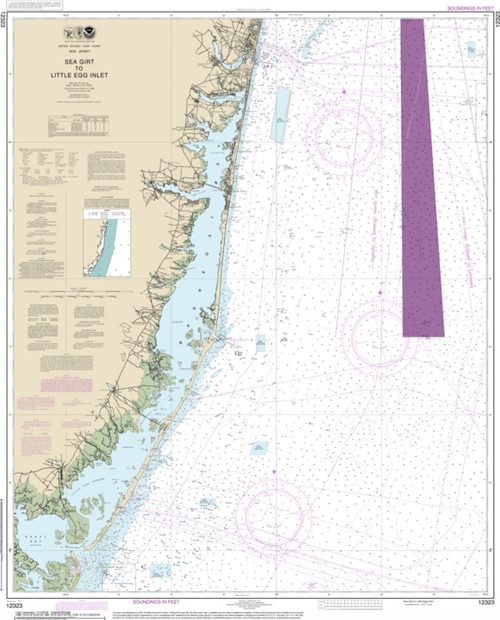
Barnegat Dive Sites Chart
- Absecon Inlet
- Adriatic
- USS Akron
- Almirante
- Anastasia
- Astra
- Barnegat Inlet
- Brigantine Beach Wreck
- boiler wreck
- Bonanza
- Brick barge
- Brigantine Inlet
- Cornelius Grinnell
- Caddo
- Capt Smitty
- Cassandra
- Charlemagne Tower
- Chaparra
- Chesapeake
- clam boat
- Creole
- Delaware
- dredge
- Duncan
- Emerald / USS Hibiscus
- Francis A Perkins
- William R Farrell
- FF Clain
- Gassoon
- Gory Wreck
- Glory Wreck
- Granite Wreck
- Great Isaac
- Gulftrade (stern)
- Gulftrade (bow)
- Hankins (Big)
- Hankins (Offshore)
- Hankins 3
- Cornelius Hargraves
- Harry Rush
- Hornet
- Ida K
- Inshore barge/tug
- Irene/Truro
- John Minturn
- John Marvin
- Kennebec
- Lake Frampton
- Lake Allure
- Lana Carol
- Lavallette Wreck
- Leon Walter
- Lillian
- Manhattan
- Maurice Tracy
- Mediator
- Meta
- Middle Barge
- Mohawk
- EF Moran
- Mullica River Wrecks
- NJ Aquarium
- Northern 29
- NW Barges
- Offshore Tug
- Oklahoma
- Patrice McAllister
- Park City
- Peerless
- Persephone
- Remedios Pascual
- Reliable
- Ridge Schooner
- Riggy
- RP Resor
- Rump
- Southern Lillian
- Sachem
- Salem
- San Saba
- Sea Hag
- Seaside Crane Barge
- Shookus
- Simala
- Sumner
- Southwest Mohawk
- Thurmond
- Tolten
- Troop Carrier
- Vivian
- Vizcaya
- Yellow Flag
- ZPG-3W
- Adriatic
- Barnegat Bay
- Barnegat Inlet
- Barnegat Light Reef ...
- Beach Jetties
- Bonanza
- Brick barge
- Caddo
- Chaparra
- Charlemagne Tower
- Chesapeake
- clam boat
- Cornelius Hargraves
- F.F. Clain
- Francis A Perkins
- Garden State N Reef ...
- Garden State S Reef ...
- Gassoon
- Great Isaac
- Gulf Trade
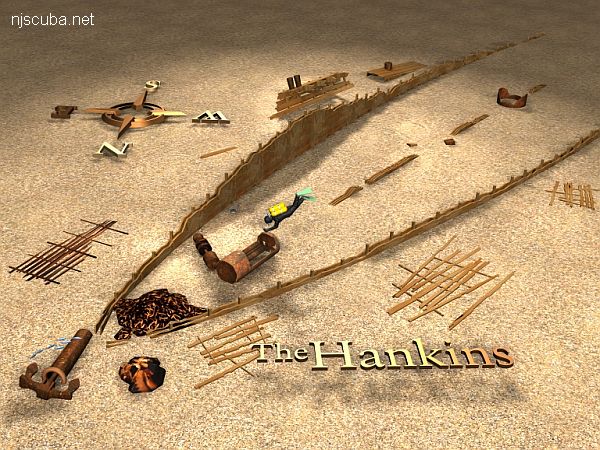
- Hankins Wrecks
- Harry Rush
- Inshore Barge/Tug
- Irene/Truro
- Type:
- shipwreck, schooner barge(s)
- Sunk:
- late 1800s
- Depth:
- 80 ft
More: Hankins Wrecks ...
- Type:
- shipwreck, sailing ship
- Depth:
- 85 ft
A large wooden sailing ship, more intact than most. The hull is almost complete, 8-10 feet high, with a Navy-style stockless anchor in one side of the bow, and bowsprit lying in the sand below. The bowsprit indicates that this was a true sailing ship and not a schooner barge. I saw no sign of towing bits, bow, or stern. The stern is broken down.
More: Sea Hag ...
- Type:
- shipwreck, barges ( 2 )
- Sunk:
- Saturday May 26, 1934
foundered in storm - 2 casualties - Depth:
- 70 ft
More: Irene/Truro ...
- Type:
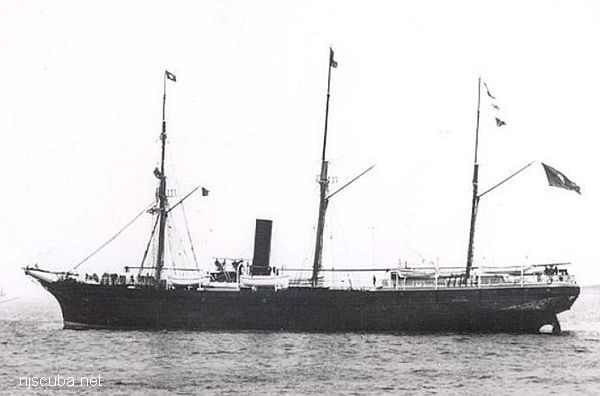
- shipwreck, steamer, Spain
- Name:
- Vizcaya is a Basque province in northern Spain. The Basques are a fiercely independent seafaring people of unknown origin.
- Built:
- 1872, England, as Santander
- Specs:
- ( 287 x 38 ft ) 2458 gross tons, 103 passengers & crew
- Sunk:
- Saturday October 30, 1890
collision with schooner Cornelius Hargraves - 60 casualties - Depth:
- 80 ft
More: Vizcaya ...
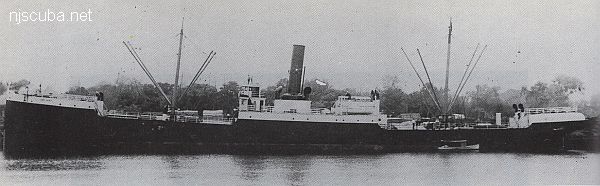
- Type:
- shipwreck, steamer, USA
- Name:
- San Saba is a river in central Texas, a tributary of the Colorado River of Texas.
- Built:
- 1879, Delaware River Iron Shipbuilding & Engine Works, Chester PA USA, as Colorado
- Specs:
- ( 306 x 39 ft ) 2458 gross tons, 37 crew
- Sunk:
- Friday October 4, 1918
struck mine laid by U-117 - 30 casualties - Depth:
- 80 ft
More: San Saba ...