
Margaret
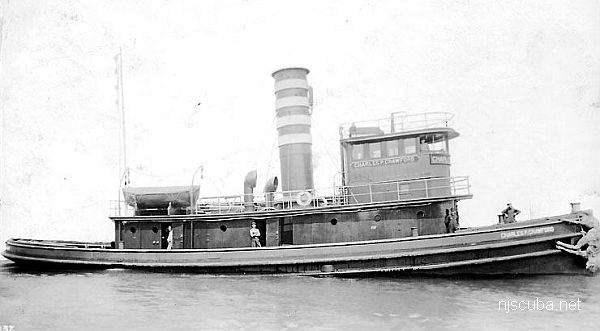
- Type:
- artificial reef, tugboat
- Built:
- 1915, Bethlehem Staten Island, Staten Island NY, as Charles P. Crawford
- Specs:
- ( 97 x 24 ft ) 171 gross tons
- Sunk:
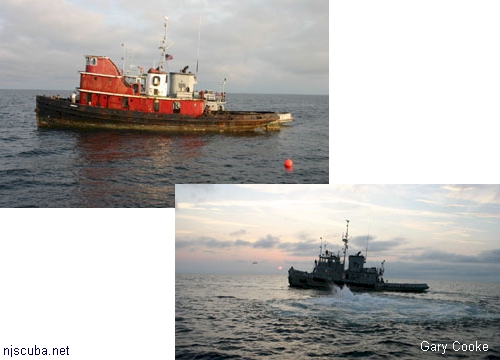
- Thursday June 28, 2007 - Delaware #11 Artificial Reef
- GPS:
- 38°40.540' -74°43.957'
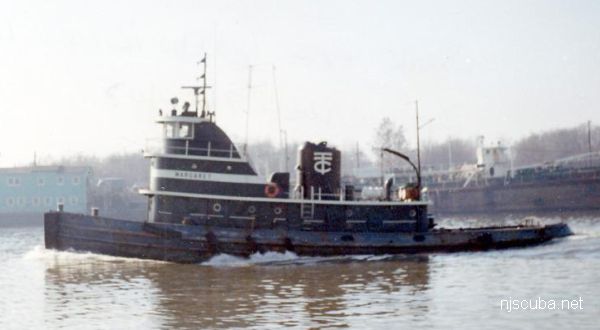
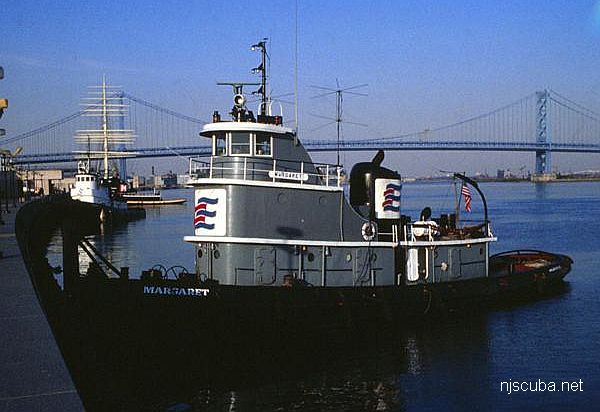
The 92-year-old tugboat Margaret was built by Staten Island Shipbuilding Co. for the Erie Railroad. Originally powered by a double-compound steam engine, the vessel is 97 feet long and 24 wide, weighed 171 gross tons. The Margaret was sunk in memory of Edward Hahn of Centreville, Md., an avid fisherman, and his family and friends funded the preparation of the vessel for sinking off the Delaware coast.
Built in 1915, By the Staten Island Shipbuilding Company of Port Richmond Staten Island, New York as Charles P. Crawford for Erie Railroad Company of Jersey City, New Jersey. On May 8th, 1917 the tug was commissioned by the United States Navy as the SP-366 for minesweeping and towing. She was outfitted with two one-pound guns.
On August 12th, 1919 the tug was sold and renamed Akron. She was then acquired by C.G. Willis and renamed Carteret. The tug was eventually acquired by Tucker Transportation of Camden, New Jersey, for the Oliver Transportation work, and renamed Margaret after the Express Marine Incorporated family matriarch. She was later acquired by Moorhead City Towing of Moorehead City, North Carolina.
Powered by the double compound steam engine, rated 700 horsepower, with 155psi scotch boiler. Later repowered with a single EMD diesel rated at 1,200 horsepower. (Wayne Huebschman)
tugboatinformation.com


Questions or Inquiries?
Just want to say Hello? Sign the .