
World War I (1/3)
World War I
World War I Losses
World War II
World War II Losses
- Arundo
- Ayuruoca
- USS Bass
- Bidevind
- Black Point
- Catamount
- Cayru
- Choapa
- Coimbra
- Continent
- I.P. Goulandris
- Gulftrade (stern)
- Gulftrade (bow)
- Gypsum Prince
- Hvoslef
- India Arrow
- USS Jacob Jones
- Lemuel Burrows
- Lake Frampton
- Maiden Creek
- Maurice Tracy
- Miraflores
- USS Moonstone
- USS Murphy
- Norness
- HMS Pentland Firth
- Pan Pennsylvania
- Persephone
- Rio Tercero
- RP Resor
- San Jose
- Suffolk
- Tolten
- USS Turner
- U-550
- U-853
- U-869
- Varanger
- YP-387
More: Wartime Losses ...
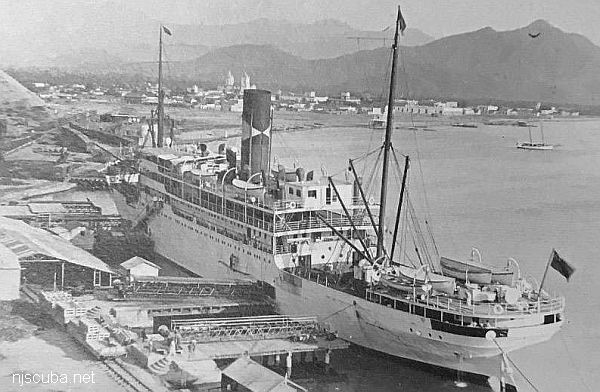
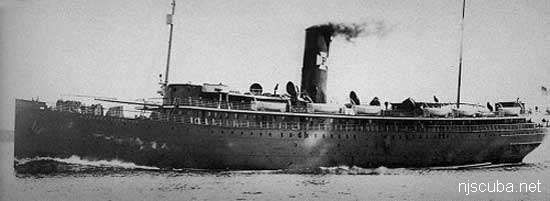
- Type:
- shipwreck, liner, USA
- Built:
- 1896, Newport News Shipbuilding, Newport News VA USA, as La Grande Duchesse
- Specs:
- ( 380 x 47 ft ) 5017 gross tons, 330 passengers & crew
- Sunk:
- Sunday June 2, 1918
shelled by U-151 - 13 casualties - Depth:
- 250 ft
More: Carolina ...
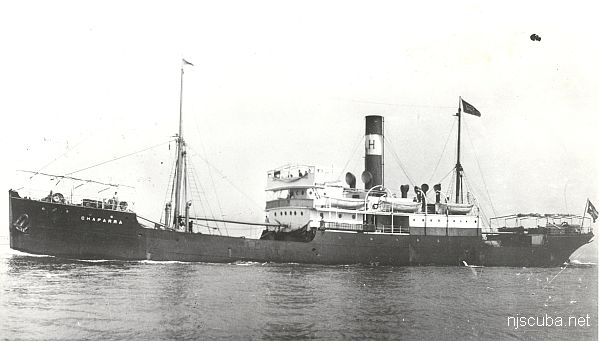
- Type:
- shipwreck, freighter, Cuba
- Name:
- a seaport in northeastern Cuba
also Spanish for "cowboy" or slang for "shorty" - Built:
- 1906, Scotland, as Tinhow
- Specs:
- ( 249 x 38 ft ) 1510 gross tons, 29 crew
- Sunk:
- Sunday October 27, 1918
struck mine laid by U-117 - 6 casualties - Depth:
- 80 ft
More: Chaparra ...
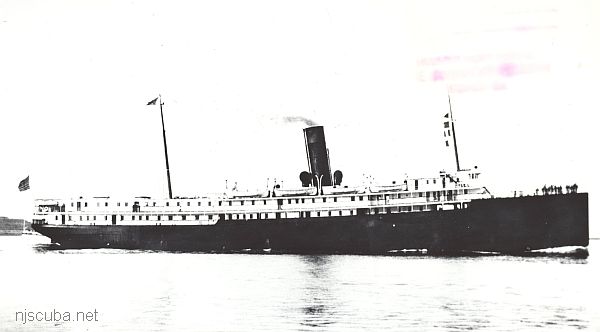
- Type:
- shipwreck, liner, USA
- Built:
- 1911, New York Shipbuilding, Camden NJ USA, as Somerset
- Specs:
- ( 309 x 46 ft ) 3648 gross tons, 135 passengers & crew
- Sunk:
- Wednesday May 1, 1918
collision with French Navy cruiser La Gloire - 67 casualties - Depth:
- 110 ft
More: City of Athens ...
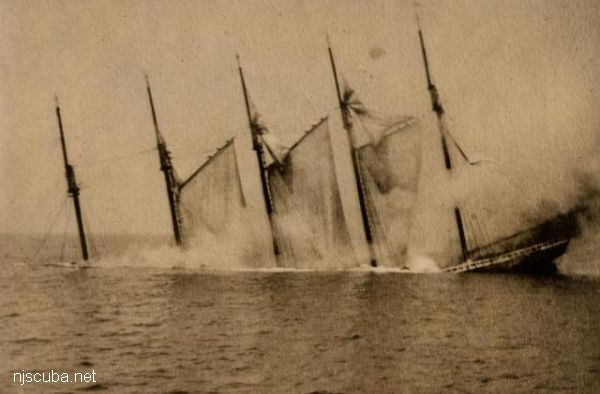
- Type:
- shipwreck, schooner, USA
- Built:
- 1904, Deering & Donnell, Bath ME USA
- Specs:
- ( 259 x 45 ft ) 2088 gross tons, 10 crew
- Sunk:
- Wednesday August 14, 1918
shelled by U-117 - no casualties - Depth:
- 60 ft
low debris field mostly buried in the sand
More: Dorothy B Barrett ...
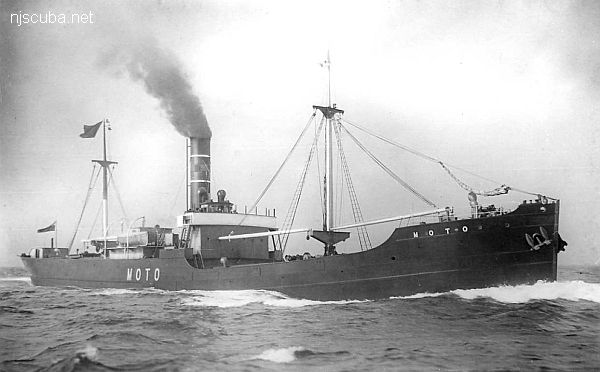
- Type:
- shipwreck, tanker, England
- Built:
- 1913, England
- Specs:
- ( 279 x 40 ft ) 1918 gross tons, 28 crew
- Sunk:
- Sunday April 30, 1917
collision with steamer Harlem - no casualties - Depth:
- 185 ft
More: Durley Chine ...
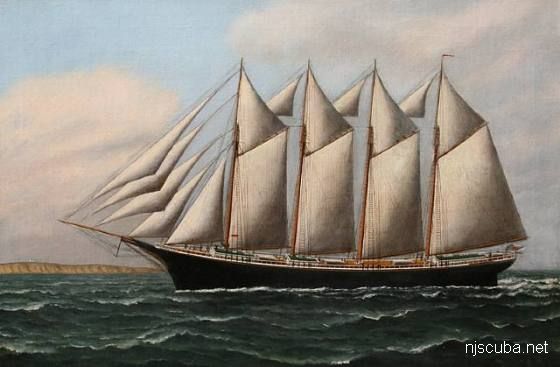
- Type:
- shipwreck, schooner, USA
- Built:
- 1904, Cobb Butler & Co, Rockland ME USA
- Specs:
- ( 228 x 43 ft ) 1791 gross tons
- Sunk:
- Sunday June 2, 1918
bombed by U-151 - no casualties - Depth:
- 185 ft
More: Edward H Cole ...
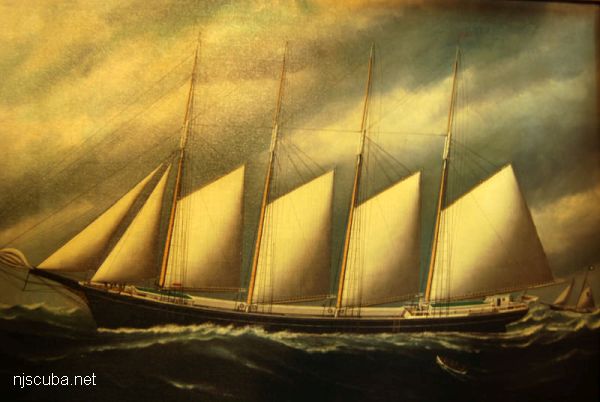
- Type:
- shipwreck, schooner, USA
- Built:
- 1902, William Rogers & Son, Bath Me USA
- Specs:
- ( 168 x 36 ft ) 599 gross tons, 8+ passengers & crew
- Sunk:
- Sunday June 2, 1918
collision with liner Prinz Oskar ( 1090 tons) - no casualties - Depth:
- 110 ft
More: City of Georgetown ...
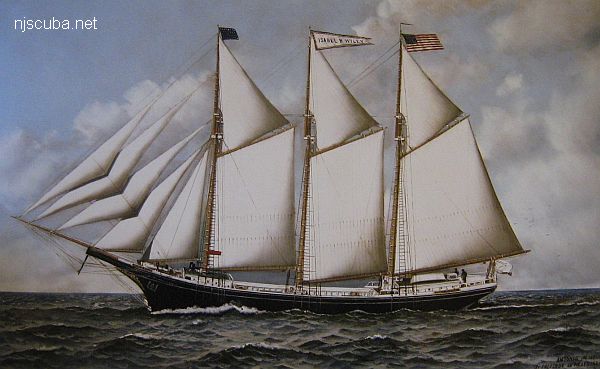
- Type:
- shipwreck, schooner, USA
- Built:
- 1901, Goss & Sawyer, Rockland Me USA
- Specs:
- ( 226 x 43 ft ) 1778 gross tons
- Sunk:
- Sunday June 2, 1918
bombed by U-151 - no casualties - Depth:
- 200 ft
More: Isabel B Wiley ...
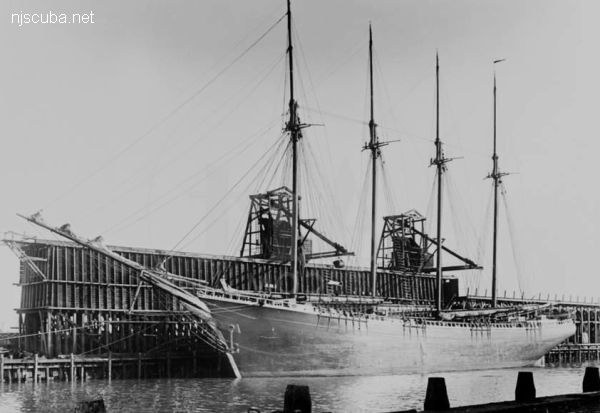
- Type:
- shipwreck, schooner, USA
- Built:
- 1901, Cobb Butler & Co, Rockland ME USA
- Specs:
- ( 226 x 43 ft ) 1778 gross tons
- Sunk:
- Sunday June 2, 1918
bombed by U-151 - no casualties - Depth:
- 200 ft
More: Jacob M Haskell ...
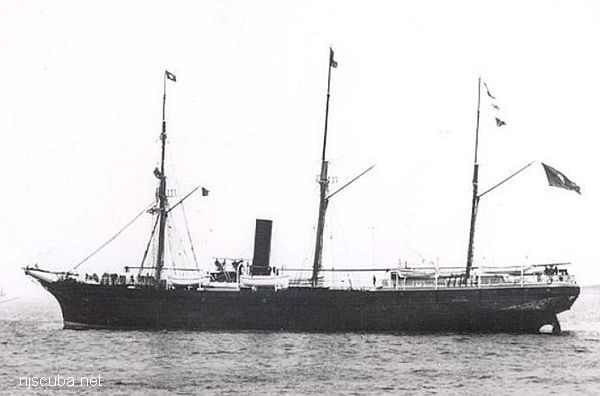
- Type:
- shipwreck, steamer, Spain
- Name:
- Vizcaya is a Basque province in northern Spain. The Basques are a fiercely independent seafaring people of unknown origin.
- Built:
- 1872, England, as Santander
- Specs:
- ( 287 x 38 ft ) 2458 gross tons, 103 passengers & crew
- Sunk:
- Saturday October 30, 1890
collision with schooner Cornelius Hargraves - 60 casualties - Depth:
- 80 ft
More: Vizcaya ...