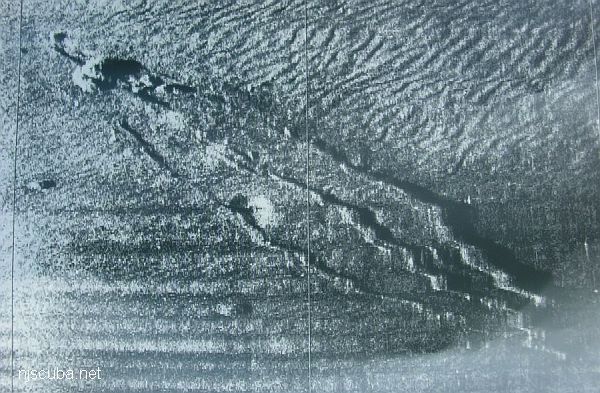
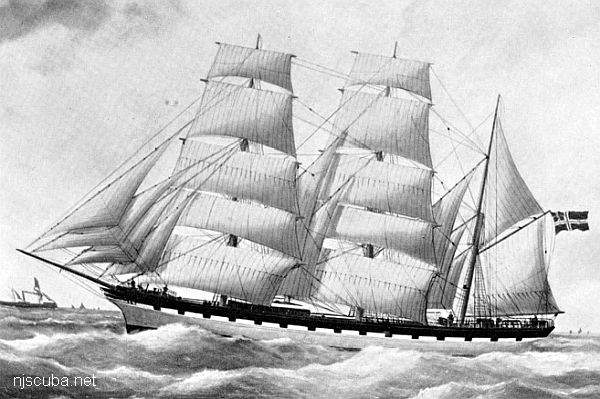
- Type:
- shipwreck, schooner barge ( originally a bark )
- Built:
- 1876 as Parknook
- Specs:
- ( 199 x 32 ft ) 793 tons
- Sunk:
- Saturday September 12, 1931
foundered - GPS:
- 40°25.374' -73°52.828' (AWOIS 2013)
- Depth:
- 60 ft
More: Cecilia M. Dunlap ...
More: Cecilia M. Dunlap ...
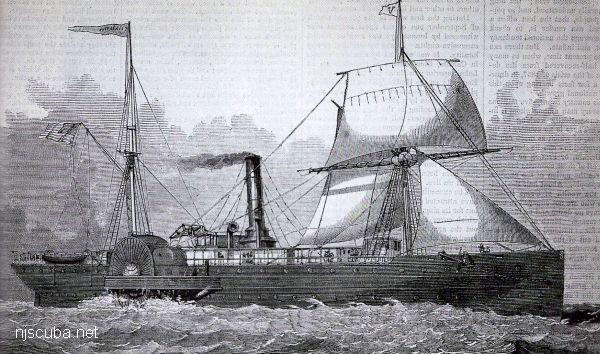
More: Champion ...
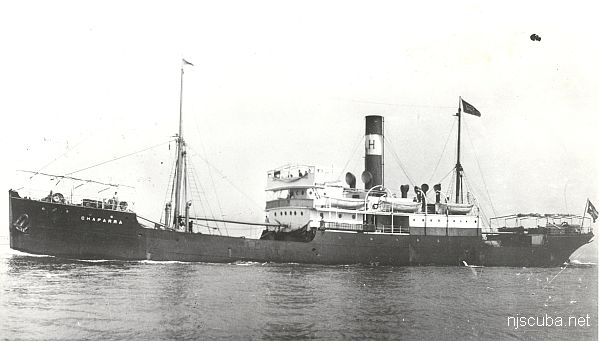
More: Chaparra ...
More: Charlemagne Tower ...
More: Charles Dunlap ...
Chauncy Jerome
More: Chauncey Jerome ...
More: Chesapeake ...
The "China Junk Wreck" by Townsend inlet rises up to 15 ft. What you can see is a couple of boilers and a debris field. To dive it you must hit the tide just right. On a good day, you can see 15-20 ft. A good tog spearfishing site.
More: China Junk Wreck ...
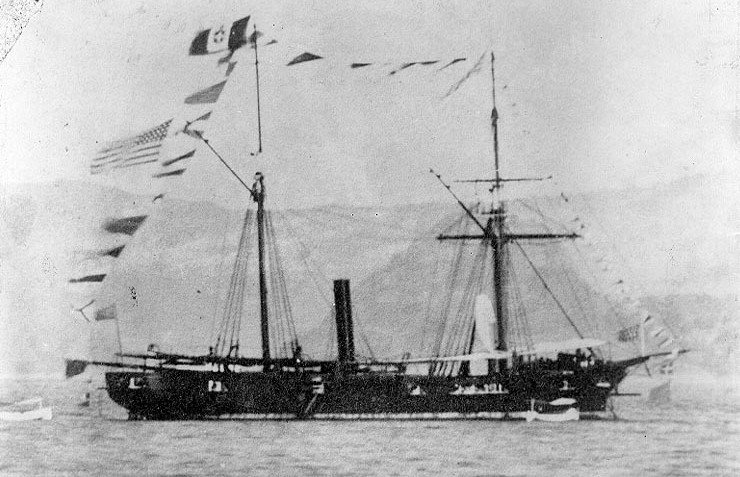
The "China Wreck" is the partial remains of a late 19th-century wooden sailing ship, with a cargo of china plates and cups, and miscellaneous articles. This site is believed to be the wreck of the D.H. Bills, a 158'-long wooden-hulled barkentine topsail schooner that sank with a cargo of British-made earthenware during a storm in March 1880.
More: China Wreck ...
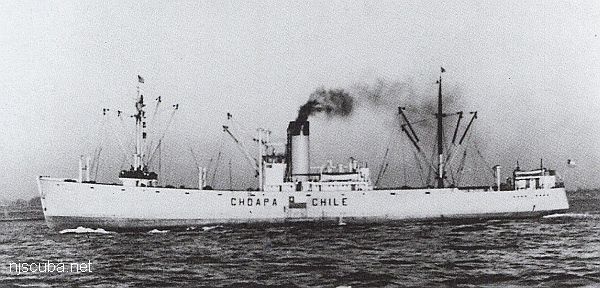
More: Choapa ...