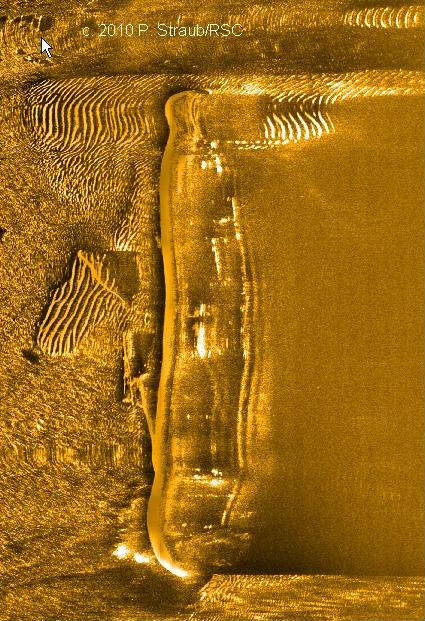
I don't know the reason for this offshore barge's name, other than it might well be the real one. Nevertheless, this wood barge, sometimes called a drydock lies in 120+ of water and is usually a very good lobster dive, albeit a deeper one. Bottom visibility is often cloudy to poor. It's not the best bottom conditions here, but a careful and advanced certified diver can bring home a lot of lobsters for dinner with a dive here. This spot isn't frequently dived.
This wreck got its name from the first few divers to get there, who struck it rich in lobsters in its wooden ribs and decking. The wreckage is very well spread out in several lines or walls, with decking off to one side. Near the bow, an overturned piece of decking is home to ling and blackfish. Off to the side lie the winch and small bits of machinery.
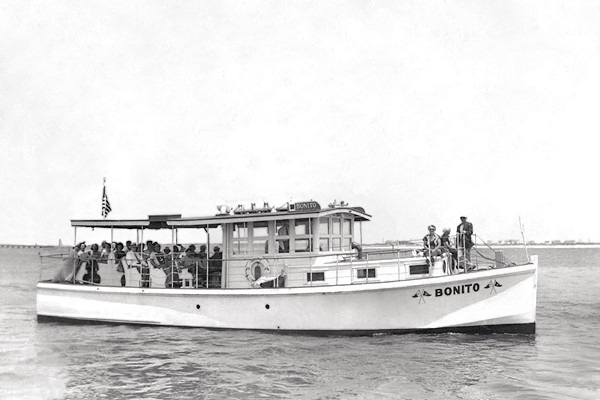
The Bonito was sunk as a "fish haven", an artificial reef in modern parlance. I'm sure there is nothing left of the wooden hull, and anything else has long since disappeared into the sand, but it is interesting for being one of the earliest documented reefs.
Division of Fish & Wildlife P.O. Box 400 Trenton, NJ 08625-0400 walk-in at 501 E. State St., 3rd Floor Director: 609-292-0891 General information: 609-292-2965 njwildlife@nac.net