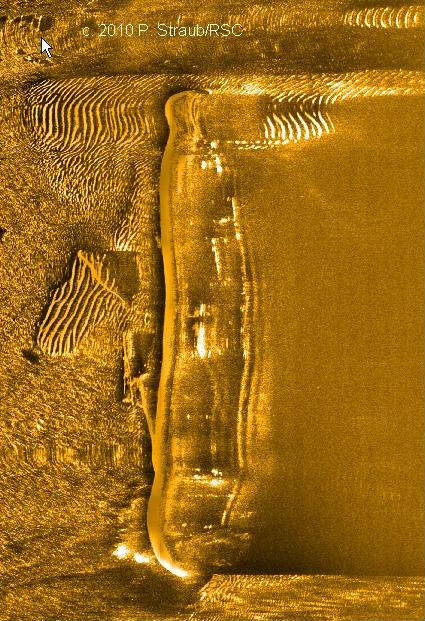
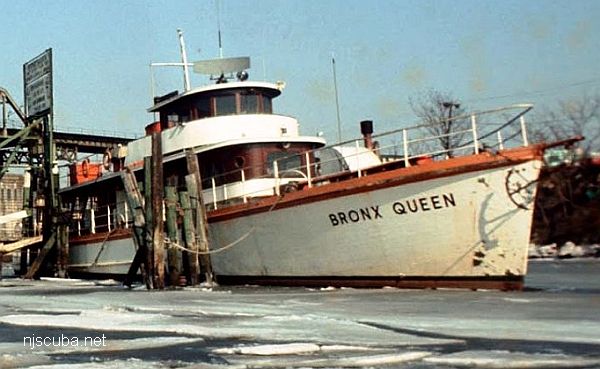
I don't know the reason for this offshore barge's name, other than it might well be the real one. Nevertheless, this wood barge, sometimes called a drydock lies in 120+ of water and is usually a very good lobster dive, albeit a deeper one. Bottom visibility is often cloudy to poor. It's not the best bottom conditions here, but a careful and advanced certified diver can bring home a lot of lobsters for dinner with a dive here. This spot isn't frequently dived.
This wreck got its name from the first few divers to get there, who struck it rich in lobsters in its wooden ribs and decking. The wreckage is very well spread out in several lines or walls, with decking off to one side. Near the bow, an overturned piece of decking is home to ling and blackfish. Off to the side lie the winch and small bits of machinery.
The Mullica River Shipwrecks and the Revolutionary War
reprinted from Hidden History of Maritime New Jersey Steve Nagiewicz
New Jersey has commonly been known as the "Crossroads of the American Revolution." So many of the major Revolutionary War battles were fought here at places that jump off the pages of our history textbooks, like the Battles of Monmouth, Princeton, and Trenton and, of course, the iconic Delaware Crossing on Christmas Day by General George Washington in 1776. Washington and his main army, it seems, had spent more time in New Jersey than any other place. Of course, New Jersey's geographic position between New York and Philadelphia was a large part of that "Crossroads" title. Not surprisingly, the ocean provided another type of crossroad - one that was faster, more direct, and with the ability to send large amounts of supplies and troops by sea and along our coastline.