Long Island West Dive Sites (1/10)
Long Island - Central Chart
- 3 Sisters
- 3/4 Tug
- 59-Pounder
- Acara
- Across
- Arnoff
- Arundo
- Asfalto
- Ayuruoca
- BA Wreck
- Balaena
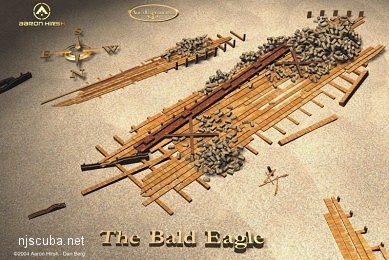
- Bald Eagle
- USS Benson
- Beth Dee Bob
- Blue Boy
- Burnside
- Catamount
- Choapa
- coal (Lido)
- Coastwise
- Continent
- Dodger
- Dragger
- Drumelzier
- drydock
- Edwin Duke / Stone Barge
- dump
- East Rockaway Inlet
- Eureka
- Fire Island Inlet
- Gate City
- Gluckauf
- I.P. Goulandris
- Gypsy
- Happy Days
- Harvey's Schooner
- Howard
- Hylton Castle
- Iberia
- Immaculata
- Irma C
- Jones Inlet
- Jones Tug
- Kenosha
- Kismet Artificial Reef
- Larsen
- Linda
- Lizzie D
- Margaret
- R.C. Mohawk
- Moriches Inlet
- Old Yankee
- Oregon
- Pipe Barge
- Ponquogue Bridge
- Ruth Shaw
- Reggie
- Rockaway Belle
- Roda
- USS San Diego
- SC-209
- Sea Wolf
- Shinnecock Inlet
- Sommerstad
- Steel Wreck
- Stolt Dagali
- USS Tarantula
- Train Wheel
- Valerie E
- Wolcott
- Yankee (G+D)
- Yellowbar Artificial Reef
More: Long Island Central Dive Sites Chart ...
- Depth:
- 110 ft
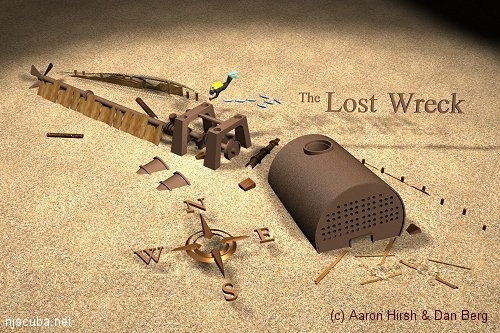
This unidentified wood wreck sits in 110 feet of water 17 miles out of Fire Island Inlet. The wreck was found by Captain Jay Porter the wreck was apparently named for the weight of a large codfish caught on the site. The wreck's wooden ribs only protrude a foot or so out of the sand but divers report that the site is excellent for catching large lobsters. A few years ago Captain Billy DeMarigny found the ship's bell. Unfortunately, no name was on it.
More: 59-Pounder ...
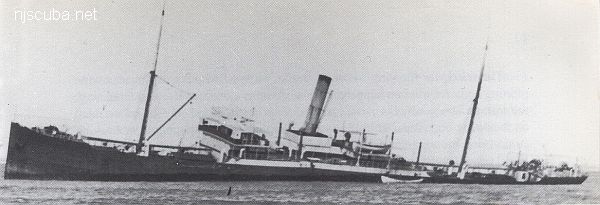
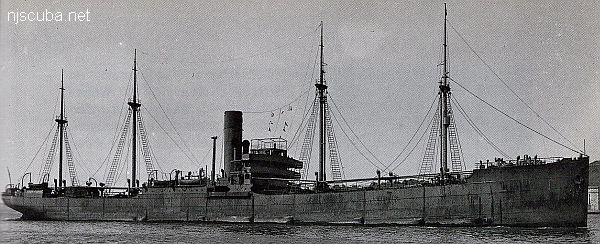
- Type:
- shipwreck, freighter, England
- Built:
- 1898, England
- Specs:
- ( 380 x 47 ft ) 4193 gross tons
- Sunk:
- March 1, 1902; ran aground in storm - no casualties
- Depth:
- 25 ft
The Acara lies 1,500 to 1,800 ft offshore, in 25 ft of water. She is quite broken up, with wreckage spread over a wide area. Still, there are one or two sections with 10 feet or so of relief. Brass fittings and other artifacts are still being found.
More: Acara ...
- Type:
- shipwreck, sailing ship, Italy
- Specs:
- 566 tons
- Sunk:
- March 4, 1881; ran aground in storm - 1 survivor
- Depth:
- 25 ft
Also known as the Italian Wreck, the Ajace was sunk at 4:00 AM on March 4, 1881. At the time, she was carrying a small cargo of scrap railroad iron and 2,040 empty petroleum barrels. While bound for New York from Belgium, the Ajace was caught in one of the worst storms of the year and ran aground off Rockaway beach. Many sources report that Captain F. Morice, seeing that all hope was lost, opened his private supply of brandy and shared it with his crew. Soon after, the crew became badly beaten from the pounding of the waves and drunk from the brandy.
More: Ajace ...
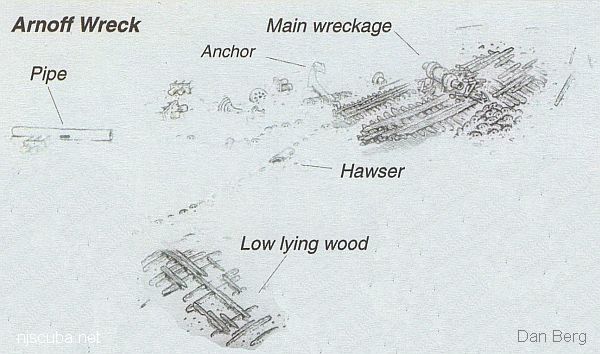
- Type:
- shipwreck, schooner barge
- Specs:
- ( 200 ft est.)
- Sunk:
- late 1800s ?
- Depth:
- 80 ft
More: Arnoff ...
- Type:
- shipwreck, schooner barge
- Specs:
- ( 330 x 40 ft )
- Sunk:
- March 12, 1932
- Depth:
- 95 ft
Capt. Mick Trzaska of the dive boat CRT II also calls this the "Bomb Wreck", since it once produced a live aircraft-type explosive. * A diver had sent it up with a lift bag thinking it was a champagne bottle! How it got there is anyone's guess.
* Probably a World War II hedgehog.
More: Asfalto ...
Atlantic Beach Artificial Reef
3.0 nautical miles south of Atlantic Beach, 0.64 sq miles
Depth: 55 - 64 ft
More: Atlantic Beach Artificial Reef ...