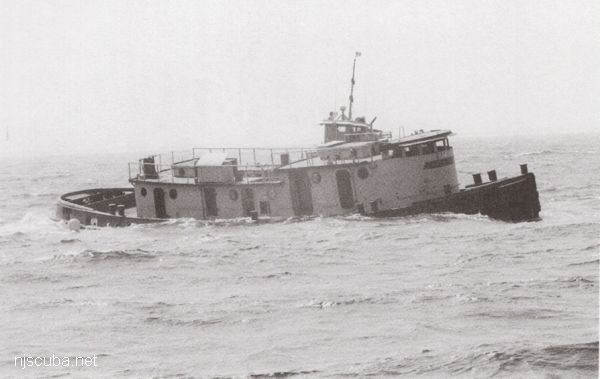
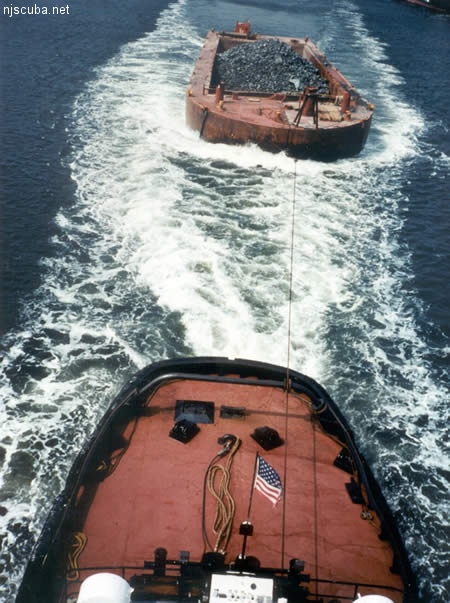
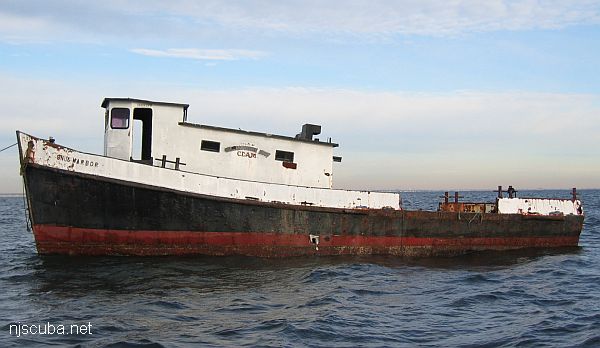
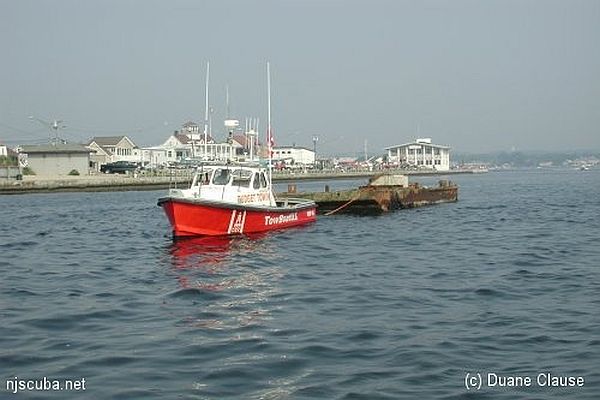
All manner of concrete, steel, and stone rubble from dredging, demolition projects, and other construction is used as artificial reef materials. This material is generally available at very low cost or free from construction companies who are more than happy to get rid of it. Transportation costs determine where this material is used by the Reef Program.
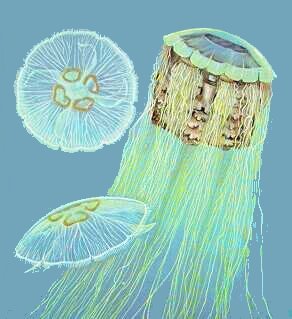
Moon Jellies Aurelia aurita (left) and Red Jelly Cyanea capillata (right)
Jellyfishes are free-swimming relatives of corals, anemones, and hydroids. In fact, in many cases, they are the same species, just in a different stage of life! Not all medusas ( as jellyfishes are called ) have a corresponding polyp stage, and likewise, not all polyps have a corresponding medusa stage, but most alternate generations in each form. Small jellies ( up to 1" across ) are most likely the medusa stage of some hydroid, while large jellies are usually the dominant stage of a species in which the polyp stage is almost absent. Even anemones have a periodic medusa stage, although it is infrequently observed.
Although jellyfish can swim slowly, they are largely at the mercy of the tides and currents, and at times large numbers are concentrated into bays and may be stranded on beaches.