Artificial Reefs (14/28)

Artificial Reefs

 1  13 14 15  28  

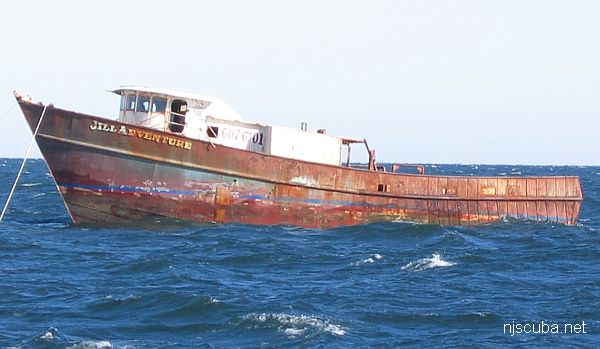
Jessie C reef
Type:
artificial reef, crew boat
Built:
1968, New Orleans LA USA
Specs:
( 55 ft )
Sponsor:
Caldwell's Diving Company
Sunk:
Wednesday February 12, 1997 - Little Egg Artificial Reef
GPS:
39°28.501' -74°11.631'


Tethered to the Cape Straight for sinking
Type:
artificial reef, buoy tender
Built:
1969
Specs:
( 46' x 16' )
Sponsor:
USCG, New Jersey State Police
Sunk:
Thursday September 9, 1993 - Cape May Artificial Reef
GPS:
38°51.106' -74°42.170'

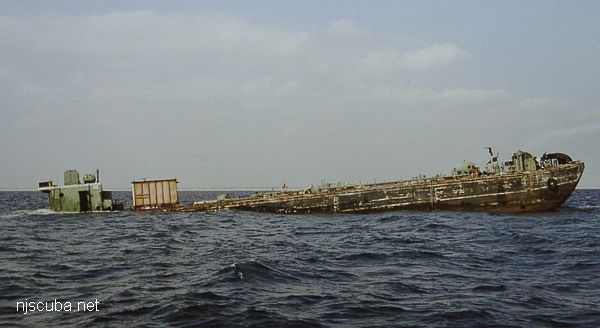
Kathy & Maria Barges reef
Type:
artificial reef, barge, canal ( cut in two )
Specs:
( 32 x 13 ft each piece )
Sponsor:
Ocean City Marlin & Tuna Club, Cape May County Party & Charter Boat Association
Sunk:
Wednesday/Thursday June 22/23, 1997 - Ocean City Artificial Reef
GPS:
Kathy: 39°10.719' -74°33.259'
GPS:
Maria: 39°10.814' -74°33.044'


Marine Life Colonization of Experimental
Reef Habitat in Temperate Ocean Waters of New Jersey

By Bill Figley
January 2003

This investigation was partially funded by the Federal Aid to Sportfish Restoration Program

for the original paper, see here.


ABSTRACT

A biological colonization study of experimental reef habitats in temperate ocean waters off New Jersey was conducted over a 96-month period. A total of 145 different taxa of 9 phyla were identified within the experimental units, including 42 arthropoda, 37 annelida and 43 molluska. Individual organisms had an estimated mean abundance of 534,566 organisms/m2 of habitat footprint, including 105 fish, 4,639 crabs and 14 lobsters. Colonial organisms covered 87,554 cm2 of the habitat surface area. Mean total biomass of the organisms inhabiting the units was 84,175 g/m2, with blue mussel comprising 63 percent of the total. The carrying capacity of the experimental habitat for all species of marine life was about 152,801 g/m2. Predation accounted for an 80 percent reduction of biomass between surfaces exposed and not exposed to predators. There were no statistically significant differences in biological colonization rates of sessile epibenthos on concrete, rock, steel and rubber substrates. On an equivalent area basis, the biomass enhancement ratios of the experimental reef habitats over surf clam-dominated and polychaete/crustacean-dominated sand bottom habitats ranged from 35 to 1,124 and 2,773 to 3,200 times, respectively. A simplified, three-tiered reef habitat food chain consisted of 84.5 percent sessile/sedentary invertebrates, 11.0 percent mobile invertebrates and 4.5 percent juvenile and adult fish. The results suggest that complex reef habitats provide both attachment surfaces and refuge habitats that support a diverse and abundant marine life community.