
Vizcaya
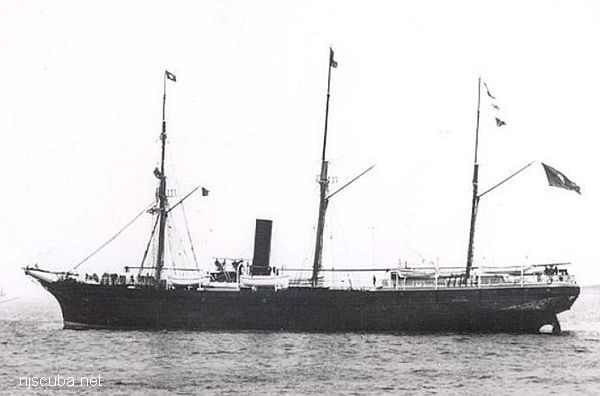
- Type:
- shipwreck, steamer, Spain
- Name:
- Vizcaya is a Basque province in northern Spain. The Basques are a fiercely independent seafaring people of unknown origin.
- Built:
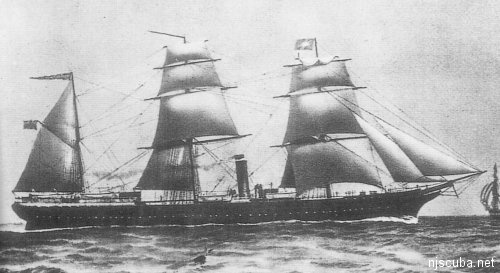
- 1872, England, as Santander
- Specs:
- ( 287 x 38 ft ) 2458 gross tons, 103 passengers & crew
- Sunk:
- Saturday October 30, 1890
collision with schooner Cornelius Hargraves - 60 casualties - Depth:
- 80 ft

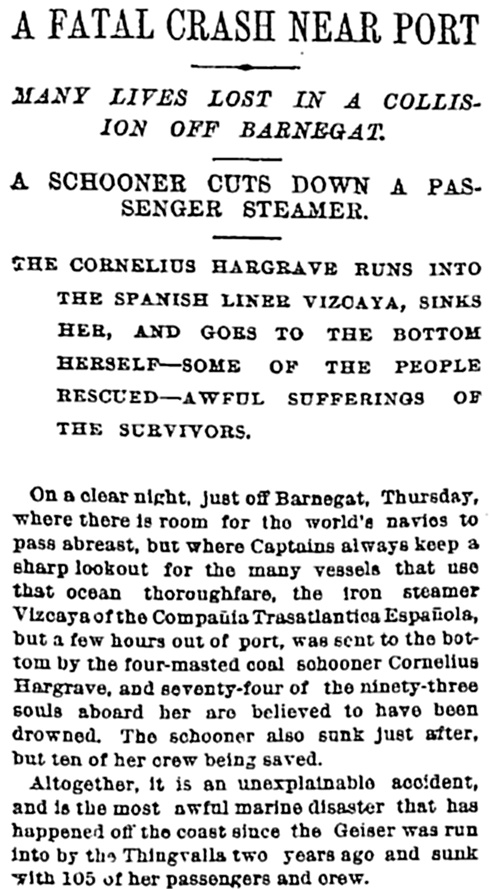
The sinking of the Vizcaya was truly a maritime tragedy. The coal schooner Cornelius Hargraves was apparently under full sail at night with no running lights when it struck the Vizcaya, almost cutting the steamer in half. The Hargrave's bowsprit then raked across the Vizcaya's deck, demolishing the lifeboats and everything else in its path. The Vizcaya sank in minutes, and soon afterward the Hargraves settled to the bottom nearby.
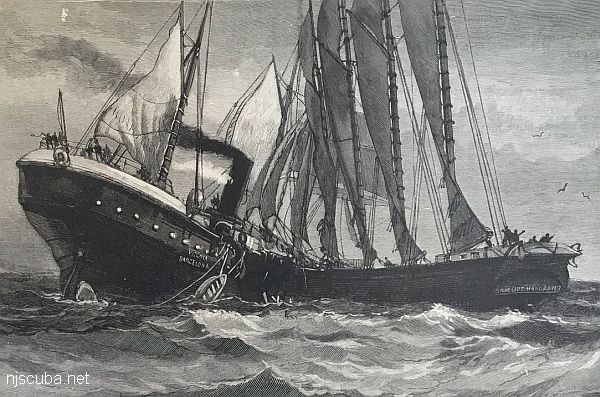
Survivors of the Cornelius Hargraves picked up several from the Vizcaya in their lifeboat, while a few survived by clinging to the protruding mast tops or were picked up by passing ships. None of the women and children aboard the Vizcaya survived.
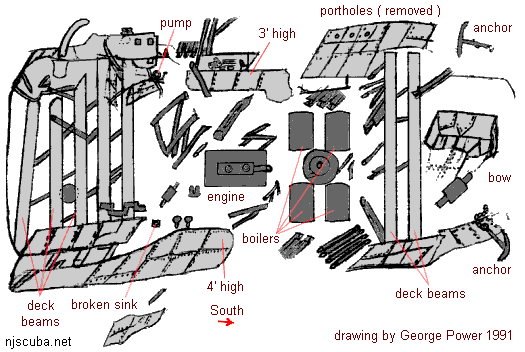
Today, the Vizcaya is a large low debris field, the highest points being the boilers and engine. It occasionally produces artifacts and is known as a good lobster wreck. I am told that the deck beams in the drawing below are greatly exaggerated and that the boilers are much bigger than shown.
Barnegat Dive Sites, Dive Sites, New Jersey Dive Sites, Steamers,
- Absecon Inlet
- Adriatic
- USS Akron
- Almirante
- Anastasia
- Astra
- Barnegat Inlet
- Brigantine Beach Wreck
- boiler wreck
- Bonanza
- Brick barge
- Brigantine Inlet
- Cornelius Grinnell
- Caddo
- Capt Smitty
- Cassandra
- Charlemagne Tower
- Chaparra
- Chesapeake
- clam boat
- Creole
- Delaware
- dredge
- Duncan
- Emerald / USS Hibiscus
- Francis A Perkins
- William R Farrell
- FF Clain
- Gassoon
- Gory Wreck
- Glory Wreck
- Granite Wreck
- Great Isaac
- Gulftrade (stern)
- Gulftrade (bow)
- Hankins (Big)
- Hankins (Offshore)
- Hankins 3
- Cornelius Hargraves
- Harry Rush
- Hornet
- Ida K
- Inshore barge/tug
- Irene/Truro
- John Minturn
- John Marvin
- Kennebec
- Lake Frampton
- Lake Allure
- Lana Carol
- Lavallette Wreck
- Leon Walter
- Lillian
- Manhattan
- Maurice Tracy
- Mediator
- Meta
- Middle Barge
- Mohawk
- EF Moran
- Mullica River Wrecks
- NJ Aquarium
- Northern 29
- NW Barges
- Offshore Tug
- Oklahoma
- Patrice McAllister
- Park City
- Peerless
- Persephone
- Remedios Pascual
- Reliable
- Ridge Schooner
- Riggy
- RP Resor
- Rump
- Southern Lillian
- Sachem
- Salem
- San Saba
- Sea Hag
- Seaside Crane Barge
- Shookus
- Simala
- Sumner
- Southwest Mohawk
- Thurmond
- Tolten
- Troop Carrier
- Vivian
- Vizcaya
- Yellow Flag
- ZPG-3W
More: Barnegat Dive Sites Chart ...
- Type:
- shipwreck, schooner, USA
- Built:
- 1889, H.M. Bean, Camden ME, USA
- Specs:
- ( 211 x 45 ft ) 1332 gross tons, 10 crew
- Sunk:
- Saturday October 30, 1890
collision with steamer Vizcaya - no casualties - Depth:
- 80 ft
More: Cornelius Hargraves ...
Questions or Inquiries?
Just want to say Hello? Sign the .