Overview of Fishes
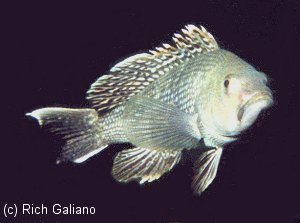
A fish is defined as a limbless aquatic vertebrate animal with fins and internal gills. There are three living classes of fish:
- Primitive jawless fishes - class Agnatha
- Cartilaginous fishes - class Chondrichthyes
- Bony fishes - class Osteichthyes
These groups, although quite different from one another anatomically, have certain common features related to their common evolutionary origins or to their aquatic way of life. Fish were the earliest vertebrates, and presumably evolved from a group of aquatic lower chordates; the terrestrial vertebrates evolved from fishes.

There are over 20,000 living species of fish. They range in size from the 1/2 -inch goby of the Philippines to the 45-ft whale shark. Many are brightly colored, and many have shapes and patterns that serve as camouflage. They are found in all marine, fresh, and brackish waters throughout the world and at all depths. Members of different species of fish tolerate water temperatures ranging from freezing to over 100°F. Most are confined either to saltwater or to freshwater, but some are physiologically adapted to moving from one to the other. A number of fishes that are born in freshwater spend their adult lives in the ocean, returning to their birthplace to spawn; the reverse of this migration occurs in some fishes born in the ocean. Many fishes stay in tightly organized groups, called schools; others are solitary and congregate only for feeding and spawning. Fish may be carnivorous, herbivorous, or omnivorous. Some fish are scavengers on lake or ocean bottoms. Fish are a major source of human food as well as of oil, fertilizer, and feed for domestic animals.
A number of aquatic invertebrate animals and groups have common names that include the term fish ( for example, crayfish and shellfish ), but these do not resemble and are not related to true fishes. Furthermore, there are members of the terrestrial vertebrate classes, such as whales and sea snakes, that have adopted an aquatic way of life; these may superficially resemble fishes and are sometimes erroneously called fishes, but they are air-breathers, and their anatomical structure reveals their relationship to land animals.
Characteristic Anatomical Features

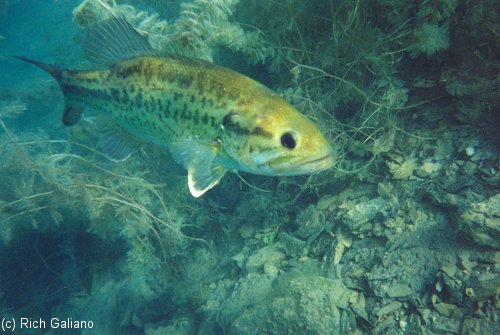
A typical fish is torpedo-shaped, with a head containing a brain and sensory organs, a trunk with a muscular wall surrounding a cavity containing the internal organs, and a muscular post-anal tail. Most fish propel themselves through the water by weaving movements of their bodies and control their direction by means of the fins. All have skins covered with slimy glandular secretions that decrease friction with the water. In addition, nearly all have scales, which together with the secretions form a nearly waterproof coating. All fishes have a lateral line system of sensory organs for detecting pressure changes in the water.
All fishes have water-breathing organs called gills located in passages leading from the throat, or pharynx, to the exterior; a few fishes also have air-breathing lungs as an additional means of respiration. In all but the most primitive class, the gill passages are supported by skeletal structures called gill arches. Plankton-feeding fish have structures called gill rakers attached to the gill arches; these strain minute organisms from the water as it passes out of the pharynx. Fish breathe by taking water into the mouth and forcing it out through the gill passages; as the water passes over the thin-walled gills, dissolved oxygen diffuses into the gill capillaries and carbon dioxide diffuses out. The circulatory system is closed, and the heart is two-chambered; the blood is red. With few exceptions, fish are cold-blooded; that is, they cannot regulate their body temperature, which is the same as that of the environment.

Methods of reproduction in fishes are widely varied. Sharks have internal fertilization, and most give birth to live young. Those that lay eggs produce large ones with tough shells. Since embryonic development is well-protected in these fish, they produce a relatively small number of young, only seven or eight at a time in some species. A few of the bony fishes, including some aquarium species, are livebearers, but most lay small, unprotected eggs that are fertilized after deposition in water. In most marine species the eggs float freely in the currents, where they are eaten by other animals. An enormous number of eggs is, therefore, necessary to ensure the maturation of a few; in many species, a female produces as many as 5 million eggs in one spawn. The eggs of most marine fishes contain oil droplets that buoy them up, while those of most freshwater fishes are heavy, with sticky surfaces that adhere to objects in the water. Most freshwater species build nests for the protection of the eggs, and in some the adults guard the nests.
Types of Fishes
The Jawless Fishes
The primitive fishes of the class Agnatha lack jaws and the paired pelvic and pectoral fins characteristic of more advanced fishes.* This largely extinct class includes two living groups, the bloodsucking lampreys, and the scavenging hagfishes. Fishes of the extinct class Placodermi were the first vertebrates to develop jaws and paired fins. These fish had bony skeletons and were covered with bony armor. A branch of this group probably gave rise to the two main modern classes of fish, the cartilaginous fish, and the bony fish.
* Moray eels also lack such paired fins, but that does not make them related; in fact, they are much more advanced than the outwardly similar lampreys.
The Cartilaginous Fishes
The cartilaginous fishes ( sharks, rays, and chimeras) are distinguished from the bony fishes by their cartilage skeletons, by the absence of either a swim bladder or lungs, by the construction of their tail fins, and by the absence in most of a gill covering, or operculum. The skin of members of this group is covered with embedded toothlike structures called denticles, giving it a rough, sandpapery quality.

Sharks are a group of almost exclusively marine and predaceous fishes. There are about 250 species of sharks, ranging from the 2-foot pygmy shark to 50-foot giants. They are found in all seas but are most abundant in warm waters. Some may enter large rivers, and one ferocious freshwater species lives in Lake Nicaragua. Most are predatory, but the largest species, the whale shark and the basking shark are harmless plankton eaters.
Sharks are heavy fishes, possessing neither lungs nor swim bladders. Their skeletons are made of cartilage rather than bone, and this, along with large deposits of fat, partially solves their weight problem; nevertheless, most sharks must keep moving in order to breathe and to stay afloat. They are good swimmers; the widespread of the pectoral fins and the upward curve of the tail fin provide lift, and the sweeping movements of the tail provide drive. Their tough hides are studded with minute, tooth-like structures called denticles. Sharks have pointed snouts; their crescent-shaped mouths are set on the underside of the body and contain several rows of sharp, triangular teeth. They have respiratory organs called gills, usually five on each side, with individual gill slits opening on the body surface; these slits form a conspicuous row and lack the covering found over the gills of bony fishes. Like most fishes, sharks breathe by taking water in through the mouth and passing it out over the gills. Usually, there are two additional respiratory openings on the head, called spiracles. A shark's intestine has a unique spiral valve, which increases the area of absorption. Fertilization is internal in sharks; the male has paired organs called claspers for introducing sperm into the cloaca of the female. Members of most species bear live young, but a few of the smaller sharks lay eggs containing much yolk and enclosed in horny shells. Compared to bony fishes, sharks tend to mature later and reproduce slowly.
Shark meat is nutritious and is used for human food. In Asian cuisines a prized gelatinous soup is made from the fins of certain species; many of the estimated 100 million sharks landed annually are taken just for the fins. The flesh is also sold for poultry feed, and shark oils are used in industry; shark-liver oil was formerly used as a source of vitamin A. The rough skin is used as a sandpaper called shagreen, and tanned sharkskin is a durable leather.

Rays are extremely flat-bodied cartilaginous marine fish, related to sharks. The pectoral fins of most rays are developed into broad, flat, winglike appendages, attached all along the sides of the head; the animal swims by rippling movements of these wings. Most rays have slender whip-like tails. The eyes and spiracles are located on top of the head, the mouth and the gill slits on the underside. Many rays are bottom dwellers, lying like rugs on the seafloor; others inhabit the upper waters. Bottom-dwelling rays breathe by taking in water through the spiracles, rather than through the mouth as most fishes do, and passing it out through the gills. Rays feed on a variety of smaller animals; the heavy, rounded teeth of most species are adapted to crushing the shells of snails and clams.
The Bony Fishes
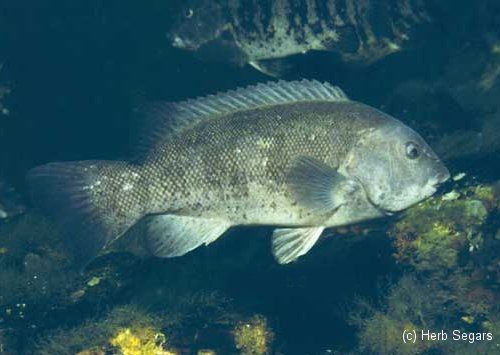
The bony fishes are distinguished from other living fishes by their bone skeletons and by the presence of either a swim bladder ( which functions as a float ) or, in a few fishes, lungs. The bony fishes are divided into two subclasses, the fleshy-finned fish and the ray-finned fish. The latter group includes over 95% of all living fish species.
The earliest bony fishes were fleshy-finned. They evolved during a period of widespread drought and stagnation and gave rise to the amphibians ( the first terrestrial vertebrates ) on the one hand and to the ray-finned fish on the other. The only surviving fleshy-finned fishes are the lungfishes and one species of coelacanth. These fishes retain some of the traits of ancestral bony fishes: fleshy fins with supporting bones ( precursors of the limbs of land vertebrates, ) internal nostrils, and lungs.
Ray-finned fishes, now predominant in both fresh and marine waters, represent an advanced adaptation of the bony fishes to strictly aquatic conditions; they are the most highly successful and diverse of the fishes. In nearly all of these fishes, the lung has evolved into a hydrostatic organ, the swim bladder. The fins in this group consist of a web of skin supported by horny rays. Each ray is moved by a set of muscles, giving the fin great flexibility. Most ray-finned fish have overlapping scales made of very thin layers of bone. Their skeletal structure is light but strong and most have excellent vision.

Compiled from various sources