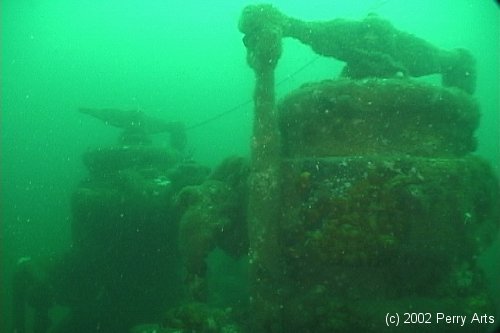
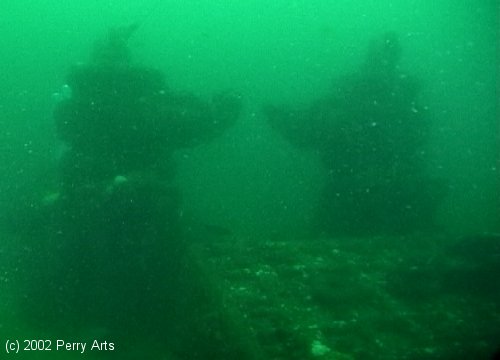
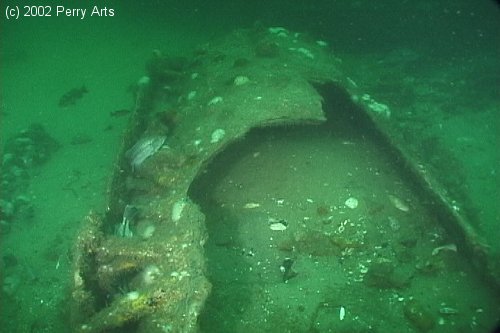
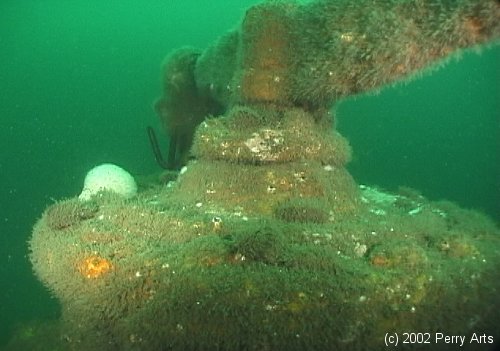
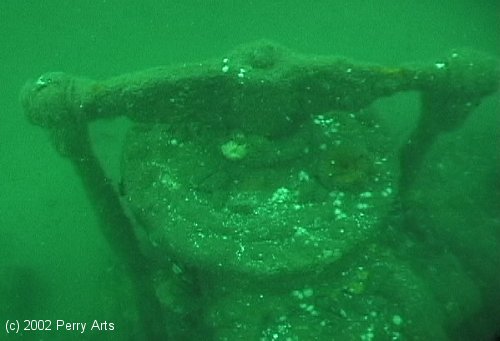
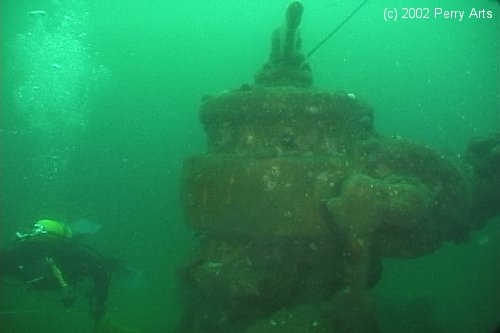
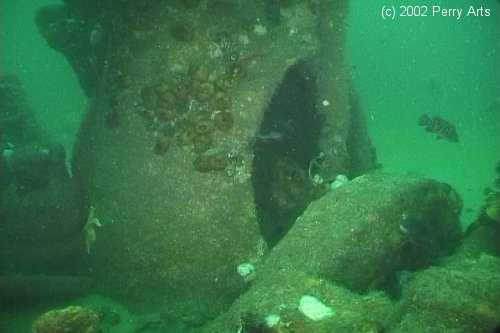
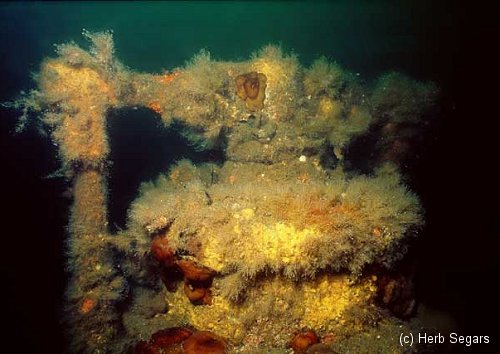
Unique along the entire coast, the twin steam engines of the Emerald pretty much clinch the identification of the wreck.The large box-like structure in the foreground is a condenser. Often, these old engines derived as much motive force from the vacuum draw of the condenser as from the steam pressure of the boilers. Some were even known as vacuum engines.The boilers lie in front of the condenser, and rather broken down. They are smaller than you would think - perhaps these were vacuum engines.The rocker arms atop the cylinders are also unique to the Emerald.Detail of the odd side-valve design of the starboard engine, another of the peculiarities of this wreck. The engines are mirror images of each other.The base of one of the engines, where it is linked to a large flywheel and the propeller shaft.
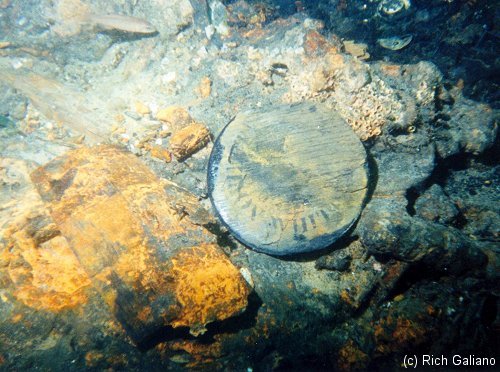
Back then many cargoes were shipped in barrels or smaller kegs. Here is the end of a small wooden keg, along with some staves. I can make out the word "WHIT(E)". The vessel's cargo included small barrels of cheese, which survives to this day as a foul-smelling white goo if you are unlucky enough to find any!
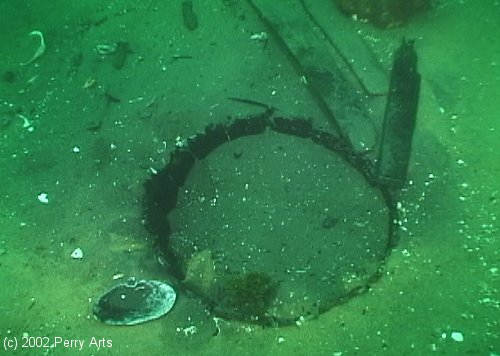
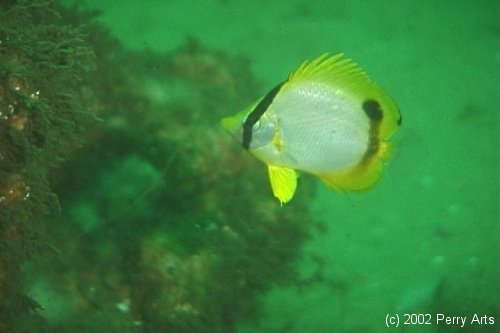
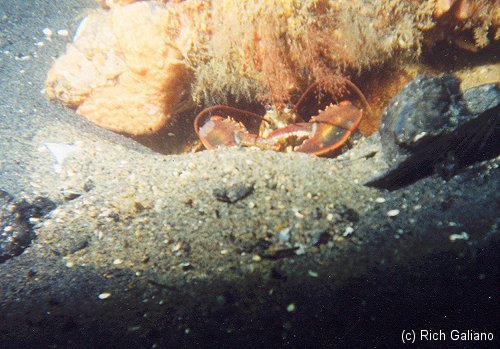
Here are the remains of a bigger barrel that once stood upright.A late-year Butterflyfish.A small lobster dug in under a piece of wreckage. There aren't too many on this site. The Emerald is known mainly as a digging wreck for artifact hunters.Once more, the distinctive engines
Surprisingly, of all the devices that make up an underwater diving kit, the last to be developed was a suitable air reservoir. Demand air valves ( regulators to you and me, ) masks, fins, snorkels, weights, even drysuits may be found in the historical record up to several hundred years ago, but because of material and manufacturing requirements, the high-capacity high-pressure portable air cylinder is a relatively recent development. ( Jacques Cousteau often gets credit for something he did not invent - the demand-valve regulator predates him considerably, although he did much to perfect its application to diving. )
Litigation has caused manufacturers to leave the market, and be replaced by others, who then left, and then others come back. From year to year, there's no telling what brand of tanks may be available, but the specs and recommendations below should apply to any.