
Salamanders

Salamander

many species

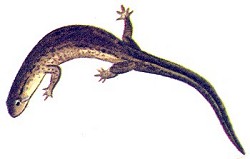
Salamanders are terrestrial as adults, but eggs and larvae are aquatic. Larvae have both gill slits and external gills. A few species are completely aquatic, retaining these features as adults. Some salamanders are boldly colored and patterned and easy to identify, but many are simply small and brown and very difficult to tell apart, like this one.
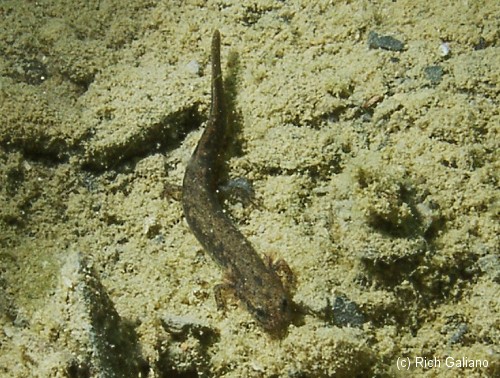
A tiny larval salamander

A tiny larval salamander at Dutch Springs. Possibly some kind of Dusky Salamander.


Homarus americanus

Size: to 36" and 45 lbs. (record)

Habitat: subtidal to the edge of the continental shelf, in any sheltered spot

Notes:

Lobsters differ from shrimps in having three pairs of clawed legs, the first with very large claws. Southern "Spiny Lobsters" are only distantly related; freshwater crayfish are closer. Lobsters, or "Bugs", are mainly nocturnal, and feed primarily on living or freshly killed food rather than scavenging on carrion, as was once thought. Although they are predominantly solitary creatures, lobsters do have a sort of social life amongst themselves. Males are more aggressive than females and will form pecking orders among individuals in an area. Female lobsters apparently seek the protection of a male when molting, then mate afterward. Lobsters shed their shells once or twice a year, depending mainly on the temperature.