
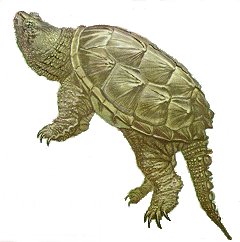
Snapping Turtle

Snapping Turtle

Chelydra serpentina

Size: to 15" (body)

Habitat: hides on the bottom in any type of water

Notes: Generally docile and easily approached in the water, but should be treated with respect for its powerful bite. This turtle can easily amputate a finger or toe and becomes pugnacious when landed. If you have the patience, try to see how long this turtle can go between breaths. A lot longer than you or me, that's for sure.
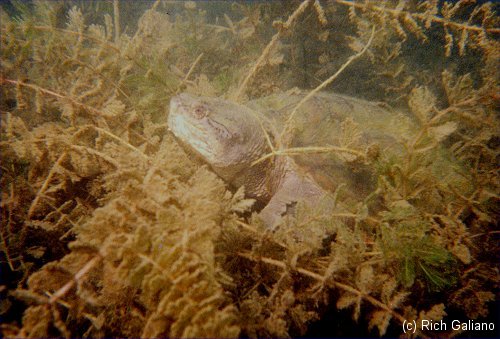
Snapping Turtle
In the water, these turtles are inoffensive, but don't tempt fate!
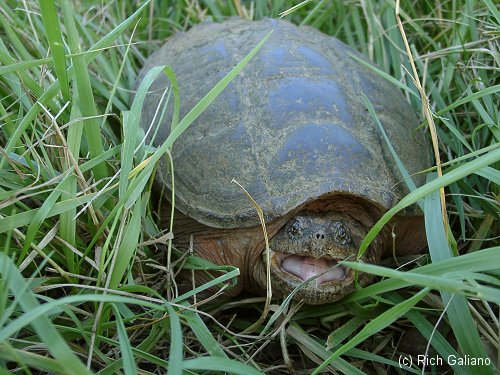
Snapping Turtle

On land is a different story. I pulled over and used a stick to push this nasty little guy off the highway. He was not the least bit appreciative, and snapped at me repeatedly - the long neck gives this turtle a very quick snake-like motion. Spring seems to be the season for Snapping Turtle wanderlust, and they turn up in the darndest places.

Purple Sea Urchin

Arbacia punctulata

Size: to 3"

Sea Urchins may be found on any solid structure, from tidal rocks to deep wrecks, although in our region they are more common in shallow estuarine waters than offshore.

This animal is related to the starfish, and shares many of its traits, with one exception. Starfish are predators, feeding upon clams and mussels, while these sea urchins are strict vegetarians. I once ordered Sea Urchin at a sushi bar, but I never even tasted it, it smelled so bad. Nonetheless, it is a delicacy in much of the far east. Unlike tropical black urchins, our northern ones are not poisonous, and the spines are not even particularly sharp.