
JJ DPC-19
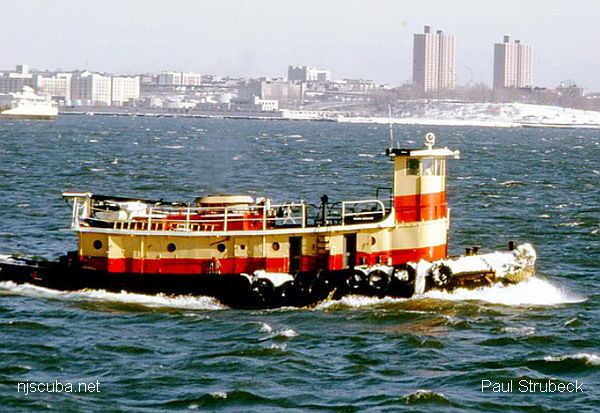
- Type:
- artificial reef, tugboat
- Built:
- 1943, Lawley & Sons, Neponset MA USA
- Specs:
- ( 86 x 24 ft ) 146 GT, 9 crew
- Sunk:
- Friday November 7, 2003 - Moriches Artificial Reef
- Depth:
- GPS:
- 40°43.470' -72°46.489'
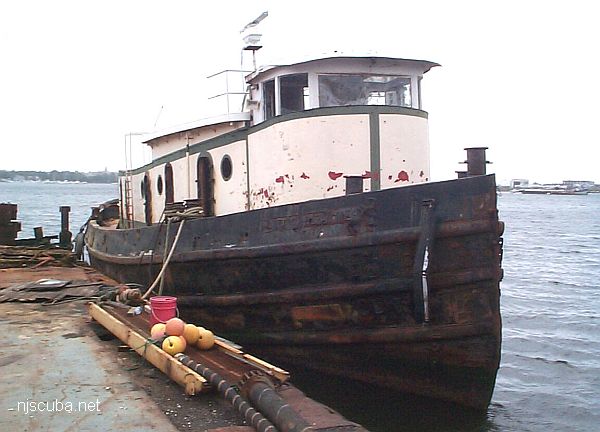
DPC-19
Built in 1943, by George Lawley and Son of Neponset, Massachusetts (hull #1307) as the DPC-19 for the United States Defense Plant Corporation. The tug was transferred to the United States War Shipping Administration, where the tug was re-designated as the WSA-2. In 1949, the tug was acquired by the Kehoe Transportation Company of New York, New York, where she was renamed Clayton P. Kehoe. In 1949, the tug was acquired by the Lakes Tankers Corporation of New York, New York, a division of the National Marine Service of St. Louis, Missouri, where she was renamed Canal Cities.
In 1972, she was acquired by the Reinauer Transportation Company of Staten Island, New York, where she was renamed the Curtis Reinauer. In 1988, the tug was acquired by J.K. Marine Incorporated of New York, New York, where she was renamed as the K-2. In 1999, the tug was sold, and reefed under the name "JJ".
tugboatinformation.com
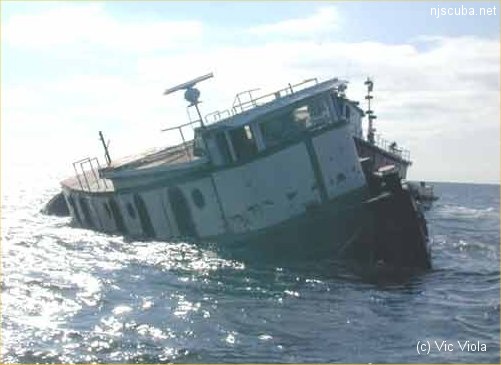
DPC-19 had her profile altered at some point, DPC boats did not have moveable pilot houses. The modification was done for operation on canals and inland waterways.
Artificial Reef Sites, Artificial Reefs, Barges, Military Reefs, Moriches Artificial Reef, New York Artificial Reef Sites, New York Artificial Reefs, Tugboats,
Moriches Artificial Reef (historical)
2.4 nautical miles south of Moriches Inlet, 0.54 sq miles
Depth: 70 - 75 ft
More: Moriches Artificial Reef ...
Long Island - East Chart
- 3/4 Tug
- Amsterdam
- Andrea Doria
- Atlantic
- USS Baldwin
- Barataria
- USS Bass
- Black Point
- Burnside
- Coastwise
- Coimbra
- HMS Culloden
- Defender
- Dodger
- John A. Downs
- Essex
- USS G-1
- USS G-2
- Gate City
- Gluckauf
- Grecian
- Horton's Point / Commodore
- Hylton Castle
- John C. Fitzpatrick
- Kenosha
- Kismet Artificial Reef
- USS L-8
- Larchmont
- Lexington
- Lightburne
- Linda
- Maiden Creek
- Malden
- Mattituck Inlet
- Mattituck Artificial Reef
- Montauk Inlet
- Moriches Inlet
- Mount Sinai Harbor
- Myronus
- Norness
- USS Ohio
- Old Yankee
- Olinda
- Oregon
- Panther
- Pinnacle
- Ponquogue Bridge
- Port Jefferson Artificial Reef
- Port Jefferson Inlet
- Puszta
- Reggie
- Republic
- USS San Diego
- Sea Wolf
- Sebastian
- Shinnecock Inlet
- Shoreham Nuclear Power Plant
- Smithtown Artificial Reef
- Snug Harbor
- USS Spikefish
- Suffolk
- USS Tarantula
- Tennyson
- Thames
- Thelma Phoebe
- U-853
- Volund
- Block Island Wind Farm
- Wolcott
More: Long Island East Dive Sites Chart ...
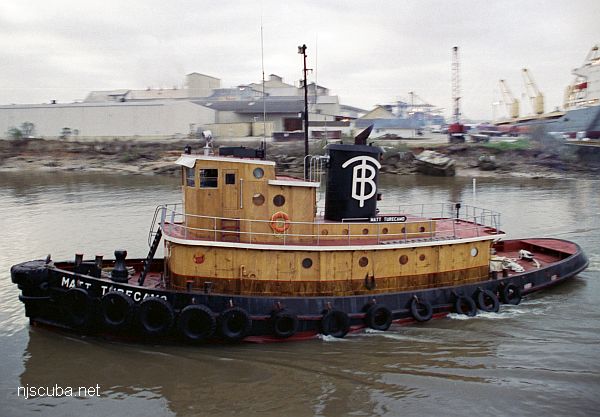
- Type:
- artificial reef, tugboat, U.S. Navy
- Built:
- 1943, Lawley & Sons, Neponset, MA as DPC-14, later Matt Turecamo
- Specs:
- ( 86 x 24 ft ) 146 GT, 9 crew
- Sponsor:
- Sean Maubray, FCO
- Sunk:
- Thursday October 17, 1996 - Sea Girt Artificial Reef
- GPS:
- 40°07.514' -73°56.465'
- Depth:
- 80 ft, main deck at 65 ft
More: Matt Turecamo DPC-14 ...
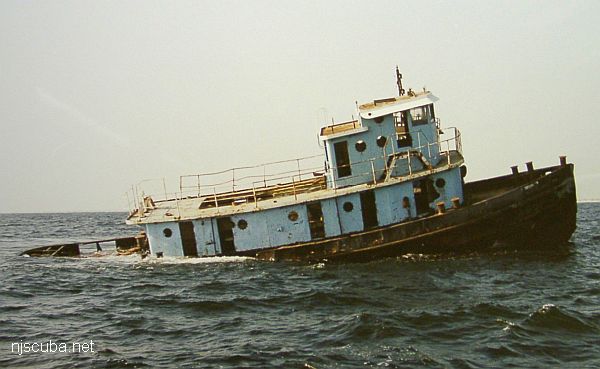
- Type:
- artificial reef, tugboat
- Built:
- 1943, Lawley & Sons, Neponset MA USA as DPC-15, later Brooklyn
- Specs:
- ( 86 x 24 ft ) 146 GT, 9 crew
- Sponsor:
- Friends of the Norma K
- Sunk:
- Tuesday October 30, 2001 - Axel Carlson Artificial Reef
- GPS:
- 40°03.390' -73°59.550'
More: Brooklyn DPC-15 ...
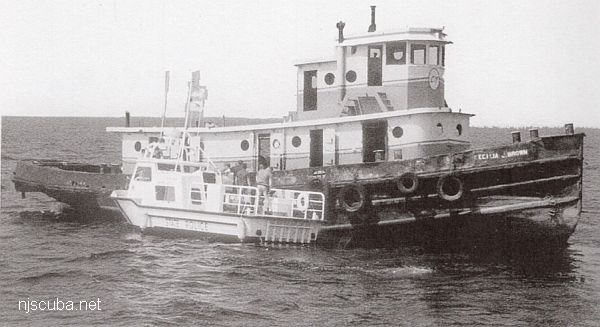
- Type:
- artificial reef, tugboat, USA
- Built:
- 1944, Decatur Iron & Steel, Decatur AL USA
- Specs:
- ( 86 x 24 ft ) 146 GT, 9 crew
- Sponsor:
- Cape May County Party & Charter Boat Association, Artificial Reef Association, Sportfish Fund
- Sunk:
- Monday August 16, 1993 - Cape May Artificial Reef
- GPS:
- 38°52.950' -74°40.200'
- Depth:
- 60 ft
More: Cecilia J Brown DPC-42 ...
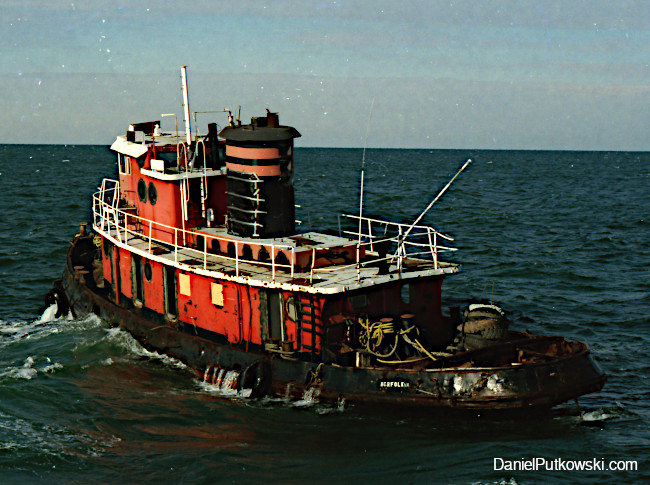
- Type:
- artificial reef, tugboat
- Built:
- 1943, Decatur Iron & Steel, Decatur AL as DPC-65
- Specs:
- ( 86 x 24 ft ) 146 GT, 9 crew
- Sunk:
- Friday Jan 15, 1999 - Delaware #11 Artificial Reef
- GPS:
- 38°40.540' -74°43.957'
- Depth:
- 75 ft
More: Delilah DPC-65 ...
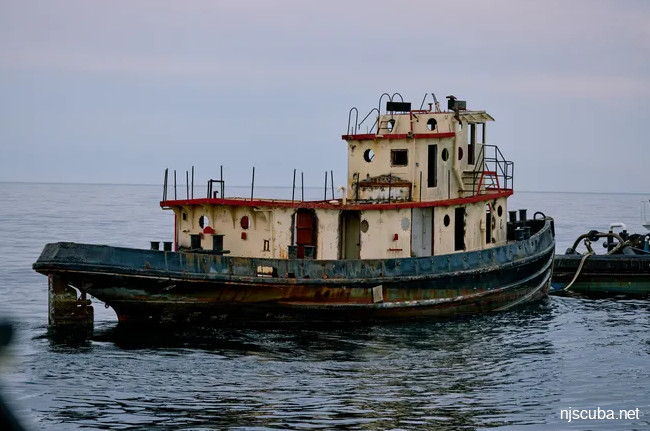
- Type:
- artificial reef, tugboat
- Built:
- 1944, Lawley & Sons, Neponset MA, as DPC-21
- Specs:
- ( 86 x 24 ft ) 146 GT, 9 crew
- Sunk:
- Saturday June 22, 2024 - Delaware #11 Artificial Reef
- GPS:
- 38°40.427' -74°43.073'
More: TD-21 DPC-21 ...
Questions or Inquiries?
Just want to say Hello? Sign the .