
Mohawk (older)
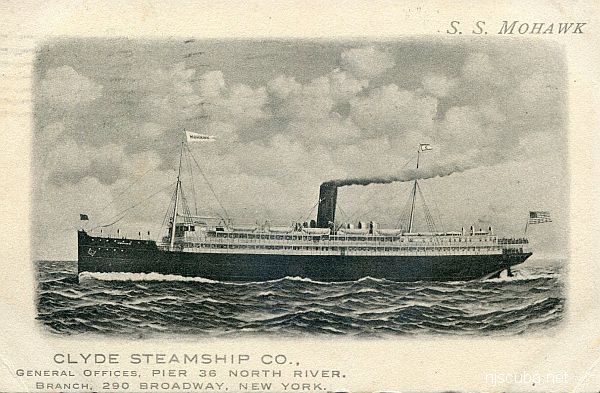
- Type:
- liner, Clyde Line, USA
- Name:
- A tribe of Iroquoian Indians of the eastern New York area.
- Built:
- 1908, Cramp Shipbuilding, Philadelphia PA USA
- Specs:
- ( 367 x 48 ft ) 4623 tons, 290 passengers & crew
- Sunk:
- Thursday January 1, 1925
burned in a storm - no casualties - GPS:
- 40°25.025' -73°45.158' (AWOIS)
- Depth:
- 25 ft
This Mohawk caught fire and burned in Delaware Bay. The burned-out shell of the vessel was demolished after sinking. Today she lies in 25 ft of water some 17 miles from Lewes, a flattened mass of wreckage covering an area some 60 ft by 300 ft in a northwest-southeast direction.
This is a tough wreck to dive on. The current can be very strong when the tide is running, so it is best to dive at slack tide. Visibility is also dependent on the tide, better visibility just at the end of an incoming tide. The strewn metal gives good cover for a variety of fish, hence her popularity with the fishing boats. Many boaters have severely damaged their vessels due to the twisted wreckage.
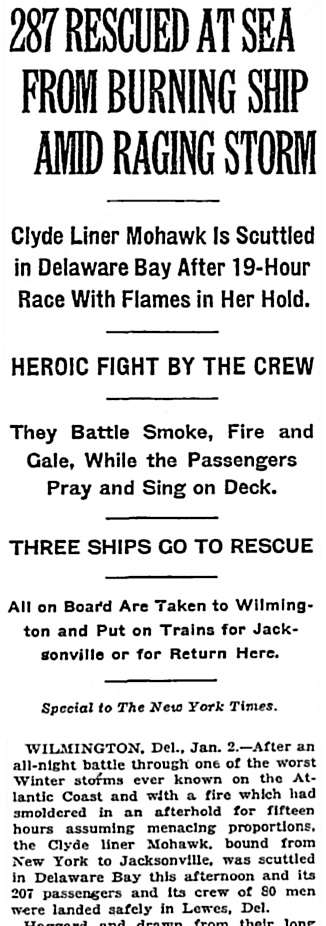
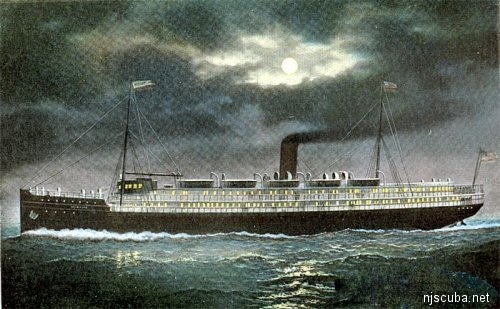
This ship's replacement, also named Mohawk, is sunk off Manasquan NJ. The Clyde Line also owned the Delaware.
Cape May Dive Sites, Dive Sites, Liners, New Jersey Dive Sites,
Cape May Chart
- Absecon Inlet
- USS Akron
- Alex Gibson
- Alexander
- Almirante
- American
- Astra
- Atlantus
- Azua
- Dorothy B Barrett
- Brigantine Beach Wreck
- USS Blenny
- boiler wreck
- Bonito
- Brian C
- Brigantine Inlet
- Brigantine Buoy Wreck
- Charles Morand
- Cape May Inlet
- Cassandra
- Cayru
- Champion
- USS Cherokee
- China Wreck
- City of Athens
- City of Georgetown
- Cleopatra
- Clermont
- Corson’s Inlet
- Crystal Wave
- William B Diggs
- dredge
- Admiral DuPont
- Elizabeth Palmer
- Elizabeth Warren
- Evening Star
- car float
- Florida
- Galimore's Cayru
- Gory Wreck
- Great Egg Inlet
- Gypsum Prince
- Hereford Inlet
- Hornet
- Hvoslef
- Independence Day
- India Arrow
- Indian River Inlet
- USS Jacob Jones
- John Marvin
- China Junk Wreck
- Kennebec
- King Cobra
- Lemuel Burrows
- Lake Frampton
- Lady Mary
- Linda Snow II
- Manhattan
- Marine Electric
- Miraflores
- Misty Blue
- Mohawk
- Montgomery
- USS Moonstone
- EF Moran
- Northern Pacific
- New Orleans
- USS Nina
- Nuphar
- Ocean Quest
- Oklahoma
- Patrice McAllister
- Pet Wreck
- Poseidon
- Ranald
- RJ Walker
- Southern Lillian
- USS S-5
- Salem
- Salem
- San Jose
- Sea Girt
- Sea Wolf
- Shookus
- Sindia
- Slabs
- General Slocum
- Southern Sword
- Townsend's Inlet
- Varanger
- Washingtonian
- Wayne
- Wily Fox
- YP-387
More: Cape May Dive Sites Chart ...
Delaware Bay
I doubt this is a good place to dive. Even without the river pollution, the bottom is muddy and the water is full of silt. If anyone knows anything different, let me know.
More: Delaware Bay ...
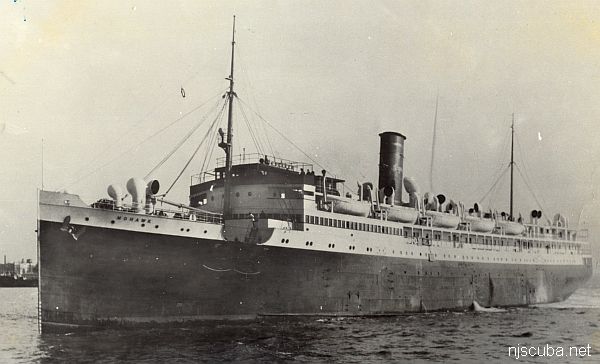
- Type:
- shipwreck, liner, USA, Clyde-Mallory Lines ( sailing under Ward Lines )
- Name:
- A tribe of Iroquoian Indians of the eastern New York area.
Three identical sisters were named Cherokee, Seminole, and Algonquin - Built:
- 1926, Newport News Shipbuilding, Newport News VA USA
- Specs:
- ( 387 x 54 ft ) 5897 gross tons, 163 passengers & crew
- Sunk:
- Thursday January 25, 1935
collision with Norwegian freighter Talisman - 45 casualties - Depth:
- 80 ft max
More: Mohawk ...
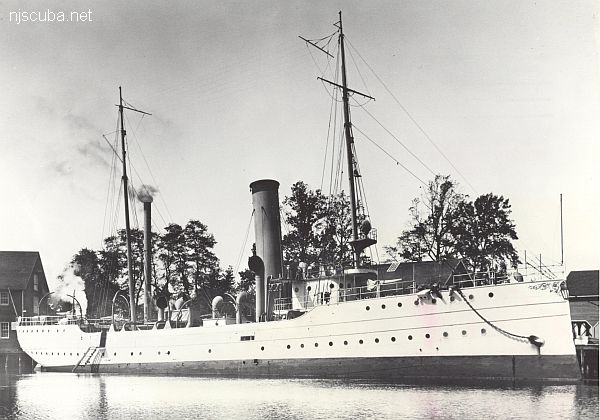
- Type:
- shipwreck, revenue cutter, U.S. Revenue Service, on loan to U.S. Navy
- Name:
- A tribe of Iroquoian Indians of the eastern New York area.
- Built:
- 1902, William R. Trigg, Richmond VA USA
- Specs:
- ( 206 x 32 ft ) 980 gross tons, 77 crew
- Sunk:
- Monday October 1, 1917
collision with tanker Vennachar - no casualties - GPS:
- 40°25.025' -73°45.158' (AWOIS 2010)
- Depth:
- 100 ft
More: R.C. Mohawk ...

Questions or Inquiries?
Just want to say Hello? Sign the .