Tolten (1/2)

Type:
shipwreck, freighter, Chile ( originally Denmark )
Name:
Tolten is a city on the central coast of Chile.
Built:
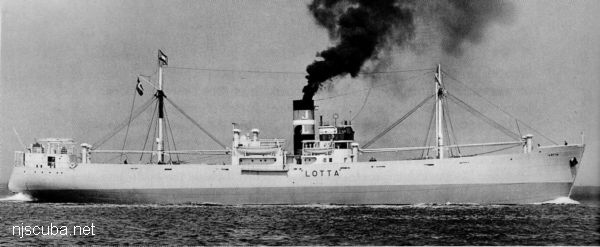
1938, Denmark, as Lotta
Specs:
( 280 x 43 ft ) 1858 gross tons, 28 crew
Sunk:
Friday March 13, 1942
torpedoed by U-404 - 27 casualties
Depth:
95 ft

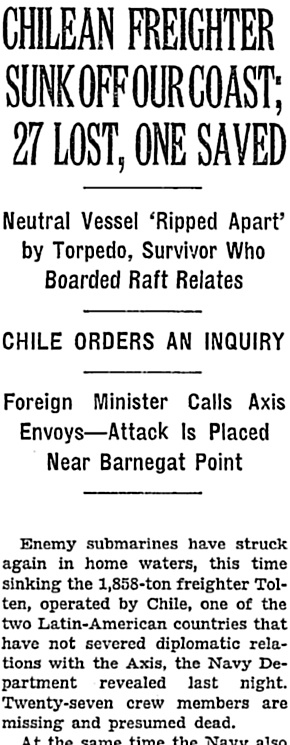
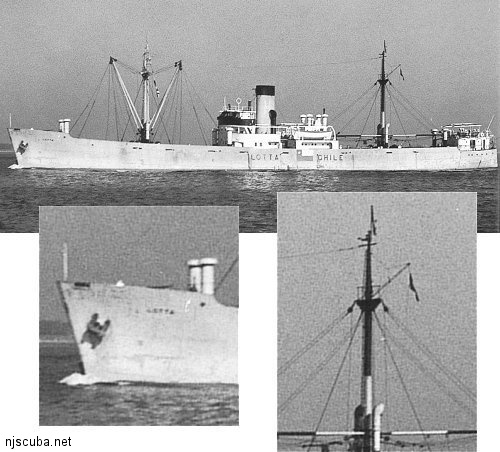
Despite being a neutral Chilean ship, the Tolten was torpedoed and sunk by a German submarine early in the war. The U-boat crews called this period of the war "The Happy Time" since their marauding off the U.S. coastline went almost completely unopposed. The Tolten was actually the Danish ship Lotta, which was taken over and renamed by the Chilean government after Denmark fell to the Germans. After the war, the U-boat captain admitted that in the dark he could not tell what ship he was firing on. The U-404 sank the Lemuel Burrows the next day. After the war, the wreck was wire-dragged to reduce its menace to shipping.

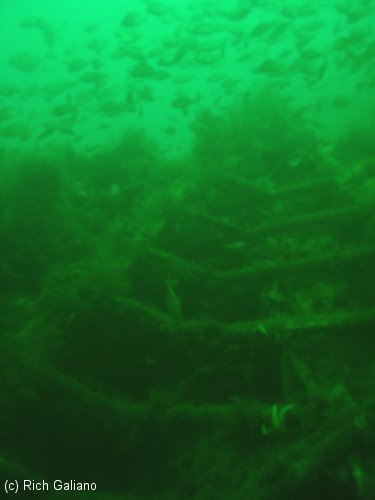
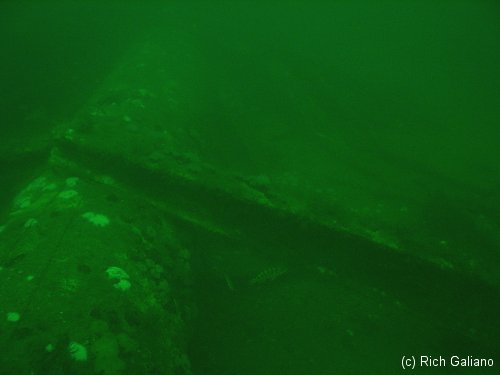
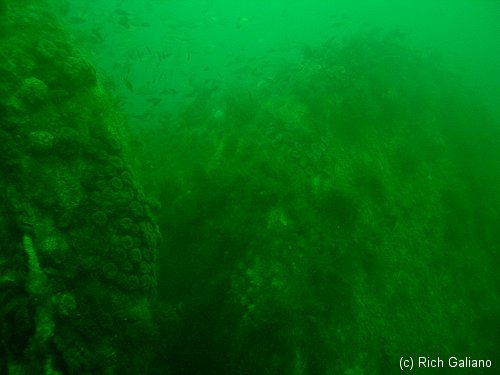
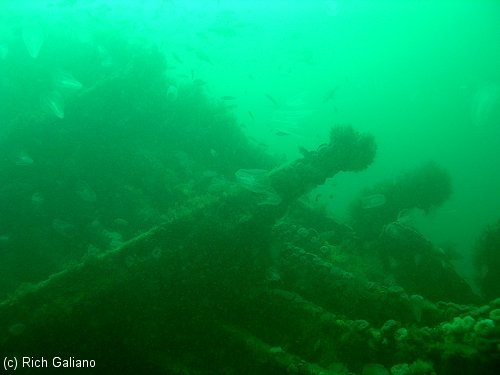
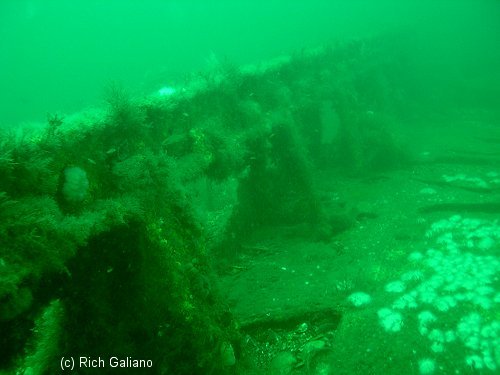
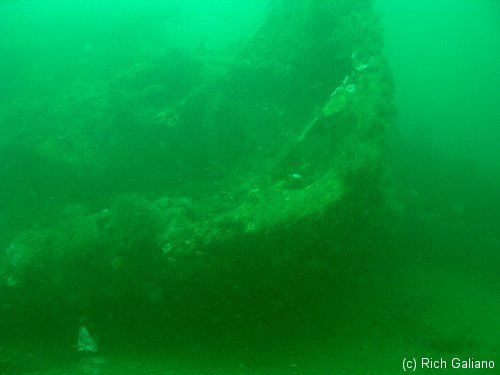
As with many wrecks like this, most of the remaining structure is found at the bow and stern, while in-between is mostly a flattened-out. The broken bow rises at least 20 ft off the bottom, and in the stern area, there are several large enclosed spaces that may be entered. The wreck lies roughly east-west and is contiguous, which simplifies navigation.

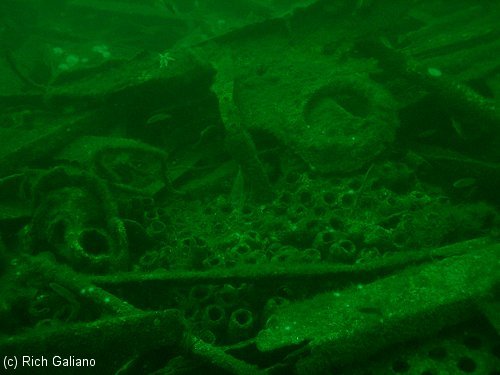
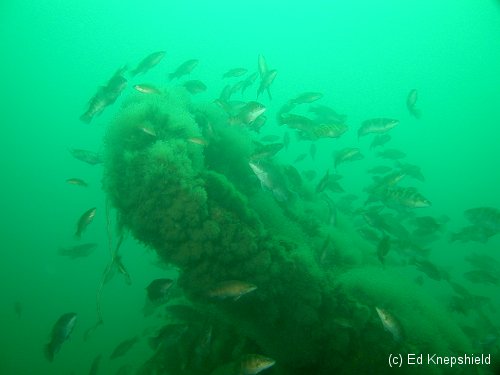
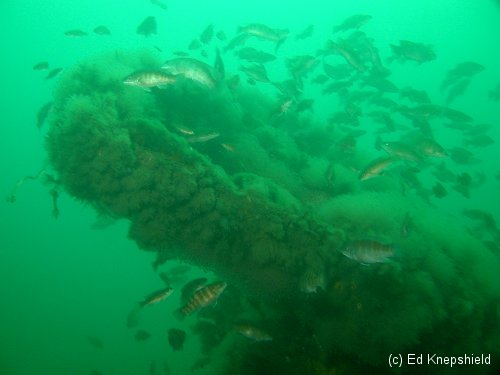
Much of the wreckage is overgrown with a luxurious layer of hydroids, anemones, and other marine life. Lobstering seems to be better along the south edge, in and around the fallen masts and hull plates, and the Tolten is a regular producer in this regard. Conditions this far offshore are often excellent, although this is usually a chilly dive.
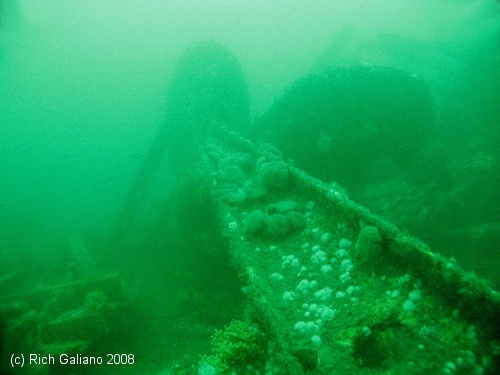
This is a long swim all around the wreck, starting near the bow and going aft past the boilers, and down the shaft alley. Around the stern to the propeller, and then back to the bow and the anchor.
Shipwreck Tolten
Shipwreck Tolten
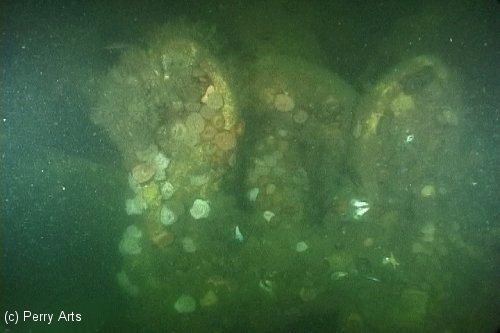
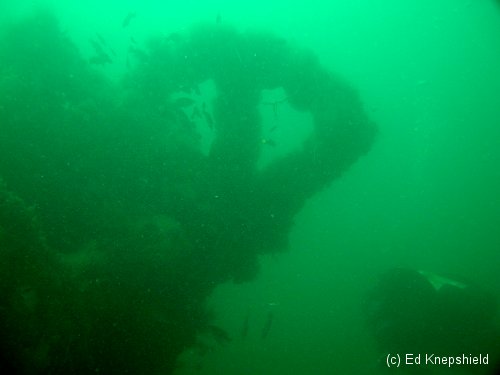
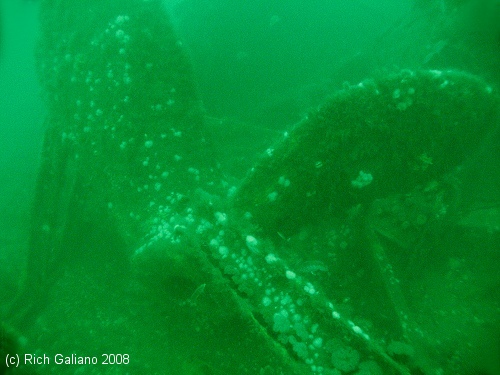
The propeller
Shipwreck Tolten
Looking up along the starboard (north) side of the stern. This is the tallest part of the wreck.
Shipwreck Tolten
Looking aft (east) along the shaft alley.
Shipwreck Tolten
Not sure what this is; near the boilers. Perhaps something to do with the engine.
Shipwreck Tolten
The front faces of the boilers. A small pile of machinery just aft of the boilers is probably the steam turbine engine.
Shipwreck Tolten
Frames and plates of what may once have been the superstructure.
Shipwreck Tolten

Most of the wreckage forward ( west ) of the boilers is low-lying. The entire wreck is smeared off to the starboard ( north ) side, no doubt from the wire-drag. This may be a hatch coaming.
Shipwreck Tolten
The forward mast-head, fallen between the boilers and the bow. Compare with photo below.
Shipwreck Tolten
Shipwreck Tolten
Shipwreck Tolten
The point of the bow, lying over on its starboard side. The Tolten's bow was reinforced to operate in icy northern waters and is still remarkably intact.


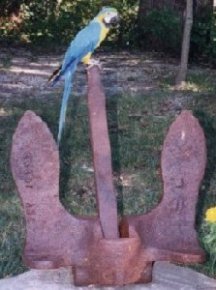
The starboard anchor was found off the wreck and salvaged several years ago.

The propeller was removed long ago.
Shipwreck Tolten
Shipwreck Tolten
The remaining port anchor, still stowed up in the hawsepipe.
Shipwreck Tolten
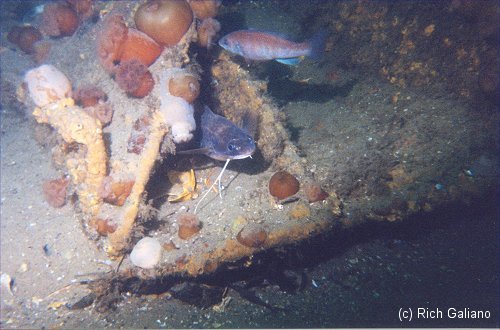
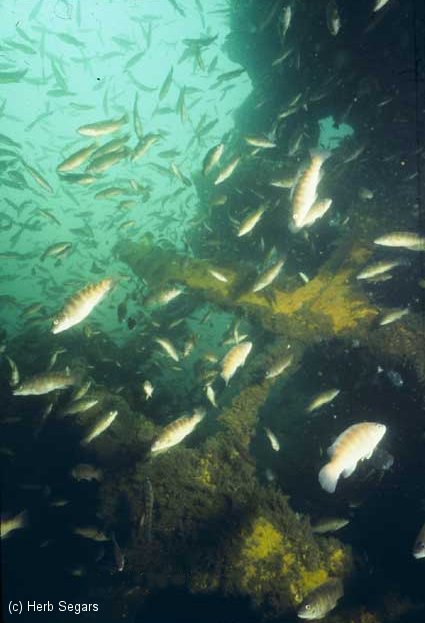
A Ling, peering out from an odd triangular frame. Notice how it is "standing" on its outstretched pelvic fins.
Shipwreck Tolten
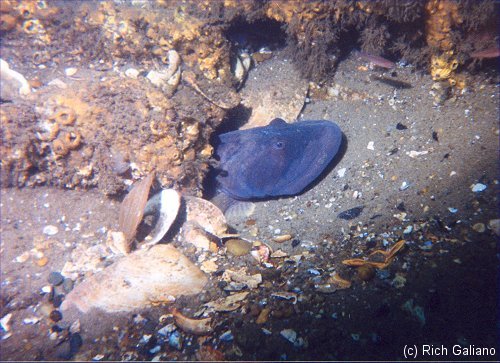
The ugliest fish in the sea - an Eelpout, hiding in a pipe.
Shipwreck Tolten
Shipwreck Tolten
Shipwreck Tolten
The steering quadrant
Shipwreck Tolten
Shipwreck Tolten
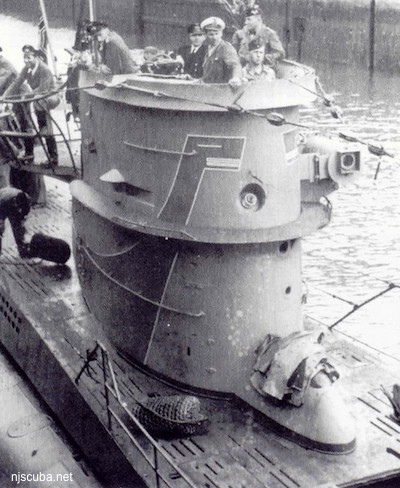
U-404
Type VIIc U-boat U-404,
note Viking-ship decoration,
sunk July 1943
 1 2  

Comments on Tolten

Questions or Inquiries?

Just want to say Hello? Sign the .

Submit a Comment

Your email address will not be published. Required fields are marked *


Click image to replace if unable to read.

Enter the digits from the image above, except for the last one:

This site uses Akismet to reduce spam. Learn how your comment data is processed.


Marine Life Colonization of Experimental
Reef Habitat in Temperate Ocean Waters of New Jersey

By Bill Figley
January 2003

This investigation was partially funded by the Federal Aid to Sportfish Restoration Program

for the original paper, see here.


ABSTRACT

A biological colonization study of experimental reef habitats in temperate ocean waters off New Jersey was conducted over a 96-month period. A total of 145 different taxa of 9 phyla were identified within the experimental units, including 42 arthropoda, 37 annelida and 43 molluska. Individual organisms had an estimated mean abundance of 534,566 organisms/m2 of habitat footprint, including 105 fish, 4,639 crabs and 14 lobsters. Colonial organisms covered 87,554 cm2 of the habitat surface area. Mean total biomass of the organisms inhabiting the units was 84,175 g/m2, with blue mussel comprising 63 percent of the total. The carrying capacity of the experimental habitat for all species of marine life was about 152,801 g/m2. Predation accounted for an 80 percent reduction of biomass between surfaces exposed and not exposed to predators. There were no statistically significant differences in biological colonization rates of sessile epibenthos on concrete, rock, steel and rubber substrates. On an equivalent area basis, the biomass enhancement ratios of the experimental reef habitats over surf clam-dominated and polychaete/crustacean-dominated sand bottom habitats ranged from 35 to 1,124 and 2,773 to 3,200 times, respectively. A simplified, three-tiered reef habitat food chain consisted of 84.5 percent sessile/sedentary invertebrates, 11.0 percent mobile invertebrates and 4.5 percent juvenile and adult fish. The results suggest that complex reef habitats provide both attachment surfaces and refuge habitats that support a diverse and abundant marine life community.