
Almirante
- Type:
- shipwreck, freighter, USA
- Built:
- 1909, Ireland
- Specs:
- ( 378 x 50 ft ) 3121 gross tons, 105 passengers & crew
- Sunk:
- Friday September 6, 1918
collision with U.S. Navy tanker Hisko - 5 casualties - Depth:
- 70 ft
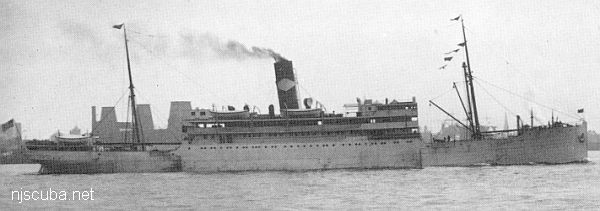
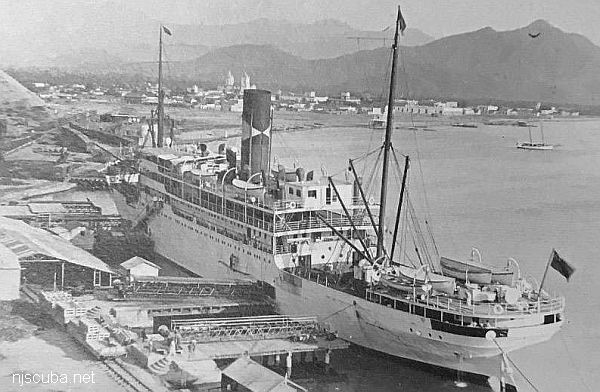
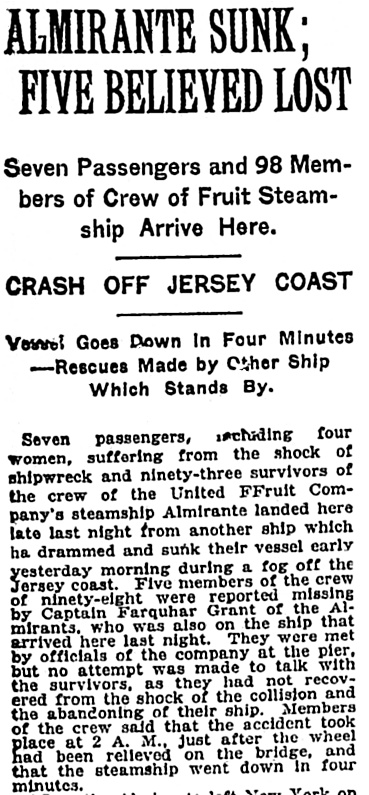
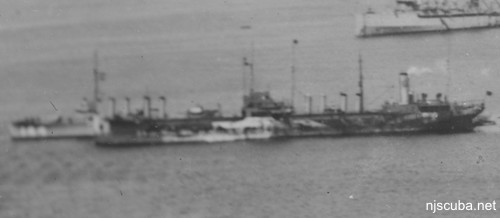
The Almirante was a United Fruit Company steamship bound from New York City to Colon, Panama with a full cargo hold. On Friday September 6, 1918 at 2:00 a.m. The 15,000-ton Navy tanker USS Hisko rammed the Almirante in heavy seas and fog. The ship sank within 4 minutes, with an amazingly small loss of 5 lives out of 105 crew and passengers due to the prompt rescue by the Hisko crew and the Lifesaving Corps ( the precursor to the Coast Guard ) from Atlantic City. The entire cargo was lost, including 26 sacks of mail. The Hisko suffered some bow damage, but was able to safely continue on to New York.
The wreck site is more commonly called the "Flour Wreck", due to the white foam that washed onto the shore after the Almirante sank. For days after the wreck, the local beaches were covered with a doughy, frothy mess. Because of this, it was thought that a large part of her cargo was flour, so the Almirante is known as the Flour Wreck, however, the ship's manifest indicates that it was carrying a cargo of fruit, not flour. Flour from the galley may have been responsible for the mess but the quantity carried for consumption is not known, making any explanation pure conjecture.
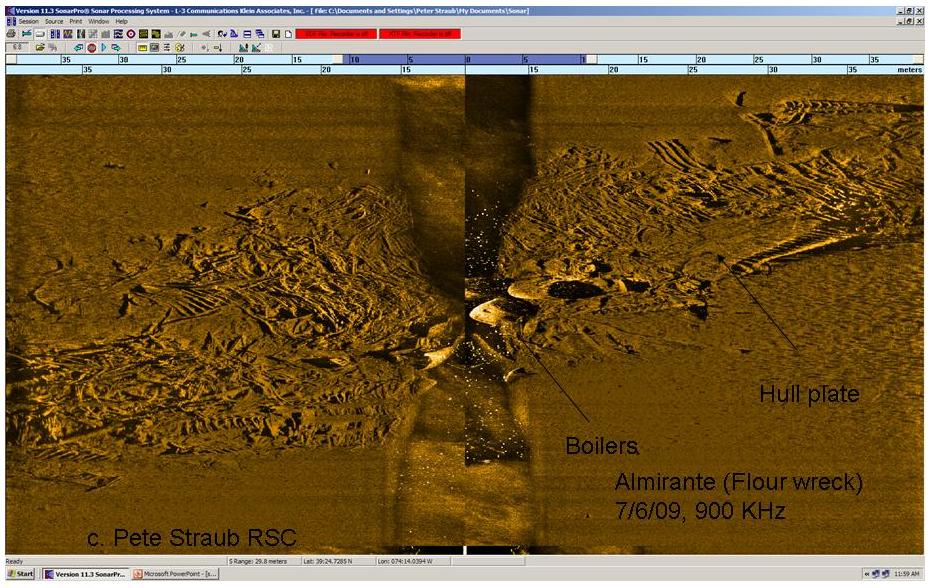
Side-scan courtesy of Stockton University
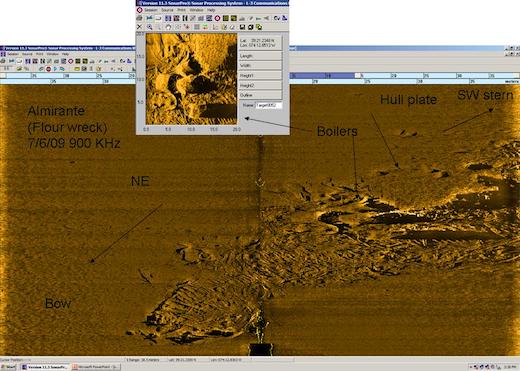
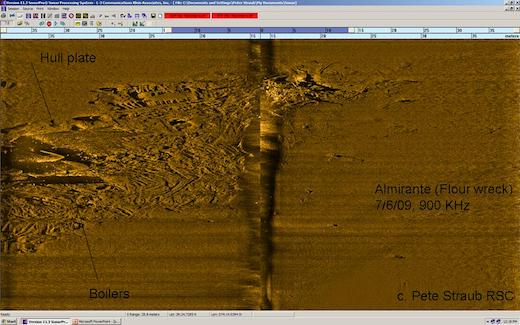
The wreck lies scattered on the ocean floor in 70 feet of water. The wreck was twice blown up, wire dragged in 1938, and again in 1950. In addition, on a submarine patrol during July 1942, the blimp K-7 spotted the shape of the wreck from the air and reported it as a possible U-boat. Coast Guard Cutter #464 dropped 5 depth charges on the wreck, further destroying it. Because of this, the wreck is mostly rubble with few identifiable parts. The Almirante is a great site for student divers because it is shallow, offers artifacts, is very scenic and its overlapping hull plates are an ideal habitat for lobsters and fish. Divers frequently Spot, Sea Bass, Blackfish, Eelpouts, Fluke, and Ling. The Almirante is a commonly visited site since it offers good visibility even when nearby wrecks have poor visibility.
Questions or Inquiries?
Just want to say Hello? Sign the .