Great Egg Artificial Reef

Great Egg Artificial Reef

7.2 Nautical Miles off Atlantic City, 1.03 sq miles
Depth: 50-70 ft [download]


M60 tanks reef
M60 tanks undergo a thorough cleaning before use as reefs

The Artificial Reef Program used four types of obsolete Army armored vehicles as artificial reef materials off the New Jersey coast. These were cleaned at local military bases, loaded onto barges for transport, and pushed off at their final destination. Once the Army had disposed of its excess inventory, the program ceased, around 1999. The Artificial Reef Program has sunk almost 400 tanks altogether, far too many to list them here in this website.


rock reef
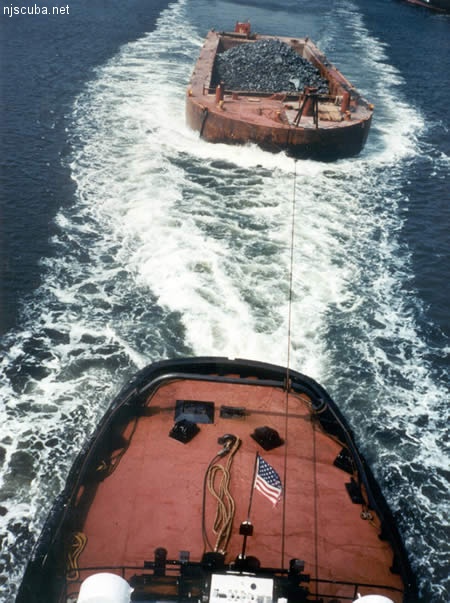
A hopper barge full of rock

All manner of concrete, steel, and stone rubble from dredging, demolition projects, and other construction is used as artificial reef materials. This material is generally available at very low cost or free from construction companies who are more than happy to get rid of it. Transportation costs determine where this material is used by the Reef Program.



mitts

Diving gloves should be close-fitting, with long, gusseted, zippered, or Velcro gauntlets that overlap your suit sleeves. This is especially important with a drysuit, since the glove will protect the delicate wrist seal on the suit. Thin tropical gloves are of very limited use in the north - your gloves should be at least 5mm thick. Three-fingered mitts are much warmer than five-fingered gloves and are really not much clumsier. They are also much easier to get on and off, which makes me wonder why so few people use them. A little spray soap will make any glove easier to get on.

A hood is critical for maintaining warmth in the water. A good hood will be as close-fitting as possible, and have a generous collar for tucking into your wetsuit, thin skin-in seal around the face, and baffled vents in the top to release bubbles. A neck skirt is much less necessary with a drysuit, but it is a simple matter to cut one off if you don't like it. A neoprene cold-water hood should be at least 5-6mm thick.

The face-hole of a hood should be as small as possible - there is no reason to expose any skin here. The face seal of the hood should overlap your mask skirt, with just barely enough room below for your regulator. You can always trim out a too-small face-hole, but a too-big one pretty much negates any other good qualities a hood may have. Ideally, with mask and hood on, you should expose a small patch on each cheek, and no more.