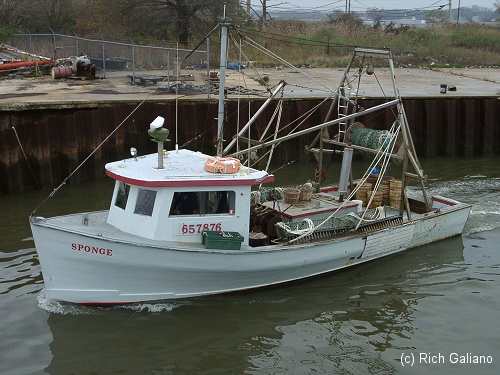
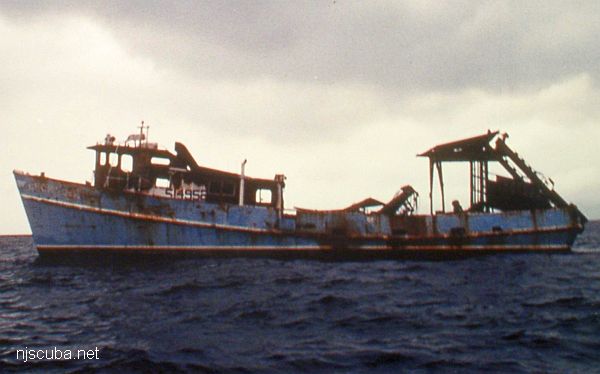
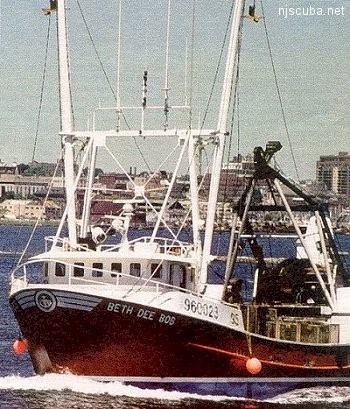
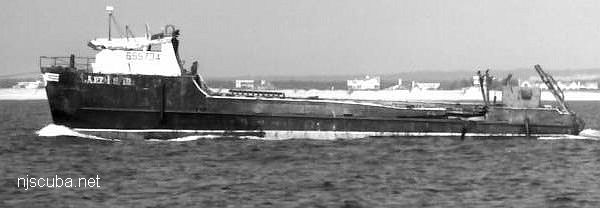
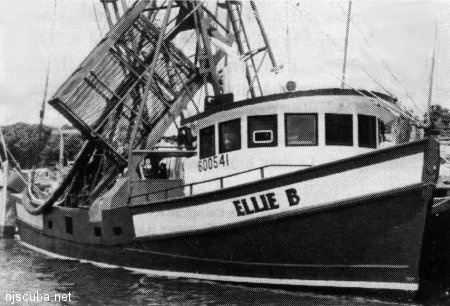
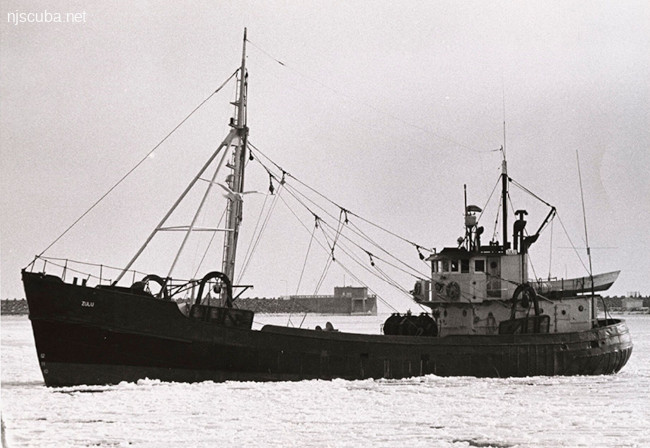
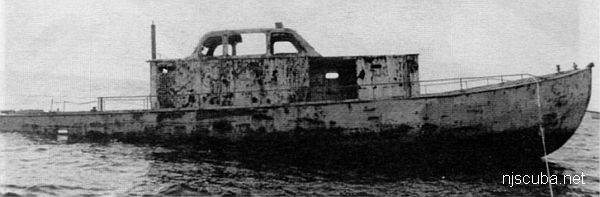
A small commercial fishing vessel of unknown type, although the bushels on deck would imply that she was after some kind of shellfish.
There are three basic types of commercial fishing vessels found in the Mid-Atlantic region: trawlers, seiners/gill-netters, and long-liners. A trawler or "dragger" operates by towing its fishing gear across the bottom. Weighted nets take bottom fishes, while cage-like steel dredges take clams and scallops. A seiner uses a floating net to encircle schools of surface-swimming fishes such as herring and tuna. A long-liner sets out miles of buoyed line with baited hooks to catch sharks, tuna, and swordfish. One could also add lobster boats and charter fishing or "head" boats to this list. And of course, dive boats.
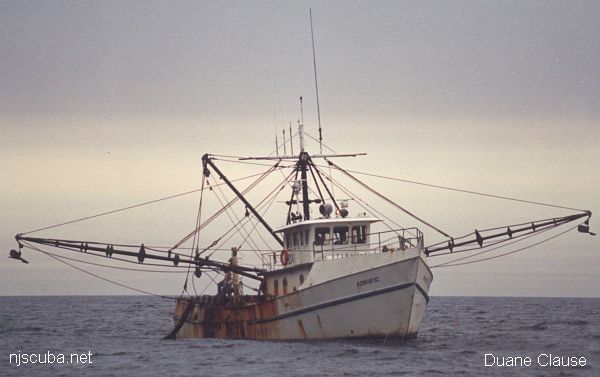
"This picture was taken several years ago by my wife, Debbie. We were searching for the Adriatic's lost clam dredge that day. Later, after the sinking, my group of divers was the first to dive on and identify her. I used this picture at the dive site to set the dive plan and objectives."