Warships
Warships
- USS Akron
- USS Algol
- USS Baldwin
- Bronx Queen
- Capt Henry
- Catamount
- USS Cherokee
- China Wreck
- HMS Culloden
- Great Isaac
- HMS Hussar
- Ida K
- Intrepid
- USS Jacob Jones
- Massachusetts
- R.C. Mohawk
- USS Moonstone
- USS Murphy
- New Jersey
- USS Ohio
- Olympia
- Peggy Diana
- USS Radford (main)
- USS San Diego
- SC-209
- SC-60
- USS Tarantula
- Texas Tower
- USS Turner
- ZPG-3W
A number of warships are sunk in New Jersey and New York waters:
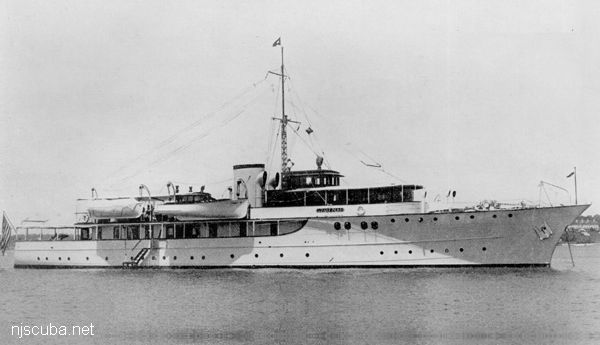
- Type:
- shipwreck, patrol boat, U.S. Navy (converted yacht)
- Built:
- 1929, Germany, as Lone Star
- Specs:
- ( 171 x 26 ft ) 469 gross tons, 47 crew
- Sunk:
- Friday October 15, 1943
collision with destroyer USS Greer ( 1090 tons) - no casualties - Depth:
- 130 ft
More: USS Moonstone PYc-9 ...
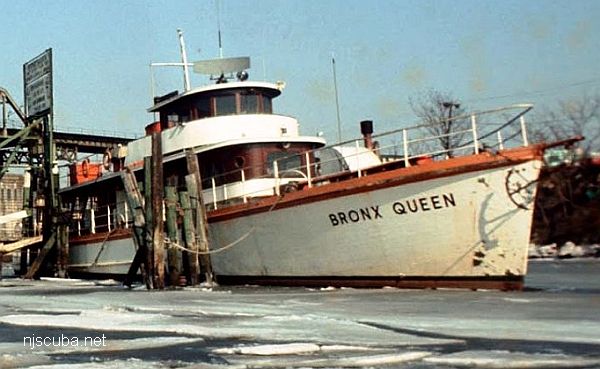
- Type:
- shipwreck, submarine chaser, later party boat, USA
- Built:
- 1942, Mathis Yacht Building, Camden NJ USA, as SC-635
- Specs:
- ( 112 x 18 ft ) 99 gross tons, 19 crew, including passengers
- Sunk:
- Saturday December 20, 1989
foundered after structural failure of aft hull caused by improper modifications - 2 casualties - Depth:
- 35 ft
More: Bronx Queen SC-635 ...
- Type:
- shipwreck, submarine chaser, U.S. Navy
- Built:
- 1917, New York Naval Shipyard, New York NY USA
- Specs:
- ( 110 x 14 ft ) 85 tons
- Sunk:
- Tuesday October 1, 1918
collision with tanker Fred W. Waller - 2 casualties - Depth:
- 45 ft
More: Sub Chaser SC-60 ...
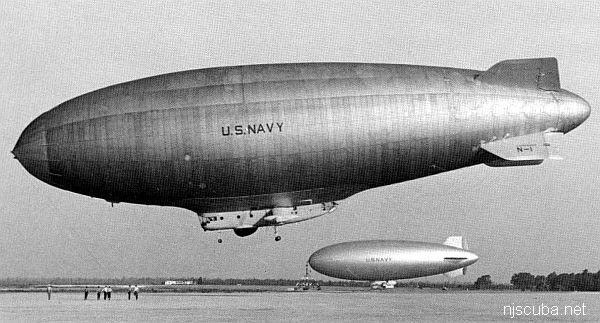
- Type:
- shipwreck, blimp, U.S. Navy
- Built:
- 1958, Akron OH USA
- Specs:
- ( 403 x 85 ft ) 40 tons, 21 crew
- Sunk:
- Wednesday July 6, 1960
unknown cause - 18 casualties - Depth:
- 60 ft
More: ZPG-3W Reliance ...
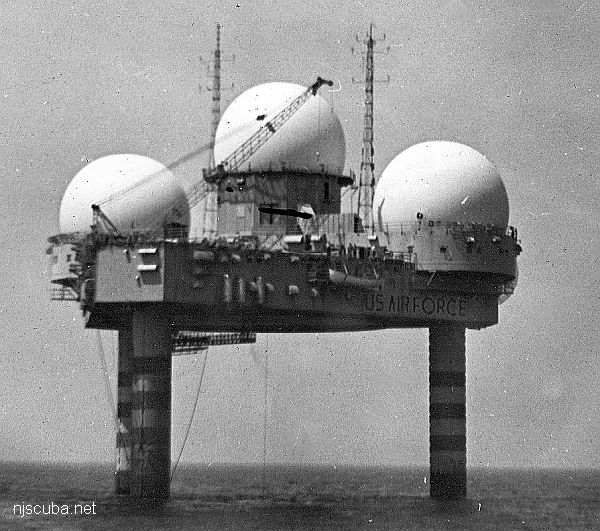
- Type:
- collapsed radar platform, USAF
- Built:
- 1955, Portland ME USA
- Specs:
- ( 67 ft above water) 6000 tons, 14 crew (minimum)
- Sunk:
- Sunday January 15, 1961
storm/structural failure/design deficiency - no survivors - GPS:
- 39°47'56.43" -72°40'08.00" (US Navy 2004)
- Depth:
- 180 ft, starts at 110 ft
More: Texas Tower TT-4 ...
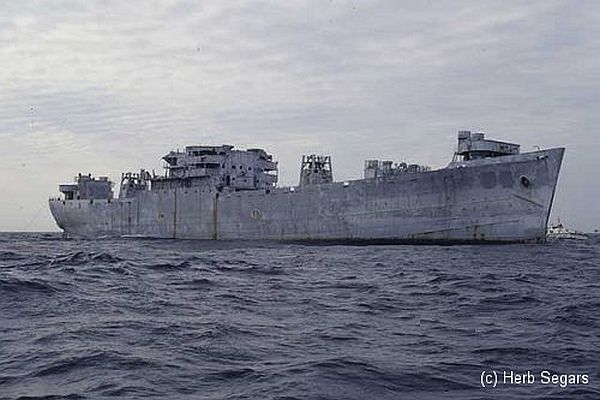
- Type:
- artificial reef, Andromeda class attack transport ( freighter ), U.S. Navy, also known as a "Victory Ship", although often incorrectly referred to as a Liberty Ship
- Name:
- One of a series of Navy transports named for stars;
Algol is a star in the constellation Perseus, also known as the Demon star. - Built:
- 1943, Moore Drydock, Oakland CA USA, as James Barnes
- Specs:
- ( 459 x 63 ft ) 13910 displacement tons, 429 crew *
* this figure almost certainly includes embarked Marines - Sponsor:
- Federal Aid in Sportfish Restoration
- Sunk:
- Thursday November 22, 1991 - Sea Girt Artificial Reef
- GPS:
- 40°06.545' -73°41.450'
- Depth:
- 145 ft +, starts at 70 ft, main deck at 110 ft
More: USS Algol AKA-54 ...