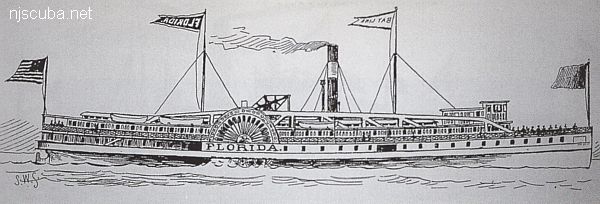
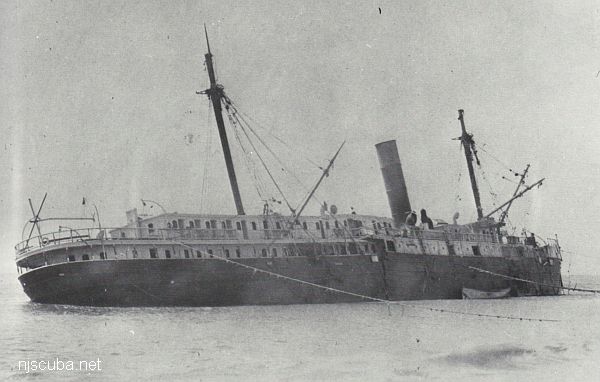
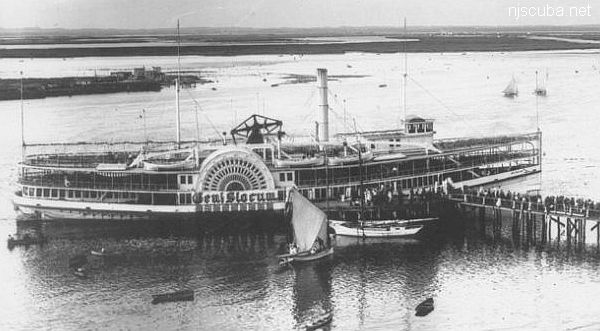
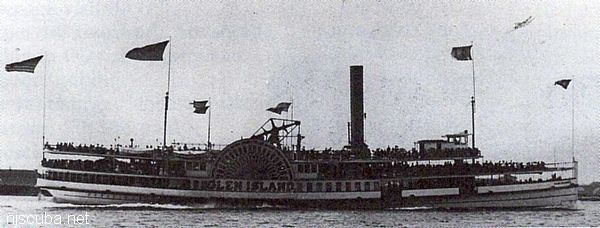
Steamer is an early term for any vessel power by a steam engine rather than sails.
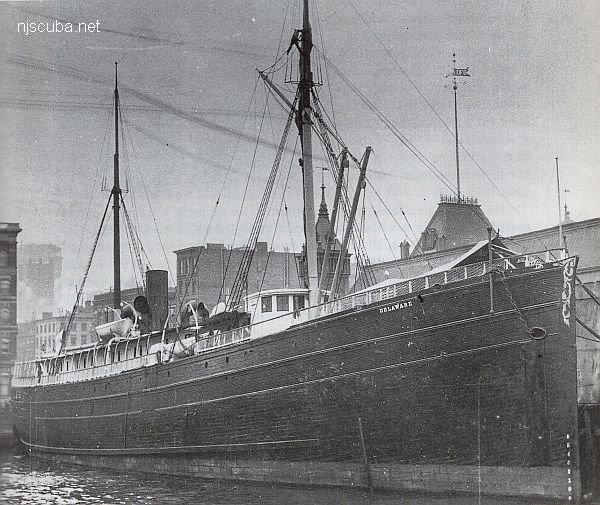
The Delaware, an 1880s screw steamer
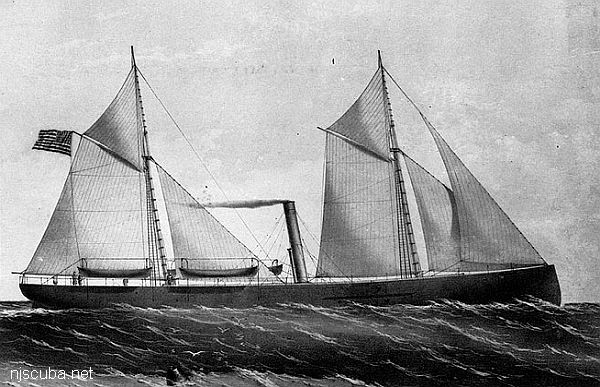
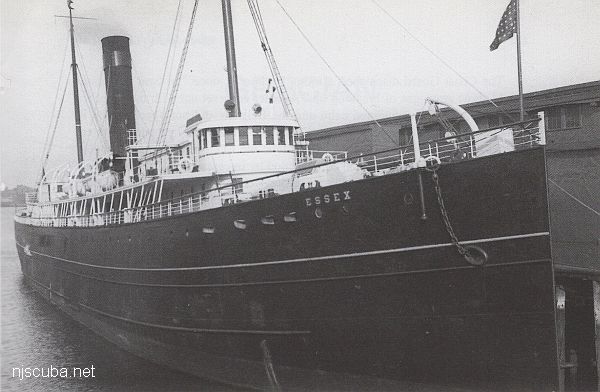
Early steamers were propelled by large paddlewheels. "Side-wheelers", with the paddlewheels on each side, were more seaworthy, and therefore more common in ocean waters, while "stern-wheelers", with a single large paddlewheel at the back, were more common as riverboats. Later, these were replaced by more efficient screw (or propeller) vessels.
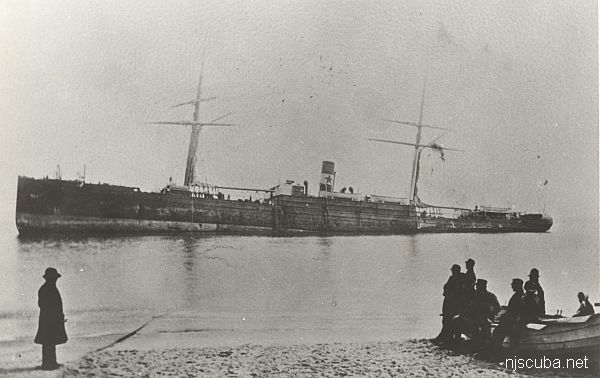
Adonis - Tuesday March 8, 1859 - ran aground in bad weather, no casualties Rusland - Saturday March 17, 1877 - ran aground in bad weather, no casualties
A very small wreck, consisting of a primitive single-cylinder steam engine and a large, completely broken-down boiler. Odd pieces of pipe and machinery lie around, but no remains of a hull, although there appears to be some iron plating under the engine. Guessing from the technology, the construction would date to around 1860 +/- 10 years, and the sinking would have been sometime after that.
John Chatterton and the Horenberg knife, the most tangible clue to the identity of New Jersey's mystery U-boat.
In 1991, while checking out an obscure site known for hanging up fishing lines, I dropped down the anchor line only to find a virgin German U-boat. A wreck diver's fantasy of discovering a new shipwreck somehow had become a reality, and it was every bit as good as could be imagined. While reveling in the experience, I wondered if I would have enough skill and luck to ever make it happen again. Several discoveries later, the challenge is still irresistible.