Moriches Artificial Reef
Moriches Artificial Reef (historical)
2.4 nautical miles south of Moriches Inlet, 0.54 sq miles
Depth: 70 - 75 ft
Moriches Artificial Reef (now)
Moriches Reef was originally very small, but has been expanded greatly. The pink region is the historical area, and the blue region is the new deployment zone, while the full permitted size of the reef is a 1-nm square that encloses the deployment zone. The misalignment in the northern boundary between old and new is accurate.
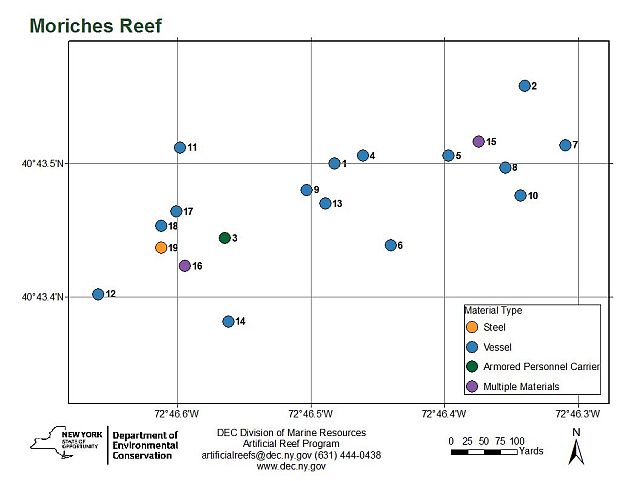
This reef is so tiny, some of these spots are probably within sight of each other underwater !
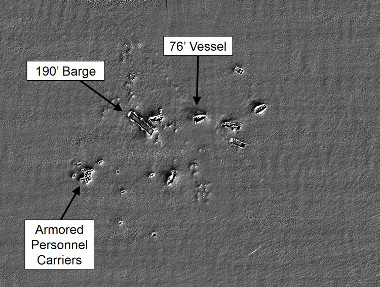
video by Dan Berg
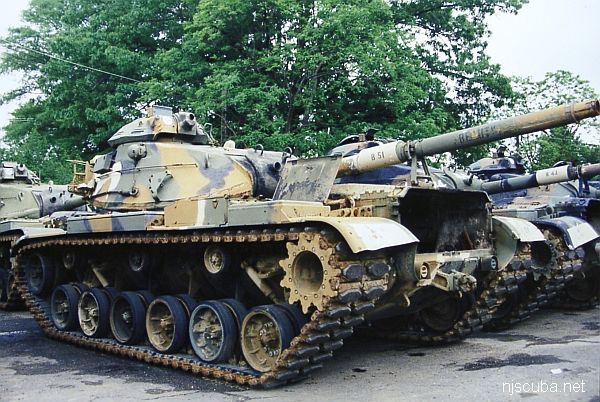
The Artificial Reef Program used four types of obsolete Army armored vehicles as artificial reef materials off the New Jersey coast. These were cleaned at local military bases, loaded onto barges for transport, and pushed off at their final destination. Once the Army had disposed of its excess inventory, the program ceased, around 1999. The Artificial Reef Program has sunk almost 400 tanks altogether, far too many to list them here in this website.
More: Army Tanks ...
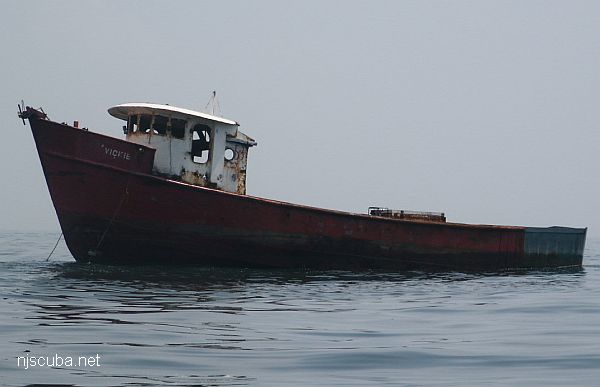
- Type:
- artificial reef, trawler, USA
- Built:
- 1972, Master Marine, Bayou La Batre, AL USA
- Specs:
- ( 68 ft ) 91 GT
- Sunk:
- Friday June 18, 2004 - Moriches Artificial Reef
- Depth:
- GPS:
- 40°43.382' -72°46.562'
More: Vickie ...
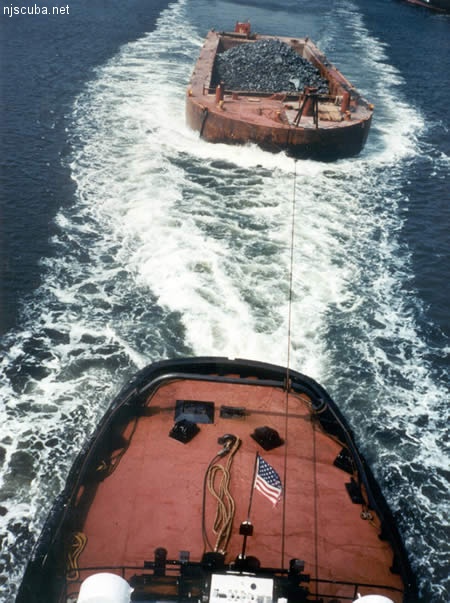
All manner of concrete, steel, and stone rubble from dredging, demolition projects, and other construction is used as artificial reef materials. This material is generally available at very low cost or free from construction companies who are more than happy to get rid of it. Transportation costs determine where this material is used by the Reef Program.
More: Rock & Rubble ...
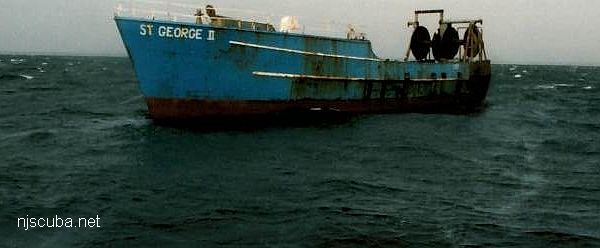
- Type:
- artificial reef, trawler, USA
- Built:
- 1979, Canaveral Shipbuilding, Cape Canaveral FL
- Specs:
- ( 97 x 24 ft ) 185GT
- Sunk:
- Friday March 12, 1999 - Moriches Artificial Reef
- Depth:
- GPS:
- 40°43.439' -72°46.440'
More: St George II ...
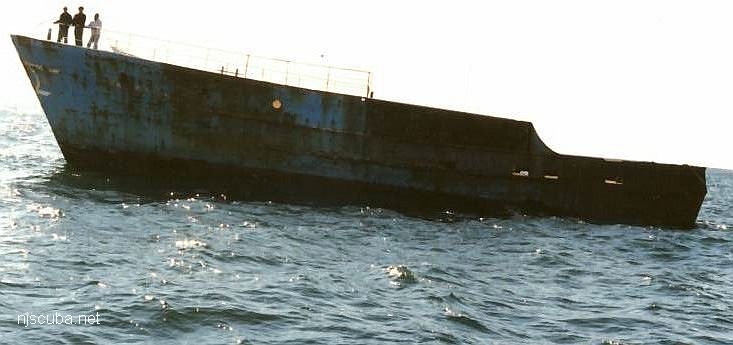
- Type:
- artificial reef, trawler, USA
- Built:
- 1978, Quality Marine, Bayou La Bâtre AL USA
- Specs:
- ( 90 ft ) 168 gross tons
- Sunk:
- Friday November 6, 1998 - Moriches Artificial Reef
- Depth:
- GPS:
- 40°43.506' -72°46.461'
More: Niagara Falls ...
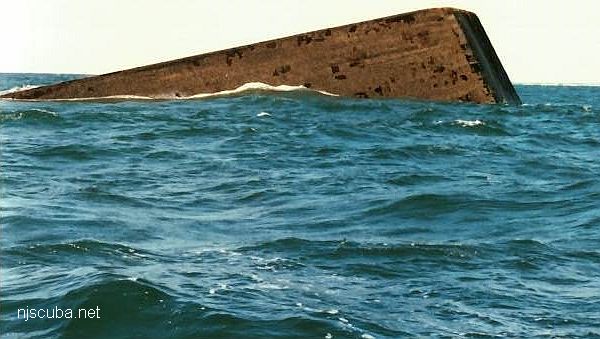
- Type:
- artificial reef, barges
- Depth:
- 70 - 75 ft
| Name | Description | Sunk | GPS |
| Jean Elizabeth |
190 ft steel | 1995 | 40°43.500' -72°46.482' |
| 60 ft steel | 1995 | 40°43.558' -72°46.340' |
|
| #335 | 80 ft steel | Friday Nov 12, 1999 |
40°43.514' -72°46.309' |
| CFD | 100 ft steel | Thursday Feb 8, 2001 |
40°43.476' -72°46.343' |
| "Pump Boat" | 25 ft steel | Sunday Oct 14, 2018 |
40°43.464' -72°46.601' |
| Self-Propelled Scow #56 |
50 ft steel | Sunday Oct 14, 2018 |
40°43.453' -72°46.612' |
More: barges - Moriches Artificial Reef ...