
Jane
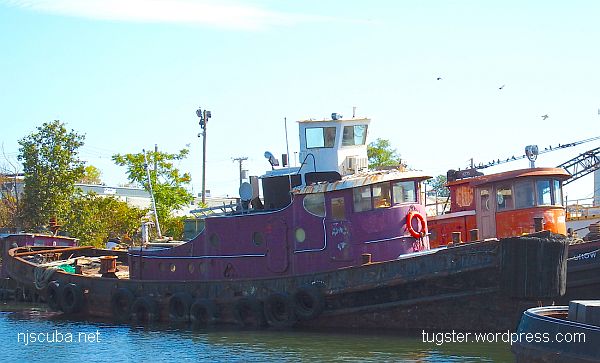
- Type:
- artificial reef, tugboat, USA
- Built:
- 1939, Pusey & Jones, Wilmington DE USA
- Specs:
- ( 70x18 ft ) 65 tons
- Sunk:
- Wednesday, September 16, 2020 - Hempstead Artificial Reef
- Depth:
- GPS:
- 40°31.030' -73°31.800'

Googling 'tugboat Jane' wasn't giving any useful results. So I tried something different - I checked the tugboat graveyard, and found the photo above, with the name Erica and Boston MA in steel letters next to a painted-on Jane. Googling both names together brought results:
Built in 1939, by Pusey and Jones Incorporated of Wilmington, Delaware (hull #1072) as the Jane for the Curtis Bay Towing Company of Baltimore, Maryland.
In 1958, the company became an affiliate of the Moran Towing Corporation of New York, New York, where the tug retained her name. In 1962, she was acquired by King and Doan Incorporated of Wilmington, Delaware, where the tug retained her name.
In 1990, the tug was sold and renamed Adam J. In 1997, she was sold and renamed Jacklyn and then Erica. In 1999, the tug was acquired by Island Barge Incorporated of New Bedford, Massachusetts, and renamed back to Jane. In 2008, she went out of documentation.
tugboatinformation.com
It is odd that the original name is just painted on, while 'Erica' is in embossed steel letters. Jane was one of the first U.S.-built vessels with the patented "Yourkevitch" hull form and specifically designed to use the Kort nozzle in propulsion. The revolutionary Yourkevitch design is more for large fast ships, and I doubt it did much for a tugboat, but Kort nozzles have become very common.
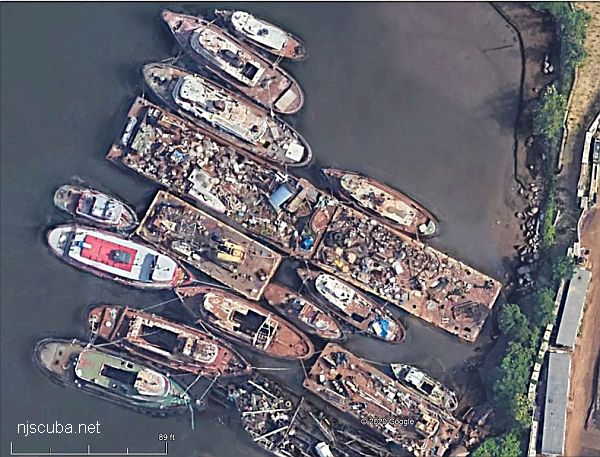
The green-decked boat at the lower left has its engine out as well. At this point, we all know what that means! The red-roofed boat is Ticonderoga, which sank in the river and was raised only to be scrapped. I wouldn't be surprised if all of these eventually get reefed.
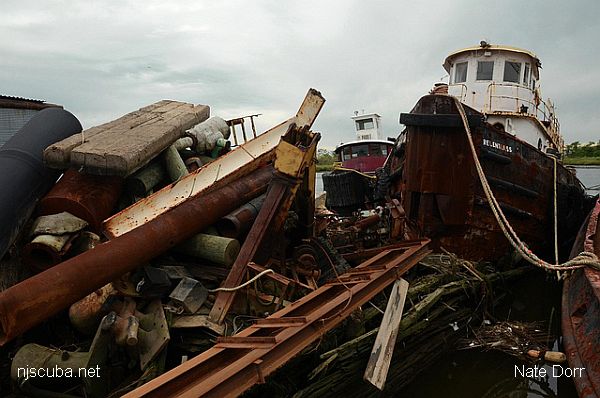
Sorry, recyclables would be the politically correct term.
The Tugboat Graveyard
Actually, these tugs are all still floating, so maybe 'hospice' would be a better word than graveyard. If you search around the live map above, you can find many other locations like this in the Arthur Kill. In most of those, the old boats are part of the landscape now - no chance of reefing them. I guess you could say they reefed themselves.

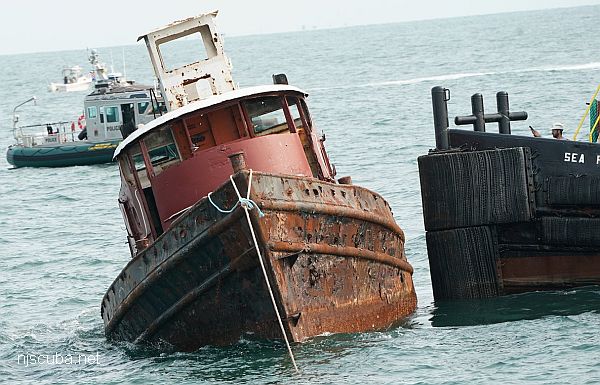

Artificial Reef Sites, Artificial Reefs, Hempstead Artificial Reef, New York Artificial Reef Sites, New York Artificial Reefs, Tugboats,
Hempstead Artificial Reef
3.3 nautical miles south of Jones Beach State Park, 1.33 sq miles
Depth: 50-72 ft
More: Hempstead Artificial Reef ...
Long Island - Central Chart
- 3 Sisters
- 3/4 Tug
- 59-Pounder
- Acara
- Across
- Arnoff
- Arundo
- Asfalto
- Ayuruoca
- BA Wreck
- Balaena
- Bald Eagle
- USS Benson
- Beth Dee Bob
- Blue Boy
- Burnside
- Catamount
- Choapa
- coal (Lido)
- Coastwise
- Continent
- Dodger
- Dragger
- Drumelzier
- drydock
- Edwin Duke / Stone Barge
- dump
- East Rockaway Inlet
- Eureka
- Fire Island Inlet
- Gate City
- Gluckauf
- I.P. Goulandris
- Gypsy
- Happy Days
- Harvey's Schooner
- Howard
- Hylton Castle
- Iberia
- Immaculata
- Irma C
- Jones Inlet
- Jones Tug
- Kenosha
- Kismet Artificial Reef
- Larsen
- Linda
- Lizzie D
- Margaret
- R.C. Mohawk
- Moriches Inlet
- Old Yankee
- Oregon
- Pipe Barge
- Ponquogue Bridge
- Ruth Shaw
- Reggie
- Rockaway Belle
- Roda
- USS San Diego
- SC-209
- Sea Wolf
- Shinnecock Inlet
- Sommerstad
- Steel Wreck
- Stolt Dagali
- USS Tarantula
- Train Wheel
- Valerie E
- Wolcott
- Yankee (G+D)
- Yellowbar Artificial Reef
More: Long Island Central Dive Sites Chart ...
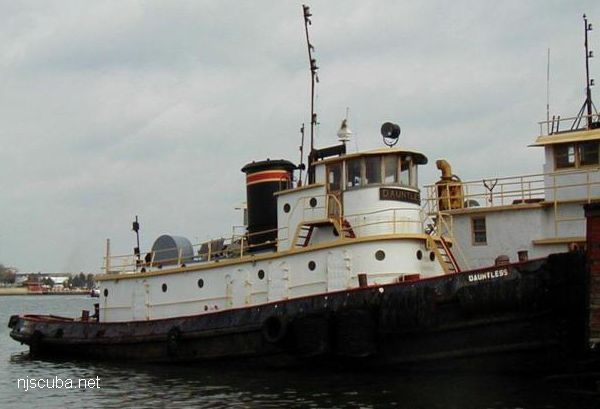
- Type:
- artificial reef, tugboat
- Built:
- 1936, Jakobson Shipyard, Brooklyn, New York NY USA
- Specs:
- ( 80x24 ft ) 146 gross tons
- Sunk:
- Tuesday November 26, 2019 - 12-Mile Artificial Reef
- Depth:
- 125 ft
- GPS:
- 40°37.073' -72°31.094'
More: Dauntless ...
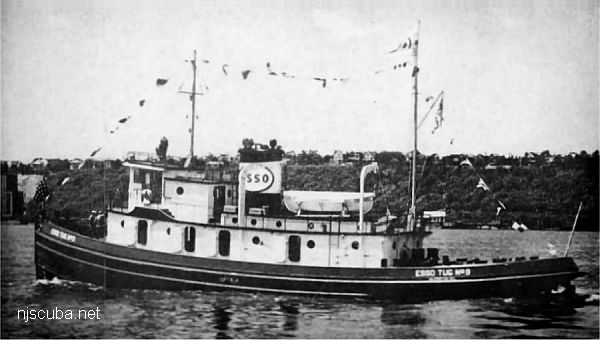
- Type:
- artificial reef, tugboat
- Built:
- 1950, Gulfport Shipbuilding, Gulfport Shipbuilding Corp, Port Arthur, TX USA
- Specs:
- ( 102 ft ) 197 gross tons
- Sunk:
- Tuesday November 26, 2019 - 12-Mile Artificial Reef
- Depth:
- 125 ft
- GPS:
- 40°37.104' -72°31.388'
More: Relentless ...
Questions or Inquiries?
Just want to say Hello? Sign the .