
Wards Island
- Type:
- artificial reef, ferry, USA
- Built:
- 1929, Electric Boat Company, Groton CT USA
- Specs:
- ( 101 x 32 ft )
- Sunk:
- Friday August 10, 2018 - Hempstead Artificial Reef
- Depth:
- GPS:
- 40°30.994' -73°32.955'


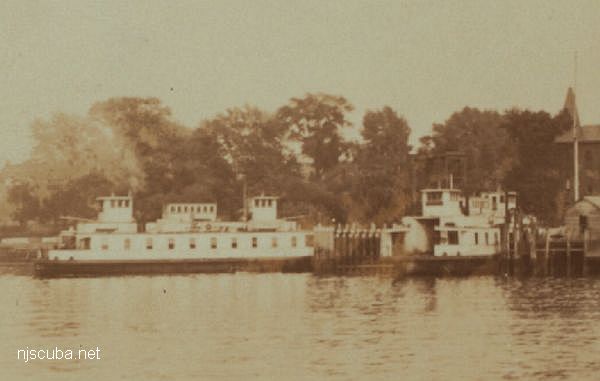
Wards Island and her sister Tenkenas were built to serve Wards Island, which at the time was a mental hospital. In 1937, bridges were completed connecting the island with the rest of New York City, and the almost-new ferries were no longer needed. Wards Island was cut down to a barge and equipped with a crane for use on New York's canal system. Tenkenas apparently received a similar conversion but must have gone to the breakers a long time ago, as there are no records.
I wonder why they weren't just put to use elsewhere? New York is a city of islands, and back then there were ferries running everywhere. Maybe they were too small to be economical. I suspect they were a somehow flawed design - Electric Boat's expertise is submarines, not ferry boats.


I see no evidence that the old ferry retained any self-propulsion after conversion. The props and rudders are merely there to fill the holes. On the other hand, the way the bow rudder is welded in place and ventilated is a clue that the vessel may have been able to drive itself in one direction, at least until the engine wore out. A big clumsy vessel like this in tight inland waters would be much better handled by one or two tenders, and every picture shows one in attendance.


This is a better fate for the old boat than being cut up for scrap and sold to China.
Questions or Inquiries?
Just want to say Hello? Sign the .