
Carolina (1/2)
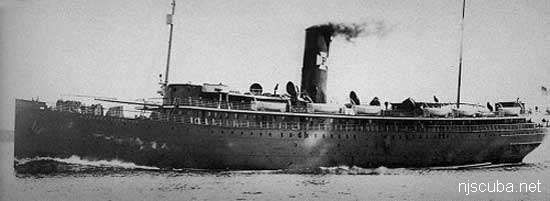
- Type:
- shipwreck, liner, USA
- Built:
- 1896, Newport News Shipbuilding, Newport News VA USA, as La Grande Duchesse
- Specs:
- ( 380 x 47 ft ) 5017 gross tons, 330 passengers & crew
- Sunk:
- Sunday June 2, 1918
shelled by U-151 - 13 casualties - Depth:
- 250 ft


A Brief History of the SS Carolina
by John Yurga
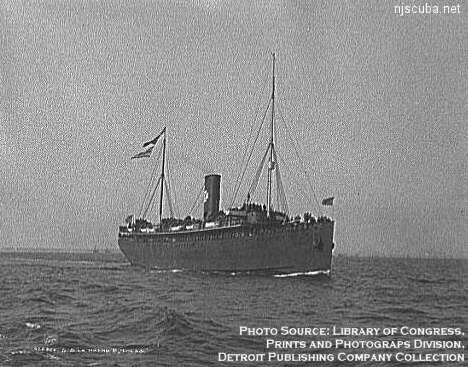
The ship known as the SS Carolina had an interesting history prior to its sinking on June 2, 1918 by the U-151. Between her birthing pains, ownership by three different companies, and a total refit, she made the press time and time again. This history covers the highlights of her career.
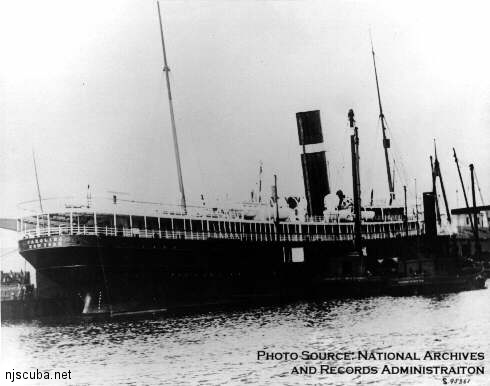
In April 1895, The Newport News Shipbuilding and Dry Dock Company received a $500,000 contract for a passenger/cargo vessel from the Plant Investment Co. Hull No.15 was the first passenger vessel to be built at what was to become one of the pre-eminent shipyards on the East coast. Because competition for shipbuilding work was so fierce at the time, it was said that there would be no profit in building her. The 404' ship was to be powered by twin quadruple-expansion engines with 4 water-tube boilers. She was christened on January 30, 1896, as La Grande Duchesse. Following her completion, she made three local sea trials and then sailed for New York in late November. She was refused by the Plant Co., due to boiler and propeller problems. She came back to the shipyard, adjustments were made, and was finished in September of 1897. Again, she was refused. This time, Newport News decided to get rid of the water-tube boilers in favor of more conventional fire-tube boilers.
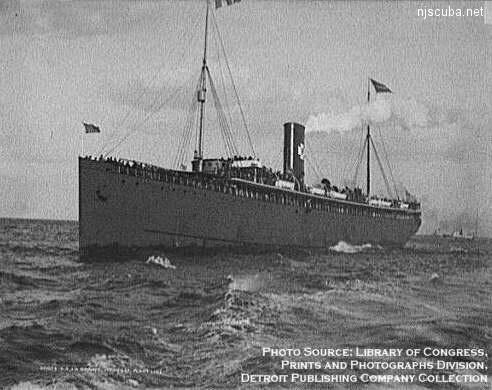
La Grande Duchesse successfully completed her sea trials in June of 1898, at which point the US government chartered her as a transport during the Spanish-American War. She was finally accepted by the Plant Co. on April 9, 1899 - over 3 years late and $536,000 over contract price. To this day she represents the largest percentage of loss on a contract the yard has ever suffered.
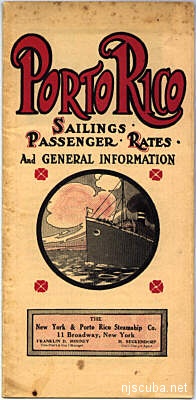
Incredibly, after all the trouble in getting her, La Grande Duchesse was passed to the Ocean Steamship Co. in November 1901 and renamed City of Savannah. Under this name, she ran a coastal service between New York and Charleston, SC. In January 1906, she was sold to the New York and Porto Rico Steamship Co., and renamed Carolina. The NYPR Co. had a regular service to Puerto Rico ( called Porto Rico in those days ) and Cuba involving several vessels. The ship had found a home at last.
Unfortunately, Carolina seemed not to be able to shake off her unlucky past. She had continual problems with her machinery; it seemed that something broke down almost every voyage. She also suffered from excess vibration and had poor steering and handling qualities due to the twin-screw design of the stern. While in drydock at Shooter's Island, NY on November 21, 1907, she was badly damaged by fire.
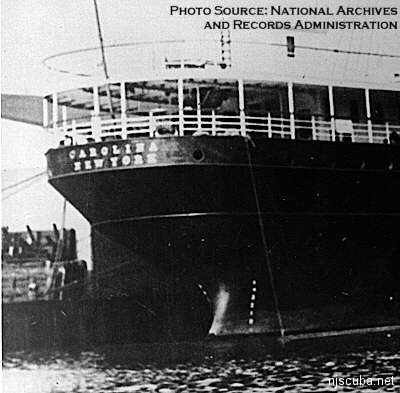
By 1913, Carolina needed new boilers. It was decided to completely rebuild the stern of the vessel, changing her from twin-screw to single-screw. This represented the most complete and complex rebuilding of a vessel her size in the US. The entire stern was taken apart, as was her upper and main decks, to access her boilers and engines. Carolina was refitted with one triple-expansion engine and four single-ended boilers. Even with one engine and 3000 horsepower less than before, she now was faster, steered better, and did not suffer from any vibration problems. This was all due to the shape of the stern, allowing her to slip through the water much more gracefully. The work was done by her original building yard, Newport News Shipbuilding and Dry Dock Co., which was happy to finally turn a profit on the ship. She was delivered to New York on March 2, 1914. Just to show she was still the same ship, less than two months later she collided with the Hamburg American liner Cleveland in New York harbor. From then on Carolina seemed content to quietly sail back and forth along her given route until she met up with the U-151 four years later.
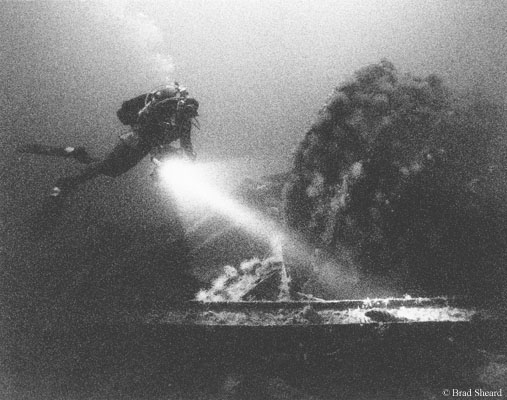
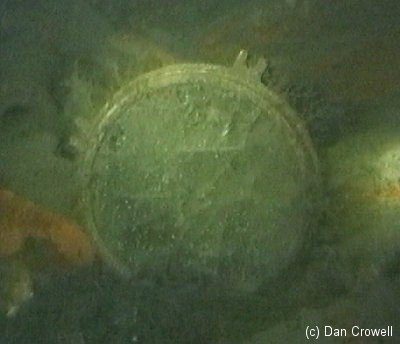
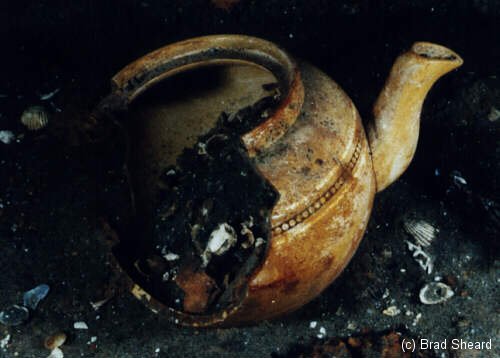
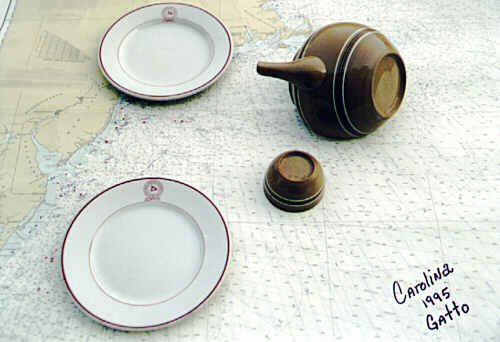
Original NJScuba website by Tracy Baker Wagner 1994-1996
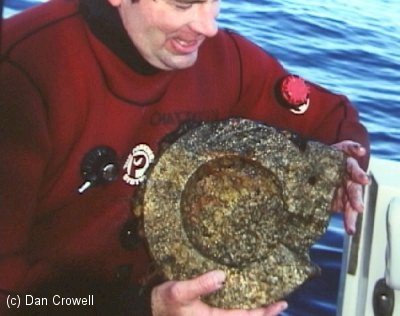
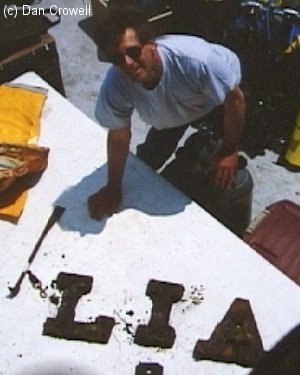
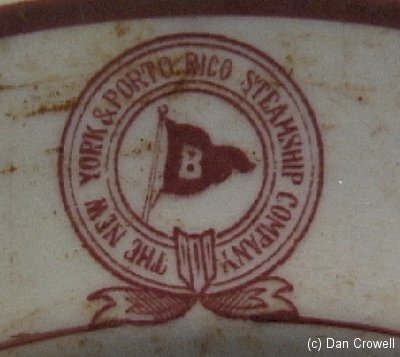
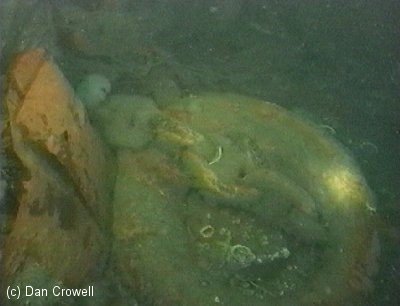
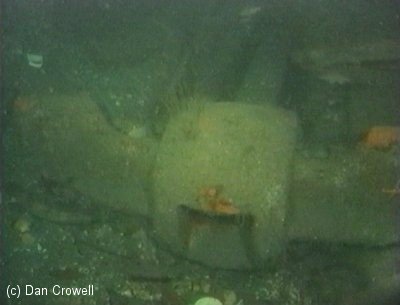
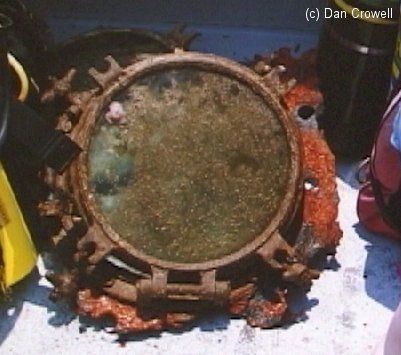
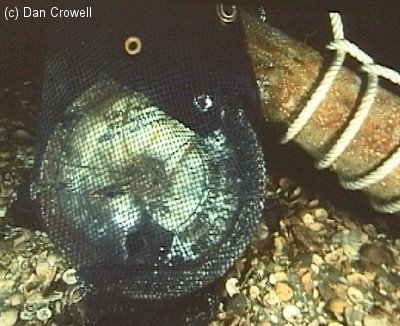
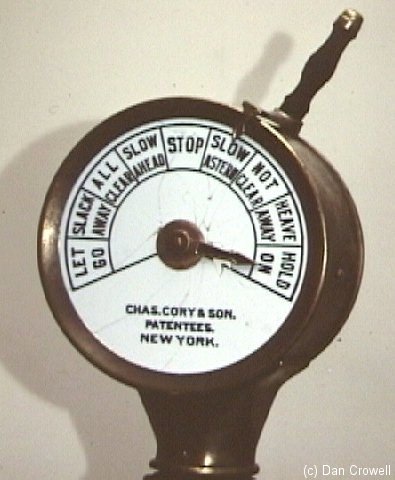
images: John Chatterton
Courtesy of Dan Crowell
Black Sunday, Deep Sea Dive Sites, Dive Sites, Liners, World War I,
Deep Sea Chart (pan right for more)
- Four Daughters
- USS Akron
- Andrea Doria
- Atlantic Princess
- Azua
- USS Baldwin
- Bidevind
- Brian C
- Carolina
- Catamount
- Cayru
- Champion
- USS Cherokee
- Coimbra
- Corvallis
- Deepwater Dump
- Durley Chine
- Edward H Cole
- Galimore's Cayru
- Lady Gertrude
- Herbert Parker
- Thomas Hebert
- Hvoslef
- Isabel B Wiley
- India Arrow
- USS Jacob Jones
- Jacob M Haskell
- Lady Mary
- Lillian
- Maiden Creek
- Miraflores
- Misty Blue
- Montgomery
- USS Moonstone
- USS Murphy
- Northern Pacific
- Norness
- Pan Pennsylvania
- Republic
- Rio Tercero
- RP Resor
- Southern Lillian
- USS S-5
- USS Salmon
- SC-209
- Sebastian
- Shookus
- Sommerstad
- USS Spikefish
- Suffolk
- Texas Tower
- Texel
- U-550
- U-869
- Varanger
- Wily Fox
- Winneconne
More: Deep Sea Dive Sites ...
U-151's path from Isabel B Wiley to Carolina
The U-151 was the first German U-boat to operate in U.S. territory in World War I. The U-151 is not actually sunk in these waters ( it was sunk deep off Virginia after the war, ) but it did "contribute" the following six shipwrecks, all on the same day, Sunday, June 2, 1918:
More: Black Sunday ...
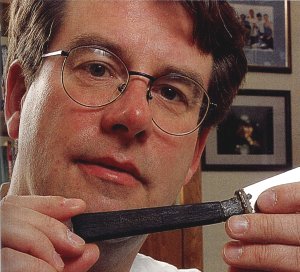
knife, the most tangible clue to the
identity of New Jersey's mystery U-boat.
In 1991, while checking out an obscure site known for hanging up fishing lines, I dropped down the anchor line only to find a virgin German U-boat. A wreck diver's fantasy of discovering a new shipwreck somehow had become a reality, and it was every bit as good as could be imagined. While reveling in the experience, I wondered if I would have enough skill and luck to ever make it happen again. Several discoveries later, the challenge is still irresistible.
More: Searching For Shipwrecks ...
Questions or Inquiries?
Just want to say Hello? Sign the .