Portholes & Deck Lights
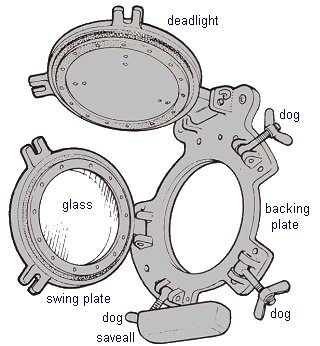
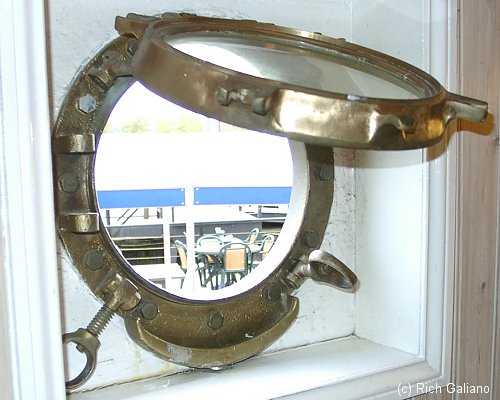
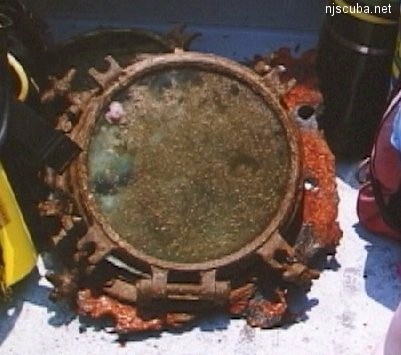
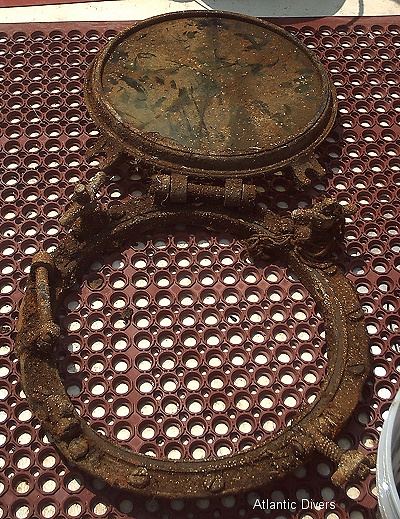
Portholes are used to let light and air into a ship. They are usually constructed of brass for corrosion resistance, which makes them highly desirable as collector's items. The drawing at right shows all the major parts:
- The immovable backing plate, bolted to the vessel's hull, which carries the hinges for the swing plate and deadlight
- The glass swing plate, which is secured shut by large butterfly nuts called 'dogs'
- The deadlight, used when it is desired to black-out the vessel, as in time of war
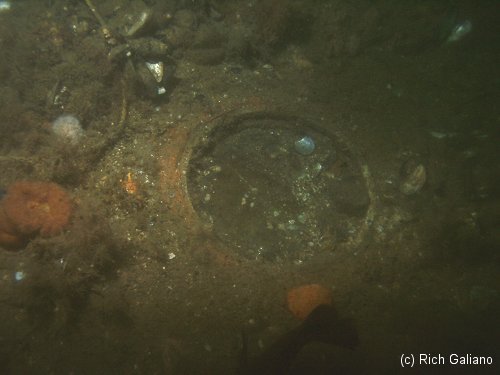
I have heard stories from the "old days" about coming up from a dive with as many portholes as you could lift, but the truth is that nowadays portholes are a rarity. That's not to say that they are impossible to find, though, as shifting sands and collapsing wreckage reveal hidden ones from time to time.
Often, if you do find one, the swing plate will have already been removed by some prior diver who couldn't get the backing plate loose. This usually requires hammer, chisel, and a set of wrenches that you don't mind sacrificing to the saltwater.


Deck Light


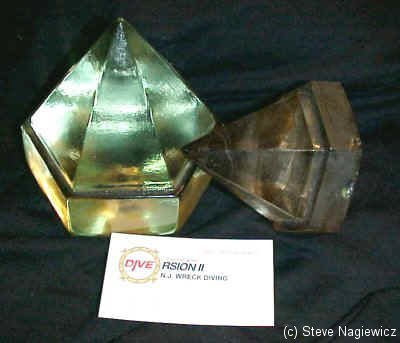
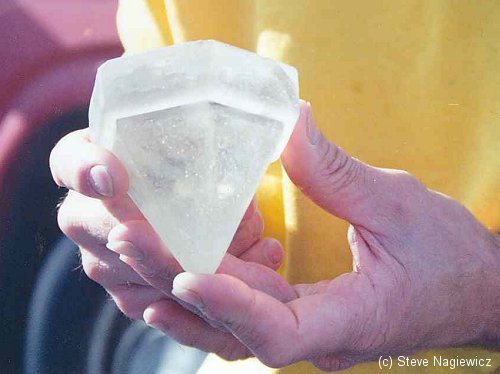
These glass prisms were mounted in the deck or sides of vessels to illuminate the interior with outside light. In modern times, the term dead-light refers to any non-opening window in a vessel. More commonly, though, the term refers to something else entirely: the metal backing plate of a porthole, which can be used to block illumination or seal up the opening in case the glass breaks.
On an old sailing ship, a deck light like this would be mounted in a watertight frame through the deck, with the pointed end down, to disperse sunlight within. At least during the day, this would save the expense and danger of burning oil lamps or candles to light the ship. Once electric lights came into use, deck lights were no longer necessary, so they are only found on older wrecks.
Something similar but not nearly as romantic can be found in the artificial reefs, where many of the tanks and APCs still have the glass prism periscopes used by the driver to see outside the vehicle when his hatch is closed. With a little work, these can often be worked loose.