Recent Edits
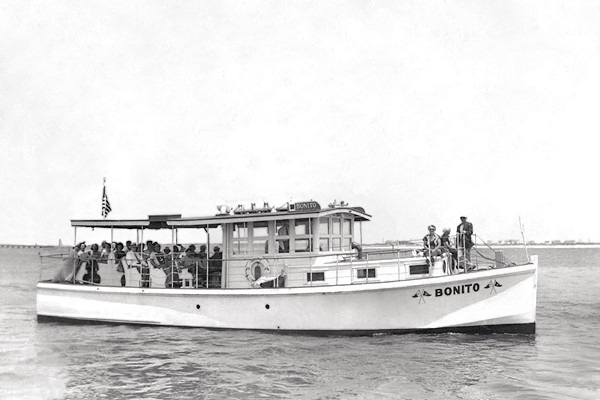
- Type:
- shipwreck, charter boat
- Built:
- 1929, Carvel Beach, MD
- Specs:
- ( 48 ft ) 25 GT
- Sunk:
- Wednesday 7/20/1960
scuttled - Depth:
- 80 ft
The Bonito was sunk as a "fish haven", an artificial reef in modern parlance. I'm sure there is nothing left of the wooden hull, and anything else has long since disappeared into the sand, but it is interesting for being one of the earliest documented reefs.
More: Bonito ...
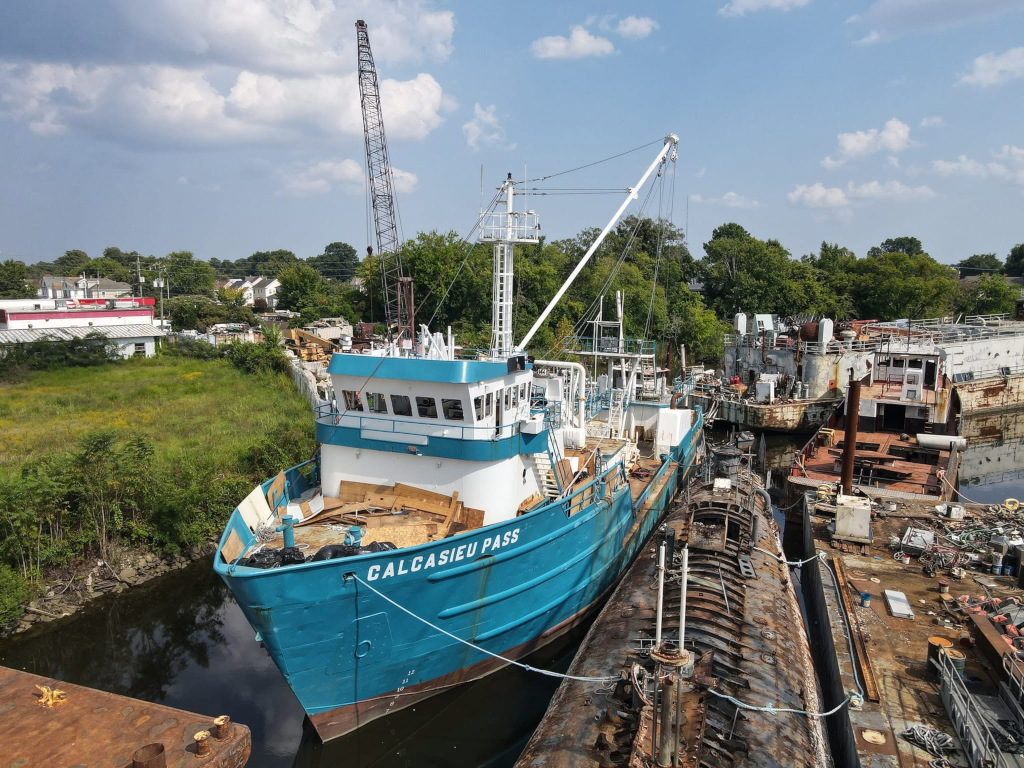
The tube next to her is the remains of USS Clamagore SS-343
- Type:
- artificial reef, purse seiner
- Built:
- 1982, Bay City Shipbuilding, Panama City FL USA, as Judy V
- Specs:
- ( 164 x 38 ft ) 409 tons
- Sunk:
- Aug 12, 2026 - DelJerseyLand Artificial Reef
- GPS:
- 38°30.715' -74°30.830'
- Depth:
- 120 ft
More: Calcasieu Pass ...
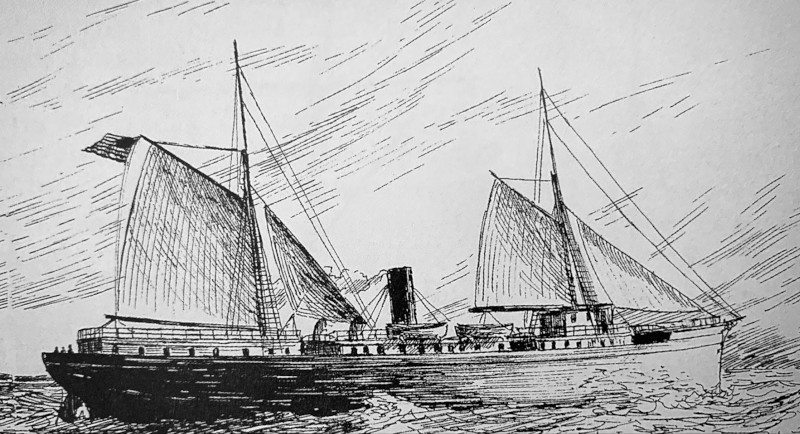
- Type:
- shipwreck, steamer, USA
- Built:
- 1872, Pusey & Jones, Wilmington DE
- Specs:
- ( 249 x 33 ft ) 1564 gross tons
- Sunk:
- Monday October 11, 1917
foundered in a storm, 1 casualty - GPS:
- 38°36.93' -74°55.82' (DNREC)
- Depth:
- 60 ft
More: New Orleans ...
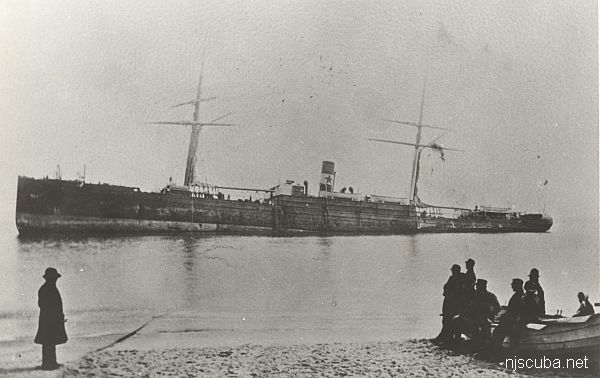
- Type:
- Adonis - shipwreck, wood-hulled bark
Rusland - shipwreck, iron-hulled steamer, England - Built:
- Adonis - 1853, Germany
Rusland - 1872, Scotland, as Kenilworth - Specs:
- Adonis - 550 tons, 12 crew
Rusland - ( 345 x 37 ft ) 2538 gross tons, ~200 passengers & crew - Depth:
- 25 ft
- Sunk:
- Adonis - Tuesday March 8, 1859 - ran aground in bad weather, no casualties
Rusland - Saturday March 17, 1877 - ran aground in bad weather, no casualties
More: Dual Wrecks ...
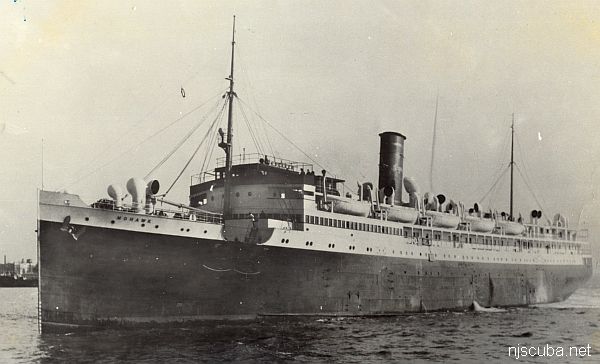
- Type:
- shipwreck, liner, USA, Clyde-Mallory Lines ( sailing under Ward Lines )
- Name:
- A tribe of Iroquoian Indians of the eastern New York area.
Three identical sisters were named Cherokee, Seminole, and Algonquin - Built:
- 1926, Newport News Shipbuilding, Newport News VA USA
- Specs:
- ( 387 x 54 ft ) 5897 gross tons, 163 passengers & crew
- Sunk:
- Thursday January 25, 1935
collision with Norwegian freighter Talisman - 45 casualties - Depth:
- 80 ft max
More: Mohawk ...
This is the trailer for a movie that came out several years ago, but I just found out about it. Old hands will recognize the boat - it is the famous SEEKER. From IMDB:
More: This is a Sad Thing ...
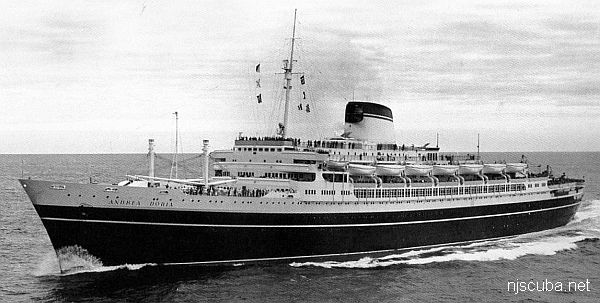

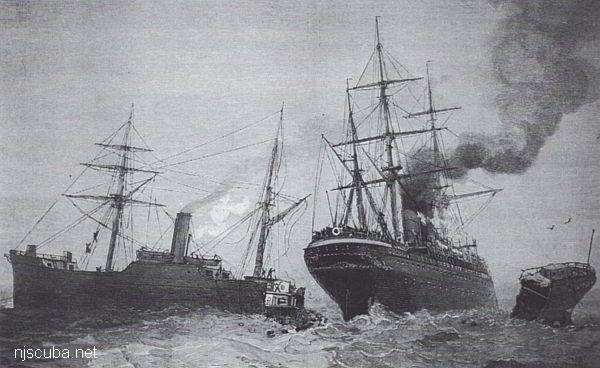
- Type:
- shipwreck, liner, Italy
- Name:
- A 16th century Genoese Admiral. This name had been previously carried by a number of Italian warships ( see page bottom )
- Built:
- 1951, Italy
- Specs:
- ( 700 x 90 ft ) 29083 displacement tons, 1706 passengers & crew
- Sunk:
- Thursday July 26, 1956
collision with freighter Stockholm ( 12000 tons) - 46 casualties - GPS:
- 40°29.405' -69°52.028' (AWOIS)
- Depth:
- 240 ft ( 190 ft minimum )
More: Andrea Doria ...
New Developments in Artificial Reefs
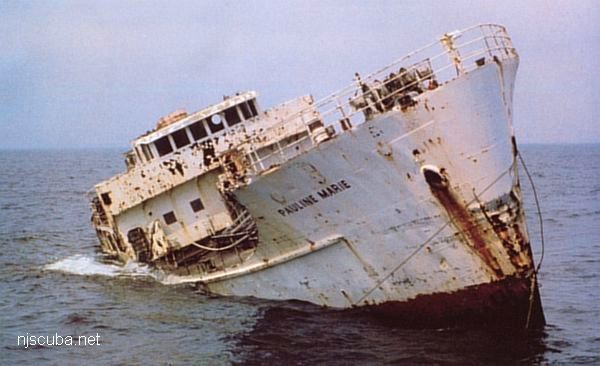
By Evelyn DeWitt Myatt & Bill Figley, 1986
It's hard to imagine anything that could have looked more forlorn than the rusty old freighter whose proud seagoing days were a thing of the past. Floating idly at her berth awaiting her fate, she was a victim of nature's ravages that had left her beautiful only in the eyes of her old captain and crew. The Pauline Marie, however, was not destined to be the victim of a cutting torch that would turn her into a tangle of scrap steel. Instead, she was acquired by the New Jersey Artificial Reef Program and went down with dignity as an artificial reef in March 1985. She now provides continuing services from her watery grave in the Atlantic, some twelve miles off Atlantic City, and her appeal to marine life is undeniable. Her interior compartments now shelter fish and crustaceans; her decks now provide substrate for mussels, soft corals, and plant life; and her newfound productivity has put delicious seafood on many tables.
More: Artificial Reefs History ...
This Rustic Ferry is Getting Dismantled in Queens to Become an Artificial Reef
The Prudence Ferry has been abandoned for years, but will get a second life in the waters off Fire Island this summer.
The City, News Partner
Mon, Apr 20, 2026
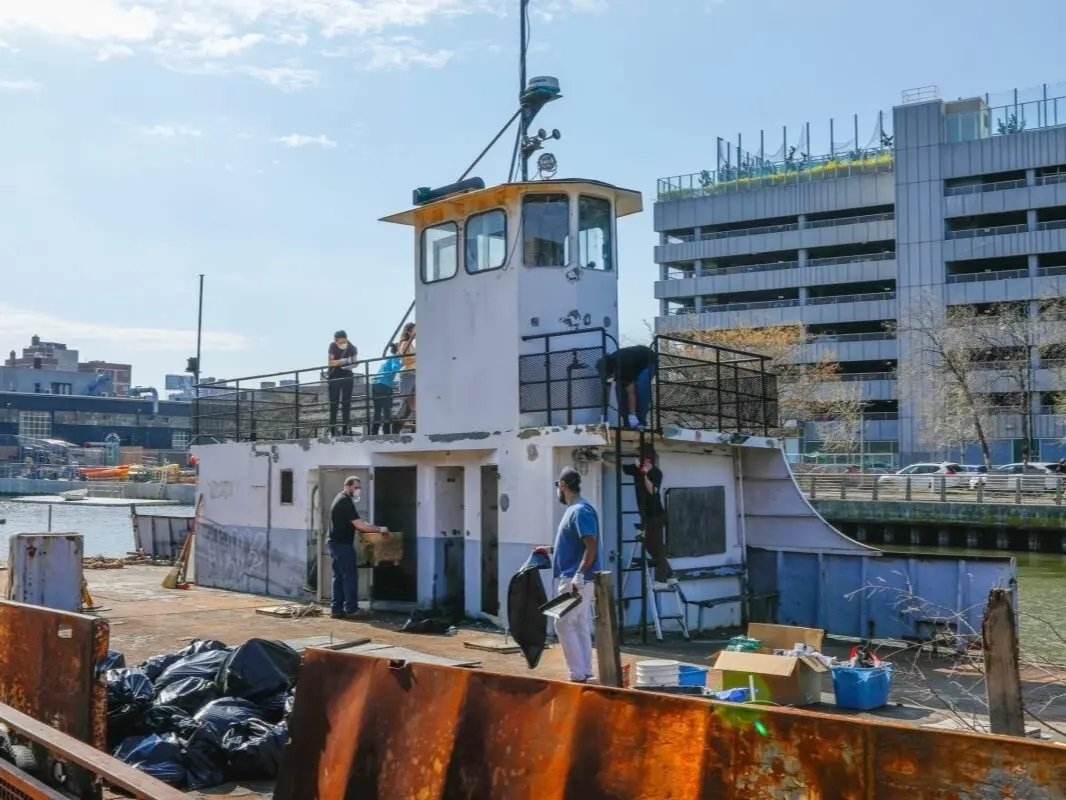
By Lilly Sabella, The City
Behind the gate of a waterfront restaurant, a rusted ferry wobbles on the waves of the East River. It’s become a familiar eyesore for residents of Long Island City, Queens since it was first moored to the Anable Basin in 2012 and has floated there since, a forgotten lump of metal - until now. The abandoned ferry, named Prudence, is getting a second life as an artificial reef. Each Saturday morning this spring, residents in masks and safety goggles leap from stable ground onto the ferry to remove any hazardous materials and make it fit for sea creatures to move in.
More: Very Soon Artificial Reef ...
- Home ...
- Dive Sites ...
- Artificial Reefs ...
- Marine Biology ...
- Artifacts ...
- Gear & Training ...
- Blog ...
- Cozumel ...

Welcome to NJScuba.net, a website dedicated to exploring the New Jersey / New York region underwater -- "Wreck Valley". Here you will find information on dive sites, marine biology, artifacts and activities, gear and training, and many other subjects.
More: Home ...