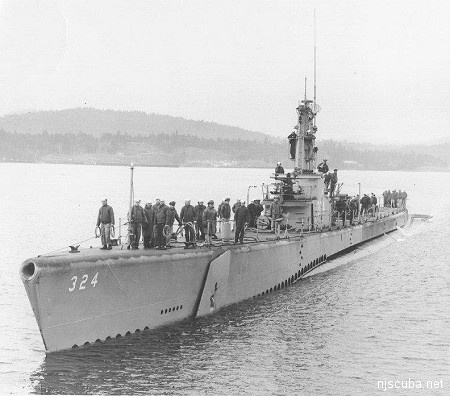
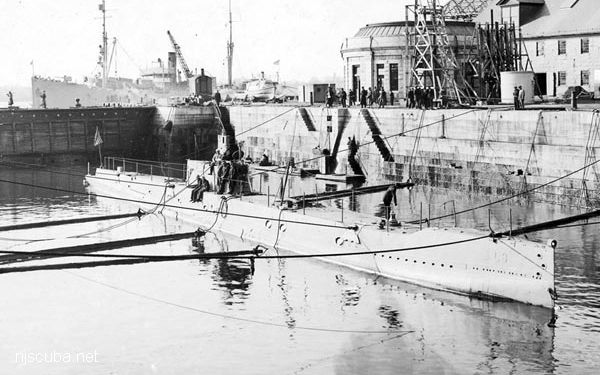
World War II - USS Blenny SS-324 - 312 ft, 1,810 tons, 8 knots submerged
Everyone knows what a submarine is - a ship that can go underwater. Hardly needs any explanation. Unless you're in the US Navy. By the Navy definition, only their modern, nuclear-powered boats ( all submarines are called "boats" ) are true submarines, designed to operate beneath the surface almost indefinitely. Anything else is merely a "submersible", tied to the surface by the need for fuel and air. Whatever.
The U-151 was the first German U-boat to operate in U.S. territory in World War I. The U-151 is not actually sunk in these waters ( it was sunk deep off Virginia after the war, ) but it did "contribute" the following six shipwrecks, all on the same day, Sunday, June 2, 1918:
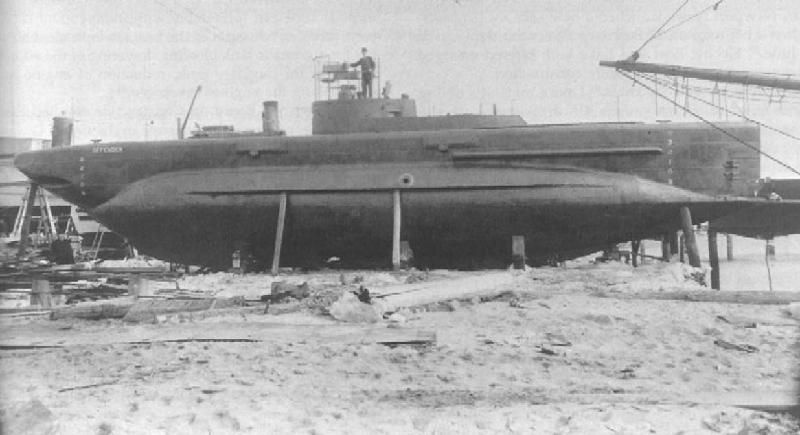
Submarine Defender as rebuilt with sharply raked bow, and her topsides changed, ready for launch at Lake's Bridgeport base. Above her twin propellers is the shutter of a stern torpedo tube. Lake's characteristic pair of amidships planes have been folded up (they are forward and abaft the big conning tower).
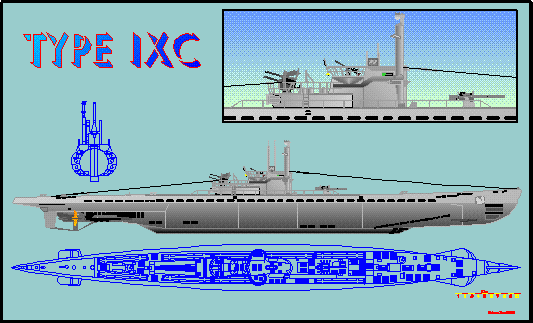
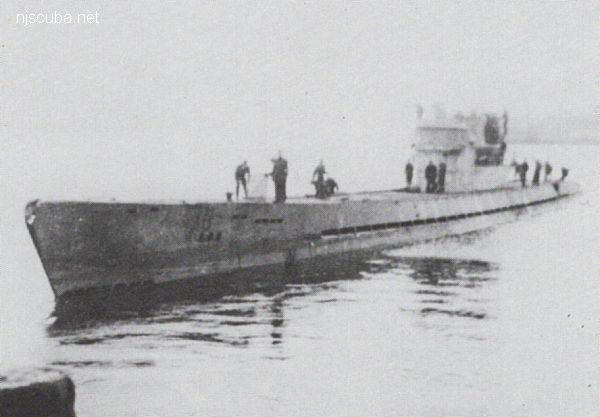
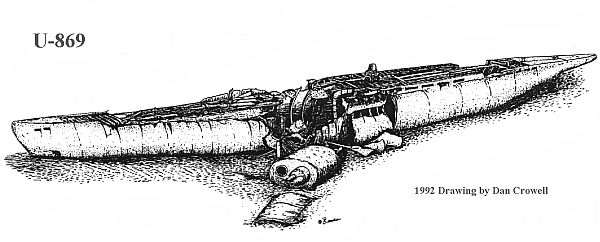
shipwreck, Type IXc/40 U-boat, Kriegsmarine, Germany
Built:
1942, Germany
Specs:
( 252 x 22 ft ) 1051 displacement tons, 48-56 crew
Sunk:
Saturday April 16, 1944
by depth charges and gunfire from destroyer escorts USS Gandy, USS Joyce and USS Peterson after torpedoing tanker Pan Pennsylvania - 44 casualties.