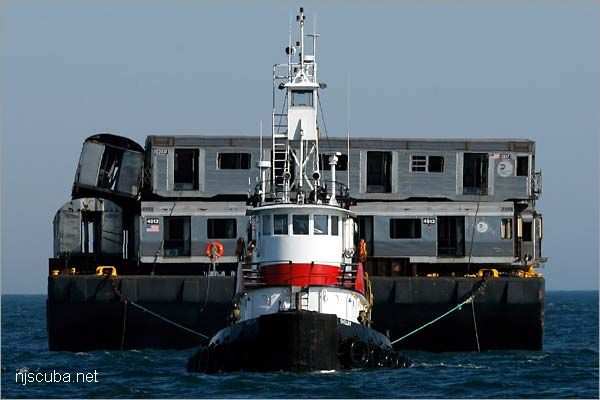
~100 "Brightliner" subway cars - NYC Subway system
Built:
1963-1964 - Budd Company - Model R32 # 3350-3949
1966-1967 - St. Louis Car - Model R38 # 3950-4149
1967-1969 - St. Louis Car - Model R40 # 4150-4349
1969-1970 - St. Louis Car - Model R42 # 4550-4949
Specs:
( 60 x 10 ft ) 10 tons ( all, typical, body only )
Sunk:
44 cars were sunk on Atlantic City Reef on April 3, 2008
more in Cape May reef and Delaware reefs
Sponsor:
New York City Metropolitan Transportation Authority ( MTA )
Delaware has a string of artificial reef sites in the Delaware bay, but they are of little interest to divers. Most of the sites are quite shallow and perilously close to the shipping lanes, several of them were actually reduced for this reason. The conditions in the bay are hardly good for diving. The reefs consist mostly of concrete rubble from construction in Philadelphia and other cities on the river. Also shown is New Jersey's sole artificial reef in the bay.
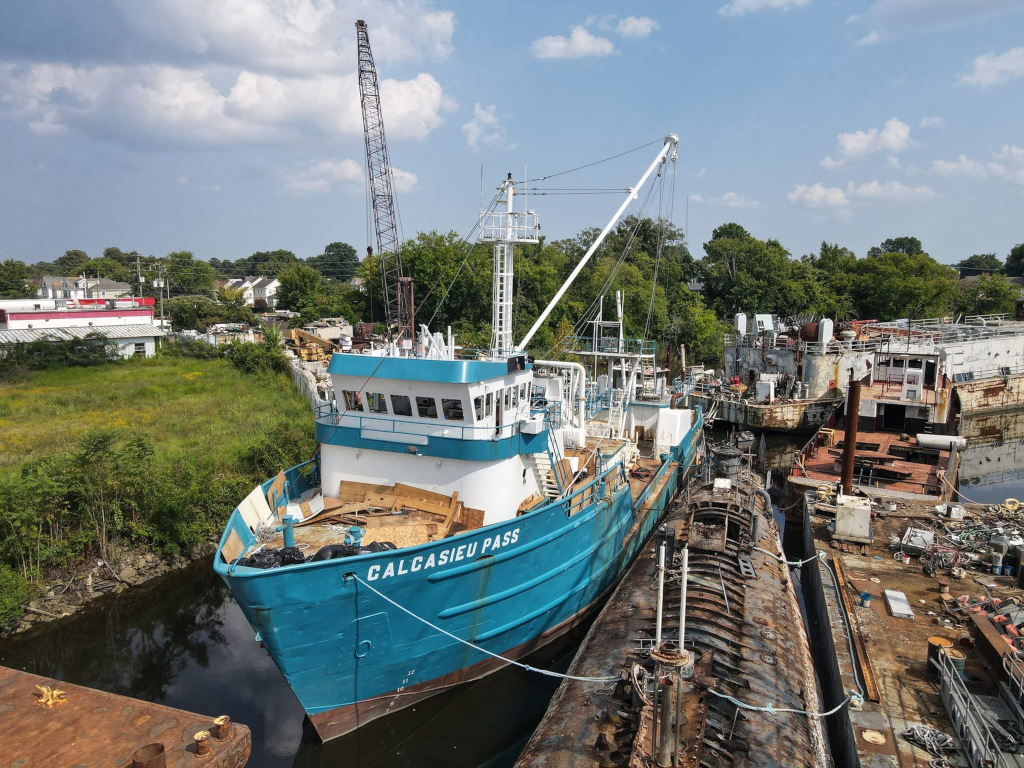
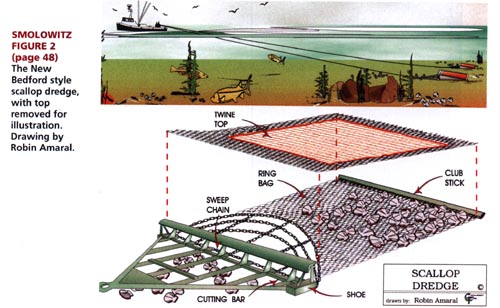
Scallop dredging is similar to clam dredging in that large metal rakes are dragged across the bottom. However, that is where the resemblance ends. Since scallops live on the surface, unlike buried clams, they can be harvested with much lighter-weight gear. A scallop rake is typically much smaller than a clam rake, consisting of a triangular frame with a chain-link catch-bag. No hydraulics are necessary. Such gear does not require as much towing power as for clamming. Since scallops are cleaned at sea as they are caught, and all the heavy shells discarded, there is also much less on-board storage requirement. Scallop boats can therefore be smaller than clam boats, and some are quite small indeed. In fact, the entire business model seems to be different, and it appears that a few small privately-owned operations persist to this day, in contrast to clamming, which is now dominated by a few corporate fleets.