Propellers, Shafts & Rudders

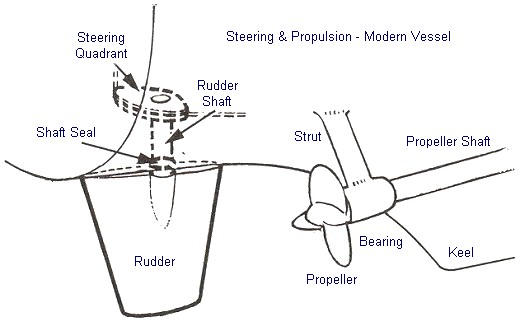
propeller & rudder
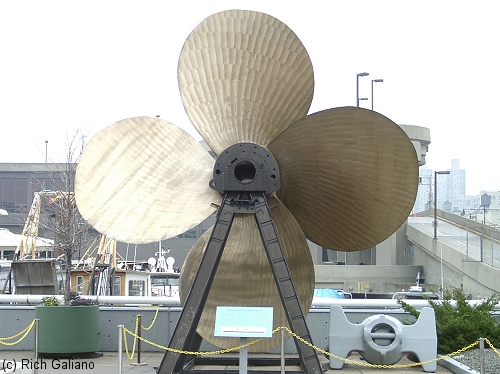
modern brass propeller
A huge modern brass propeller ( from the SS United States ) on display.
shipwreck Delaware propeller
Looking down the prop shaft at the iron propeller on the Delaware. The narrow squarish blades indicate that this is a rather primitive 1880's model, unlike the more modern rounded prop on the Macedonia below.
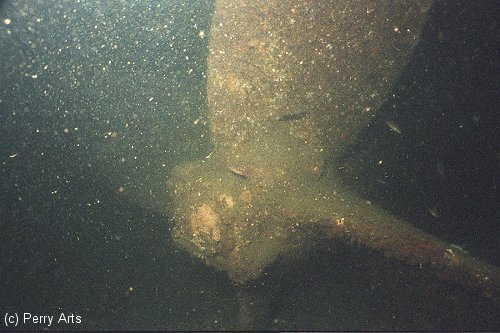
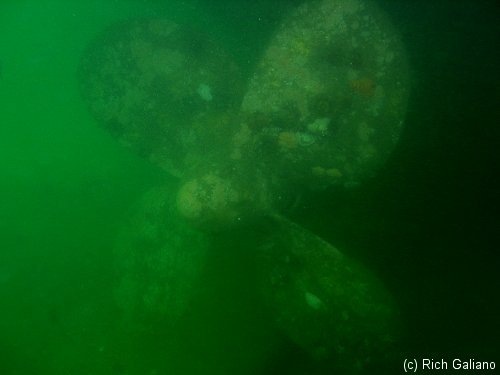
shipwreck Macedonia propeller
The propeller on the Macedonia.
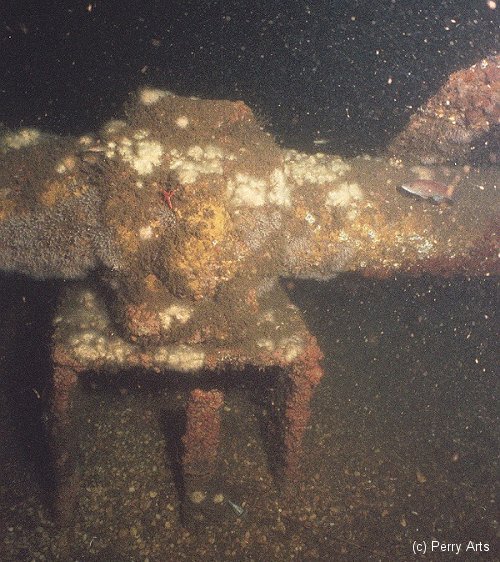
shipwreck Macedonia shaft mount
Propeller shaft bearing and mount on the Macedonia.
reef Venturo propeller
The propeller on the GA Venturo - a completely modern design. Note the wide, round blades.

Breaking a propeller shaft at sea can be a disaster. The propeller stops turning and becomes a drag, while the vessel's momentum carries it forward. The propeller slams backward, extracting the broken shaft and often mangling the rudder. This leaves a large hole open in the bottom of the vessel, directly into the bilges and machinery spaces. On a large vessel with a deep draft and a large shaft, the water comes in like a fire hose - uncontrollable.

The engine is soon disabled, and along with that the pumps, which in any case are probably not big enough to keep up with this magnitude of flooding. The outcome may take several hours, but it is inevitable unless maybe the Coast Guard can fly out a special de-watering pump on one of their big helos. Unlike a collision, storm, or rogue wave, there is usually plenty of time for an orderly abandon-ship, and there are seldom casualties if rescue is available.
Shipwreck Emerald
The "Emerald" fell victim to a broken prop shaft in 1873, and the Lady Gertrude sank the same way in 2016.
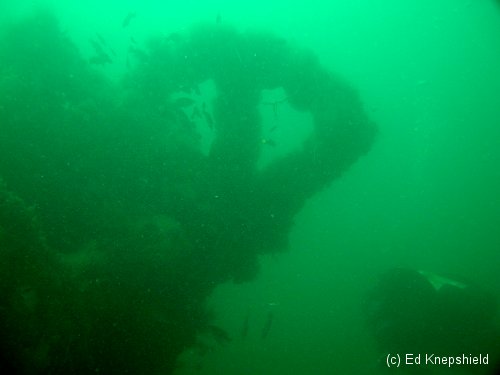
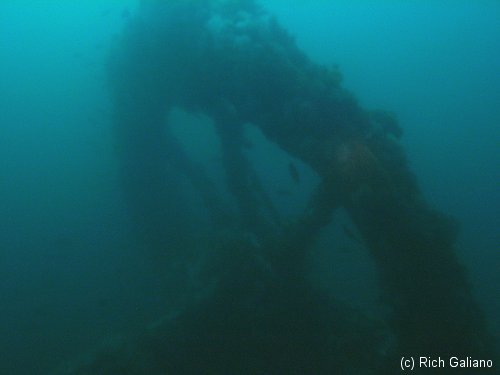
shipwreck Oregon steering quadrant
The fallen steering quadrant on the Oregon, perhaps 20 ft across.
shipwreck Tolten steering quadrant
Tolten steering quadrant
The steering quadrant on the Tolten

A number of small warships are sunk in New Jersey and New York waters.

subchaser (model)

A subchaser was a small coastal patrol vessel of World War I or II. Subchasers were lightly armed and even more lightly constructed, mostly out of plywood, powered by two diesel (WWII) or three gasoline (WWI) engines. Roughly the same design was used in both wars - 110 ft long, about 100 tons. Almost a thousand were built over both World Wars, and several are lost in the waters around this area. Many private yachts and some larger fishing trawlers were converted to perform this function also, like the Tarantula and the Moonstone. Conversely, some subchasers were converted to other duties after the war, such as the Bronx Queen, pictured below in military trim. Real subchasers were designated SC-, while converted yachts were designated SP-, PY- ( patrol yacht ) or PYc ( patrol yacht - coastal. )