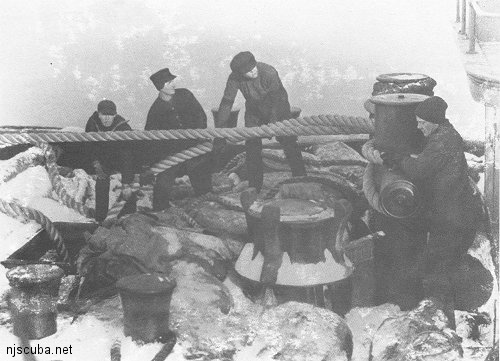
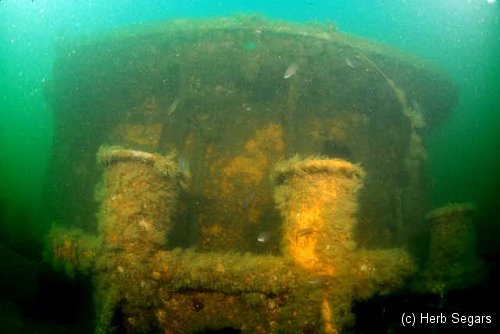
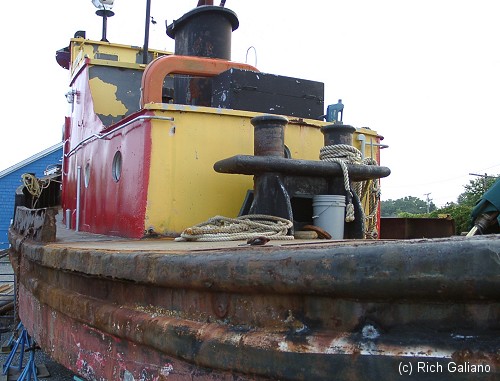
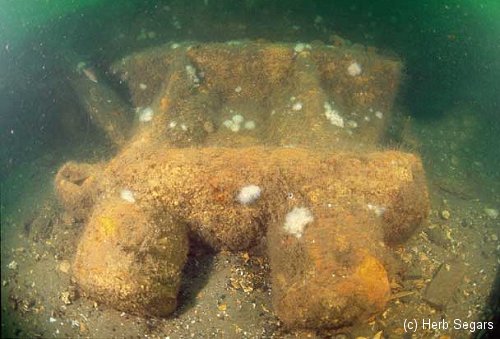
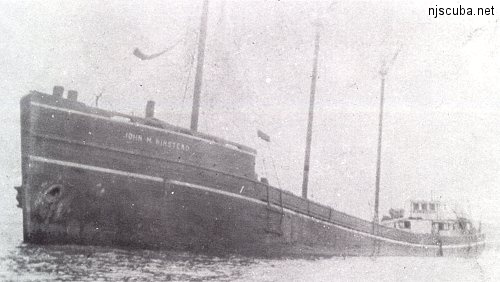
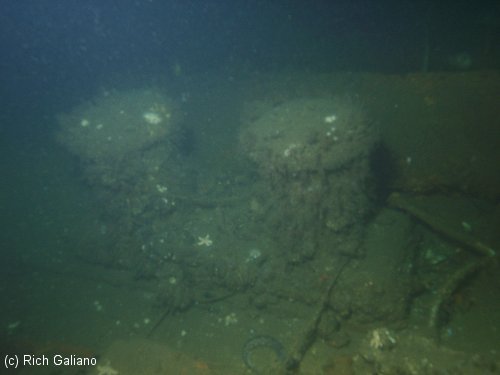
A huge towing bit in use on a turn-of-the-century tugboat. Notice the smaller deck cleat and the steam-powered capstan in the foreground.The bow towing bit in front of the wheelhouse on a more modern tugboat - the G.A. Venturo.Towing bit on the Ingrid AnnA large towing bit, fallen over in the sand on the Riggy wreck.A similar but even bigger towing bit upended on the "Middle barge". Such an artifact is a sure sign of a schooner barge wreck.The two tops of the towing bit are evident in the bow of this schooner barge. A similar arrangement would be found in the stern. On barges, the bits were mounted lengthwise, whereas on the tugboat above it appears to be mounted transversely.An enormous iron mooring bit on the Oregon.Cast-iron mooring bit recovered from the Delaware using 500-pound lift bags. The casting proved to be hollow, and not as heavy as you might think, perhaps 250 pounds. The same article would be called a bollard if installed on land.... with a lot of cleaning-up and anti-corrosion paint ...