China & Silverware (2/2)

NJ Scuba
Andrea Doria
China from the shipwreck Andrea Doria

In the era of the great trans-Atlantic liners, traveling first-class meant the height of luxury. Of the Andrea Doria, the Italian Line said, "She was also designed as a living testament to the importance of beauty in the everyday world." This was reflected in every part of the ship, right down to the china service.
China from the shipwreck Andrea Doria

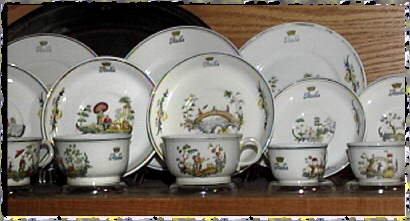
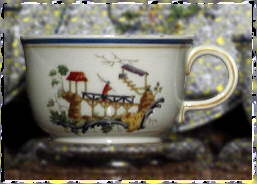
Each piece of this elaborate first-class china bears a scene in an oriental design. There are a number of different scenes, and a stylized version of the Italia crest was used to complement the design.
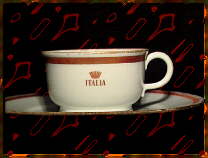
China from the shipwreck Andrea Doria

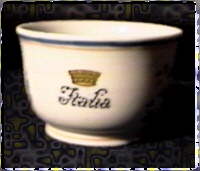
The standard first-class china was less ornate, but elegant in its simplicity, with a border and crest of red and gold leaf.

The china used by the second- and third-class passengers was plainer than the first-class pieces but is still evidence of the Italian Line's commitment to "beauty in everyday life" aboard ship.
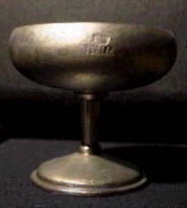
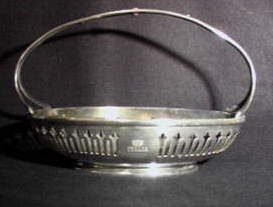
China from the shipwreck Andrea Doria
The pewter sherbet dish was used in the Second Class dining room.
China from the shipwreck Andrea Doria
A silver bread basket from First Class.
China from the shipwreck Andrea Doria
When the first dives were made to the second class area in 1991, this pitcher was the first item retrieved.
China from the shipwreck Andrea Doria
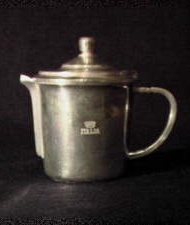
A silver teapot from First Class. There are several size teapots, which were used according to how many passengers were seated at the table.
China from the shipwreck Andrea Doria
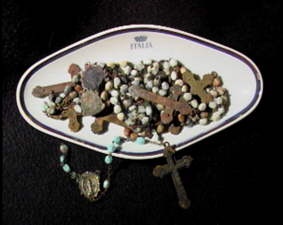
These rosary beads were being shipped from Italy to the United States as part of the Andrea Doria's cargo.
China from the shipwreck Andrea Doria
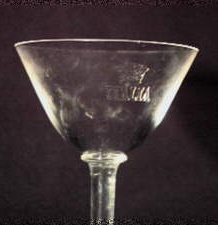
A martini glass.
China from the shipwreck Andrea Doria

In pictures onboard the ship, vases like this one appear on each table in the dining room. The vase is made from a low-quality clay, decorated with a floral design.

Original NJScuba website by Tracy Baker Wagner 1994-1996

 1 2  

periodic table

A metal is a chemical element displaying certain properties by which it is normally distinguished from a nonmetal, notably its metallic luster, the capacity to lose electrons and form a positive ion, and the ability to conduct heat and electricity. The metals comprise about two-thirds of the known elements. Some metals, including copper, tin, iron, lead, gold, silver, and mercury, were known to the ancients; copper is probably the oldest known metal.