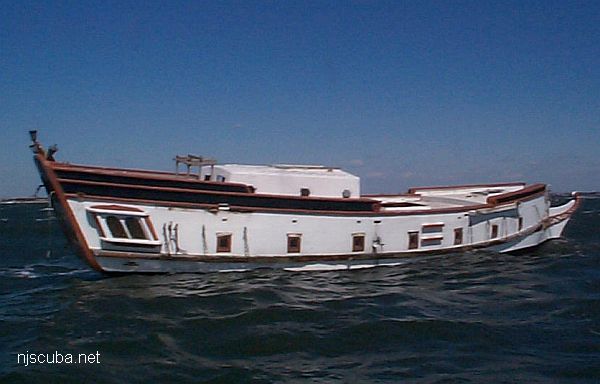
A number of small warships are sunk in New Jersey and New York waters.
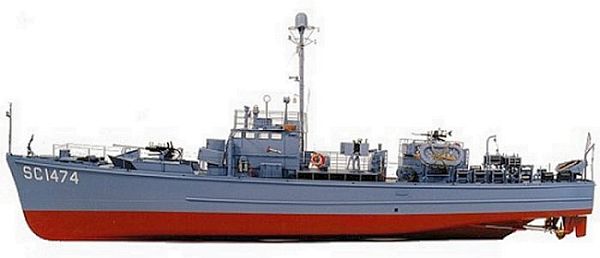
subchaser (model)
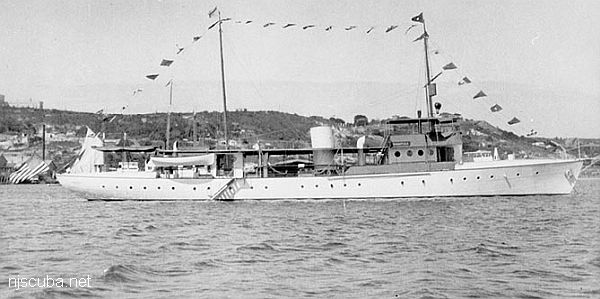
A subchaser was a small coastal patrol vessel of World War I or II. Subchasers were lightly armed and even more lightly constructed, mostly out of plywood, powered by two diesel (WWII) or three gasoline (WWI) engines. Roughly the same design was used in both wars - 110 ft long, about 100 tons. Almost a thousand were built over both World Wars, and several are lost in the waters around this area. Many private yachts and some larger fishing trawlers were converted to perform this function also, like the Tarantula and the Moonstone. Conversely, some subchasers were converted to other duties after the war, such as the Bronx Queen, pictured below in military trim. Real subchasers were designated SC-, while converted yachts were designated SP-, PY- ( patrol yacht ) or PYc ( patrol yacht - coastal. )
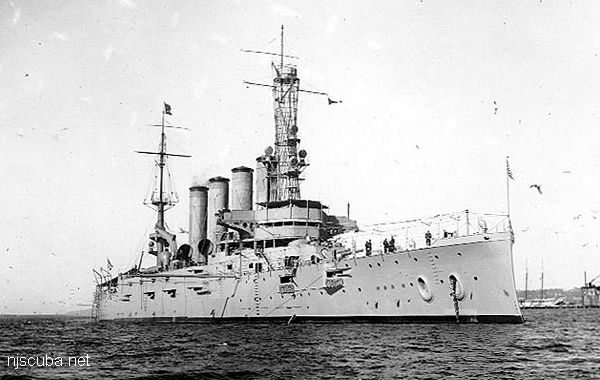
USS San Diego photographed 28 January 1915, while serving as flagship of the Pacific Fleet. Her name had been changed from California on 1 September 1914. Note two-star Rear Admiral's flag flying from her mainmast top.