Trawlers ("Draggers")
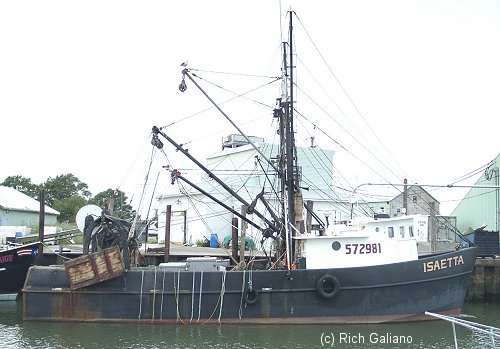
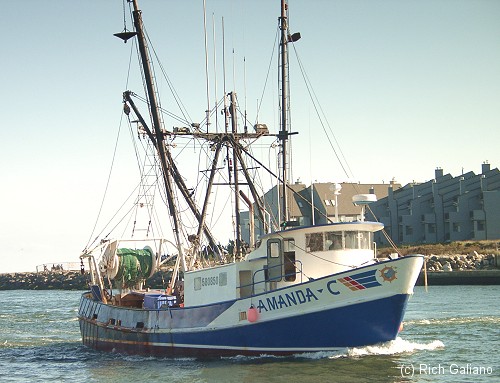
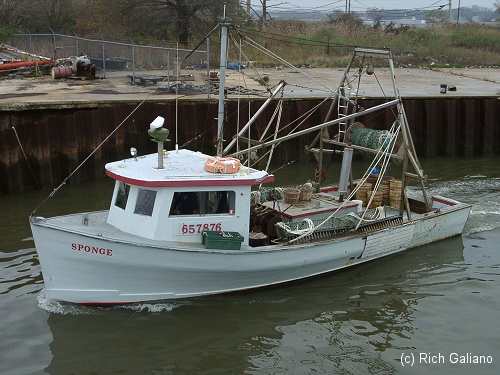
A small local trawler. The net is stowed on the large white spool aft, while the wooden otter boards are stowed alongside. Newer vessels like this put the fishing gear over the stern, while some older trawlers still put the net and otter boards over the starboard side, leaving the port side free for loading and unloading at the dock.
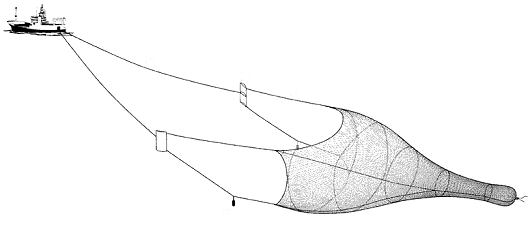
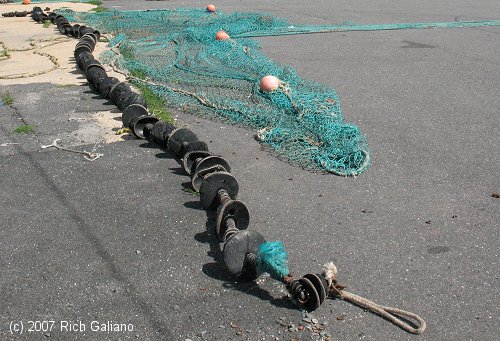
A single-vessel otter trawl - the net is spread open by large boards known as "otter boards." Two-vessel trawling operations can dispense with the otter boards, and also make use of much larger ( in some cases enormous ) nets.
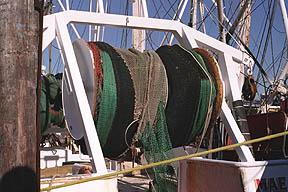
A trawler or "dragger" is a vessel that tows its fishing gear, typically a weighted net, across the bottom. Trawler nets are easily snagged on bottom obstructions. This results in damage to the gear, if not outright loss, so trawlers try to avoid such "hangs", and make note of new ones when encountered. Lost fishing nets often form shrouds over shipwrecks, which are not only dangerous to scuba divers but go on killing marine life for many years until they disintegrate. Modern "rolling nets" are much more resistant to snagging, allowing the trawlers to run closer to and even over the old obstructions that once gave the fish at least some haven.
Rolling nets and other bottom gear in action The video focuses on the lower lip of the net, the rest of it arches up out of sight. ( The soundtrack is a little melodramatic, you might want to turn it off. )
Trawlers are often the initial discoverers of shipwrecks, or "snags", as they refer to them. Trawler captains keep extensive lists of loran coordinates for snags, which can quickly destroy their expensive gear. This way they can avoid those places in the future. They usually are willing to share these coordinates with each other, and also with the dive boat captains, who sometimes assist them by recovering lost fishing equipment.
There are still a fair number of small net-trawlers operating in New Jersey waters. I'm not sure what they are after, as most economically important food fishes are too depleted in local waters to be worth going after. For example, due to excessive trawl fishing, Cod populations throughout the North Atlantic have collapsed to such low levels that some scientists doubt the fish will ever recover. Two fisheries that are still reasonably healthy are surf clams and scallops, which are targeted by specialized trawlers known as dredges - see below.
The local trawler fleet is comprised mostly of smaller draggers, up to 80 feet or so in total length. Not large enough to venture far offshore or to make extended trips, their fishing activities are mostly restricted to the waters of the New York Bight. They are all participants in what is called a mixed-trawl fishery, their fishing activities dictated by the migratory patterns of the fish through the Bight and the vagaries of the fresh fish market. They primarily target fluke, silver hake, and squid but in the past have also had significant landings of winter flounder, bluefish, monkfish, and scallop.
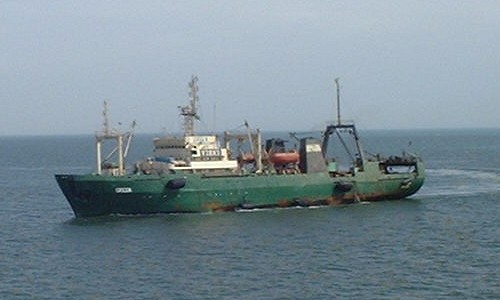
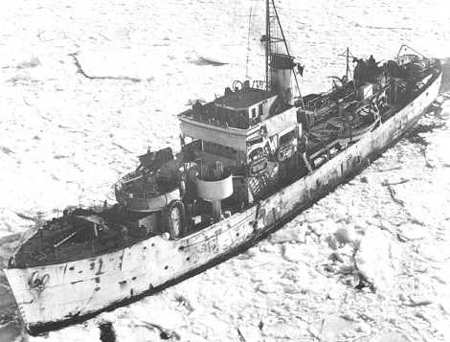
The naval trawler is a concept for expeditiously converting a nation's fishing boats and fishermen to military assets. England used trawlers during World War II to maintain control of seaward approaches to major harbors. No one knew these waters as well as local fishermen, and the trawler was the ship type these fishermen understood and could operate effectively without further instruction. The Royal Navy maintained a small inventory of trawlers in peacetime but requisitioned much larger numbers of civilian trawlers in wartime. The larger and newer trawlers and whalers were converted for antisubmarine use and the older and smaller trawlers were converted to minesweepers.
A single deck gun was mounted on each trawler. Antisubmarine trawlers were usually given a 4" gun approximately equal to the deck guns of the submarines they might encounter. Minesweeping trawlers usually received a 12 pounder, although vintage 3 pounders or 6 pounders were sometimes fitted temporarily until more suitable weapons became available. Trawlers were also given between two and four .303 caliber Lewis guns which were later augmented with a similar number of 20mm machine guns. In a surface battle with a U-boat, the trawler attempted to dissuade the U-boat deck gun crew with machine guns, while the U-boat might similarly aim its 20mm at the trawler's unshielded deck gun.
Antisubmarine trawlers were fitted with ASDIC and a few depth charge racks. Antisubmarine trawlers were typically assigned to five-ship groups. Small trawlers were difficult torpedo targets; and, while a U-boat might best a single trawler in a gunnery contest, it would be unable to withstand the combined attention of several trawlers. Antisubmarine trawlers could establish and maintain defensive perimeters around convoy assembly areas within which individual cargo ships could gain their formation stations for ocean steaming.
Trawlers are eminently seaworthy; so, when convoy escorts were needed after the fall of France, antisubmarine trawlers were pressed into escort service for which they were poorly suited. With maximum speeds of 10 to 12 knots, trawlers were able to maintain screening stations but unable to maneuver effectively. If a trawler left station to investigate a contact or rescue the crew of a torpedoed ship, hours might pass before the trawler could regain station on the moving convoy. Escorting trawlers might discourage a timid U-boat from acting independently, but an aggressive U-boat captain could use the superior surface speed of the U-boat to outmaneuver trawlers.
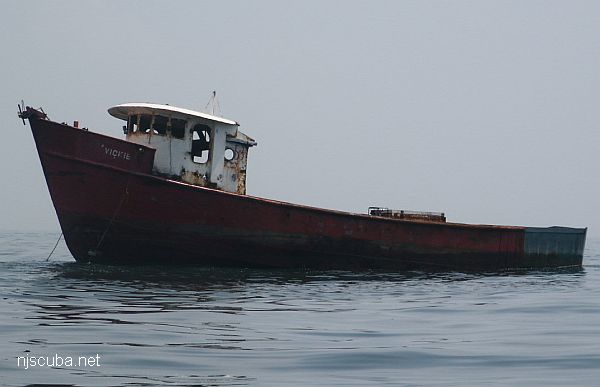
- Type:
- artificial reef, trawler, USA
- Built:
- 1972, Master Marine, Bayou La Batre, AL USA
- Specs:
- ( 68 ft ) 91 GT
- Sunk:
- Friday June 18, 2004 - Moriches Artificial Reef
- Depth:
- GPS:
- 40°43.382' -72°46.562'
More: Vickie ...
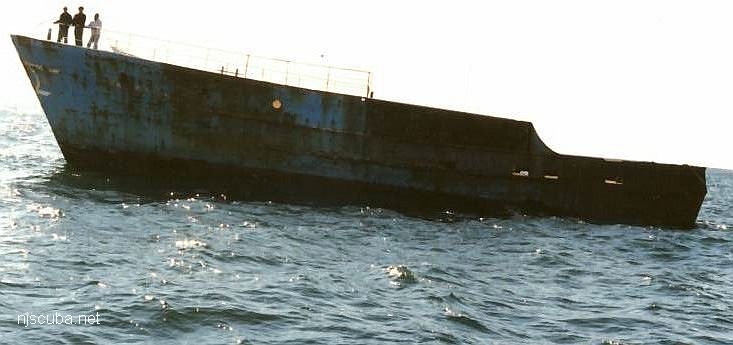
- Type:
- artificial reef, trawler, USA
- Built:
- 1978, Quality Marine, Bayou La Bâtre AL USA
- Specs:
- ( 90 ft ) 168 gross tons
- Sunk:
- Friday November 6, 1998 - Moriches Artificial Reef
- Depth:
- GPS:
- 40°43.506' -72°46.461'
More: Niagara Falls ...
There are three basic types of commercial fishing vessels found in the Mid-Atlantic region: trawlers, seiners/gill-netters, and long-liners. A trawler or "dragger" operates by towing its fishing gear across the bottom. Weighted nets take bottom fishes, while cage-like steel dredges take clams and scallops. A seiner uses a floating net to encircle schools of surface-swimming fishes such as herring and tuna. A long-liner sets out miles of buoyed line with baited hooks to catch sharks, tuna, and swordfish. One could also add lobster boats and charter fishing or "head" boats to this list. And of course, dive boats.
More: Fishing Vessels ...