Propellers, Shafts & Rudders

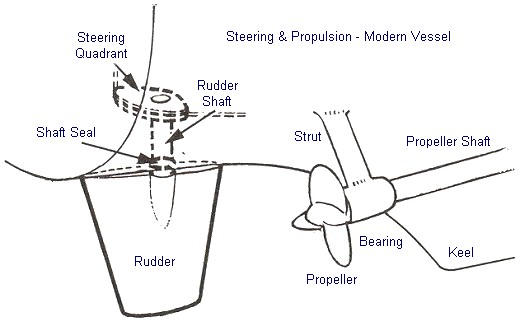
propeller & rudder
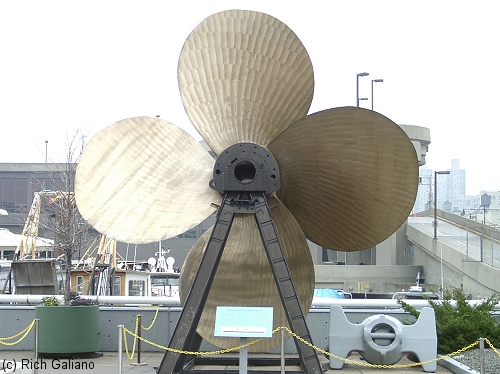
modern brass propeller
A huge modern brass propeller ( from the SS United States ) on display.
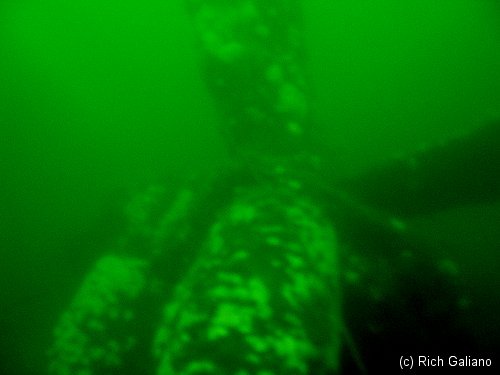
shipwreck Delaware propeller
Looking down the prop shaft at the iron propeller on the Delaware. The narrow squarish blades indicate that this is a rather primitive 1880's model, unlike the more modern rounded prop on the Macedonia below.
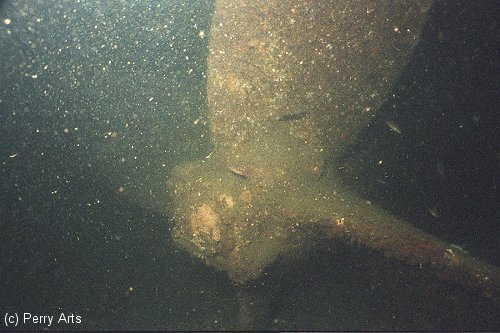
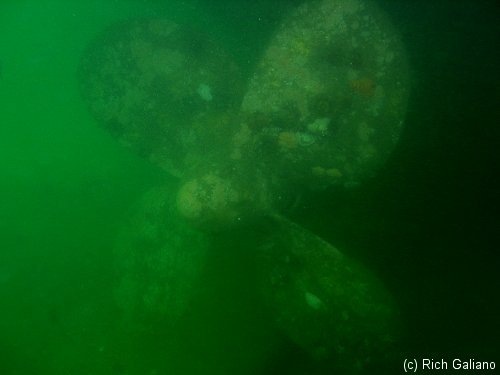
shipwreck Macedonia propeller
The propeller on the Macedonia.
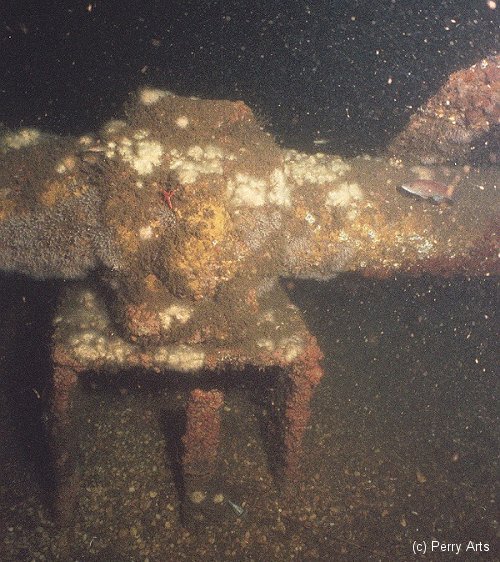
shipwreck Macedonia shaft mount
Propeller shaft bearing and mount on the Macedonia.
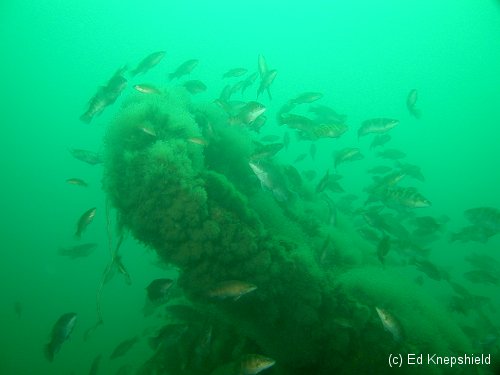
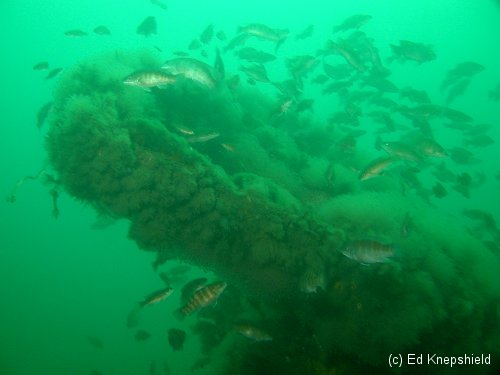
reef Venturo propeller
The propeller on the GA Venturo - a completely modern design. Note the wide, round blades.

Breaking a propeller shaft at sea can be a disaster. The propeller stops turning and becomes a drag, while the vessel's momentum carries it forward. The propeller slams backward, extracting the broken shaft and often mangling the rudder. This leaves a large hole open in the bottom of the vessel, directly into the bilges and machinery spaces. On a large vessel with a deep draft and a large shaft, the water comes in like a fire hose - uncontrollable.

The engine is soon disabled, and along with that the pumps, which in any case are probably not big enough to keep up with this magnitude of flooding. The outcome may take several hours, but it is inevitable unless maybe the Coast Guard can fly out a special de-watering pump on one of their big helos. Unlike a collision, storm, or rogue wave, there is usually plenty of time for an orderly abandon-ship, and there are seldom casualties if rescue is available.
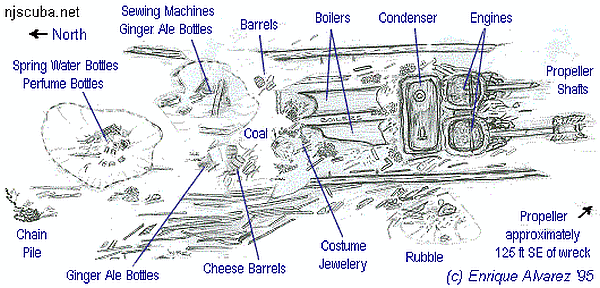
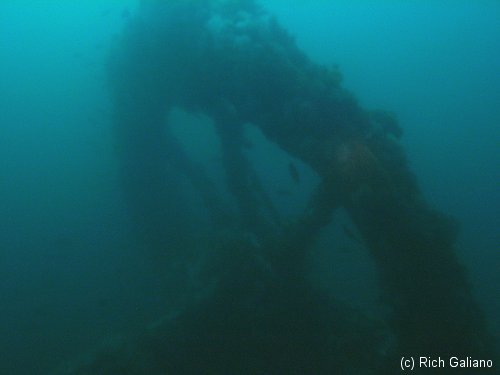
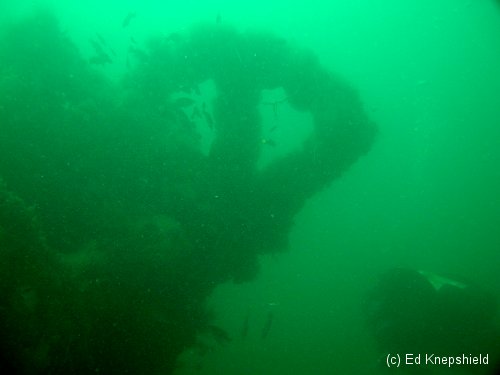
Shipwreck Emerald
The "Emerald" fell victim to a broken prop shaft in 1873, and the Lady Gertrude sank the same way in 2016.
shipwreck Oregon steering quadrant
The fallen steering quadrant on the Oregon, perhaps 20 ft across.
shipwreck Tolten steering quadrant
Tolten steering quadrant
The steering quadrant on the Tolten

Harbor Seal

Phoca vitulina

by Larry Sarner

Wild seals conjure up images of northern or even Arctic climates. But few people know that more than a hundred harbor seals call New Jersey home during the winter months, coming ashore into isolated estuaries and even upstream into a few rivers.

New Jersey is near the southern limits of the range for harbor seals on the East Coast. However, these seals are frequent visitors offshore in winter and even have been reported as far south as the mouth of the Chesapeake Bay in Virginia and off the coast of North Carolina. The winter seal-sighting season runs from December through March. Seals generally leave the New Jersey coast by the second week in April, probably responding to rising air and water temperatures and the increase in human activity.