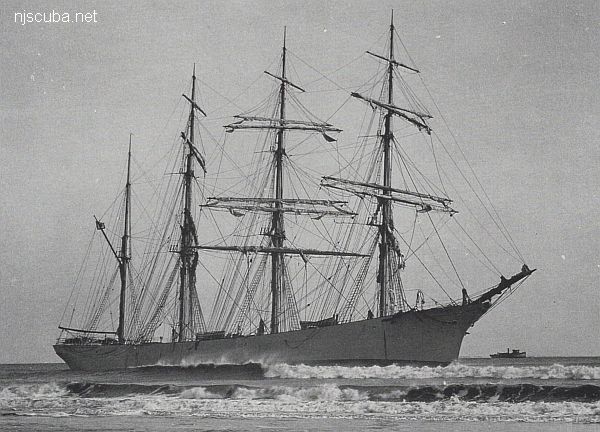
- Type:
- shipwreck, sailing ship, USA
- Built:
- 1887, Ireland
- Specs:
- ( 329 x 45 ft ) 3068 gross tons, 34 crew
- Sunk:
- Sunday December 15, 1901
ran aground in storm - no casualties - Depth:
- 0-5 ft depending on the tide
More: Sindia ...
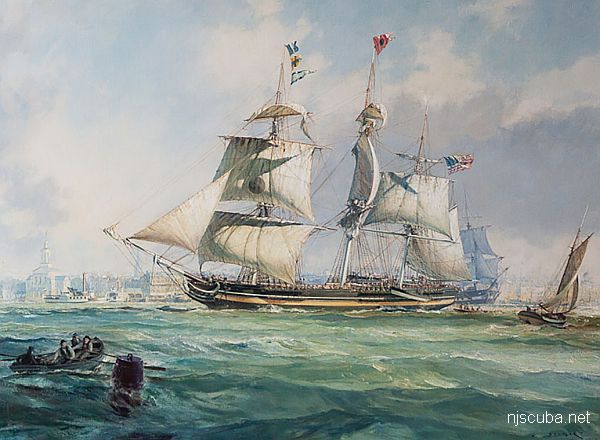
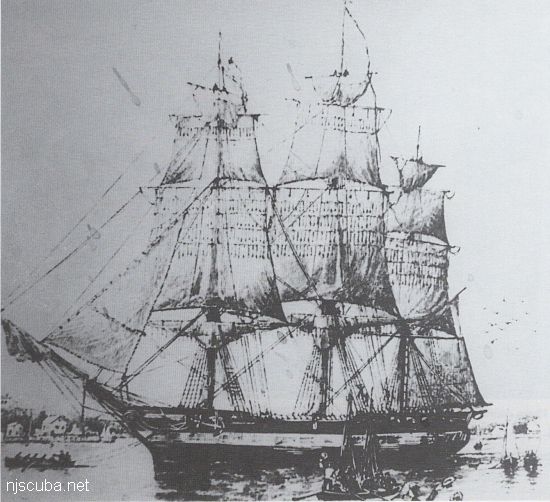
A packet ship of the early 1800s. Of note is the way the sails on the mainmast are set backward, against the sails on the fore- and mizzen- masts. Known as "backing", this was how a square-rigged ship "put on the brakes" to slow or stop without actually furling the sails.
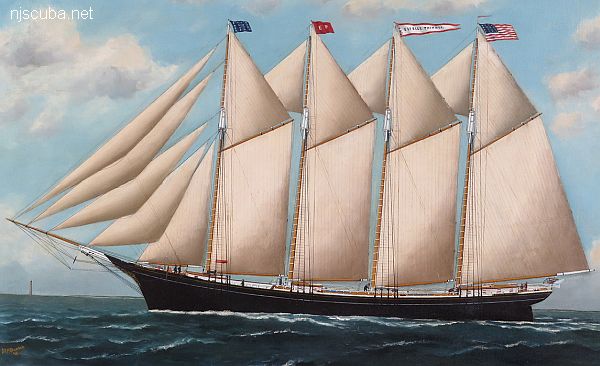
Wind power has been used by mankind for millennia. Almost every human culture has constructed sailing vessels of some kind, from crude log or reed rafts to the highly developed wind-jammers of the early twentieth century. Many of these vessels were the most complex and technologically advanced machines of their time - equivalent to our jet airliners.
More: Sailing Ships ...
More: Sindia ...
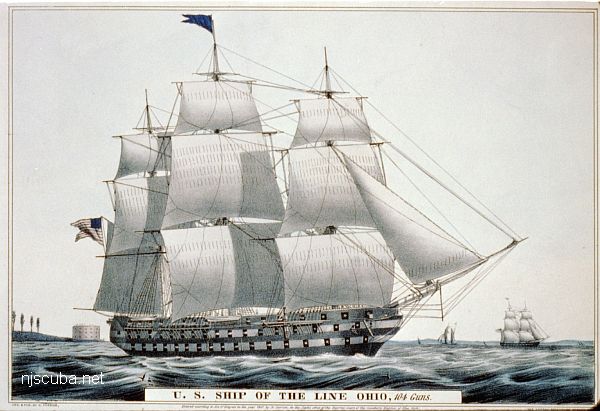
More: USS Ohio ...
More: Western World ...
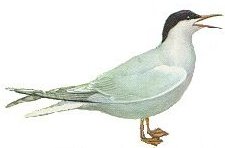
Terns are smaller and more graceful in flight than gulls. The Common Tern Sterna hirundo (right) grows to 14", wingspan 31". Their forked tails make it easy to differentiate terns from Laughing Gulls, which also have black heads.
Terns are found in the same habitats as gulls, that is to say, just about anywhere near water. Their call is a common sound along waterfronts everywhere.
More: Common Tern ...