Texel

Shipwreck Texel
Type:
shipwreck, tanker, USA
Name:
Texel is the easternmost of the Frisian islands off the coast of Holland, which are similar to our own barrier islands.
Built:
1913, Denmark
Specs:
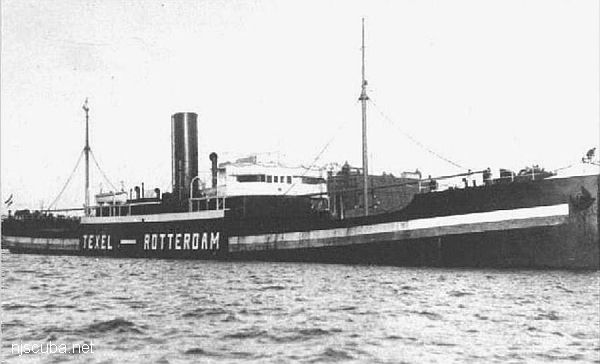
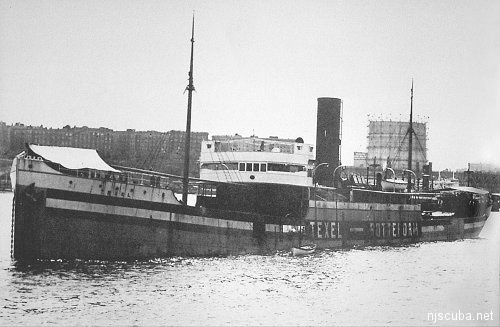
( 331 x 48 ft ) 3220 gross tons, 36 crew
Sunk:
Sunday June 2, 1918
bombed by U-151 - no casualties
Depth:
230 ft

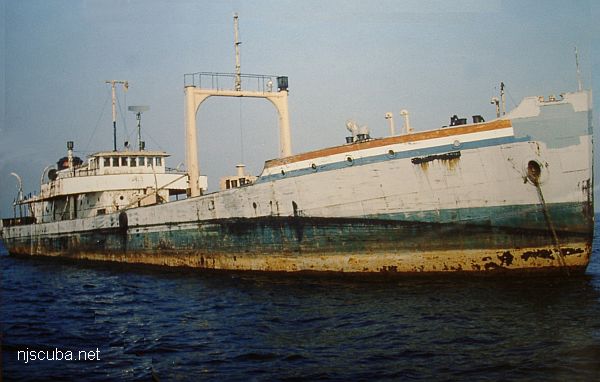
Today, the Texel lies in 230 ft of water. She sits on a sandy bottom with almost no relief. She appears to have landed upright but has collapsed into the sand. Hull plates have fallen off around her like an eroding jig-saw puzzle. Her midsection and superstructure are gone, and her bow unrecognizable. The stern is marked by the propeller shaft, which hangs above the surrounding hull plates. She is a deep dive and should be dived by only the most experienced.
Shipwreck Texel

Comments on Texel

Questions or Inquiries?

Just want to say Hello? Sign the .

Submit a Comment

Your email address will not be published. Required fields are marked *


Click image to replace if unable to read.

Enter the digits from the image above, except for the last one:

This site uses Akismet to reduce spam. Learn how your comment data is processed.


Hydroids

Masses of hydroids adorn many of the offshore wrecks, mixed in with anemones, sponges, mussels, coral, and algae. Hydroids are the most primitive Cnidarians, closely related to Hydromedusae, and display the most even split between the sessile polyp stages and free-swimming medusa stages, which are quite small and common.

The common Pink-Hearted Hydroid Tubularia spp generally grows in rounded tufts up to 6" across. Siphonophores are free-living hydroids that are often highly venomous, although most attached forms are harmless to humans.