
Poseidon

Shipwreck Poseidon
Type:
shipwreck, iron-hulled screw freighter, USA
Built:
1914, Scotland
Specs:
( 295 x 43 ft ) 1909 tons
Sunk:
Wednesday July 31, 1918
collision with freighter SS Somerset
Depth:
90 ft

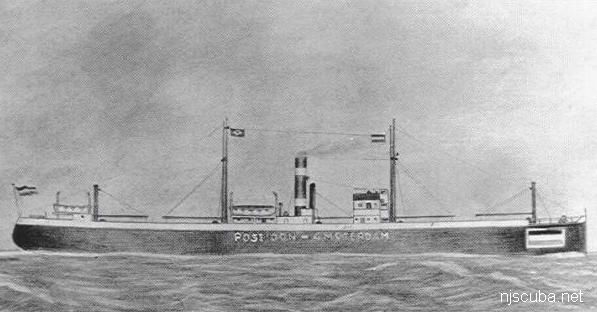
This steamer of 1,909 tons was built in 1914 by Dunlop-Bremner & Co, Port Glasgow, for N. V. Koninklijke Nederlandsche Stmbt Maats in Amsterdam. The Poseidon was powered by a steam, triple expansion engine, single screw giving 10.5 knots. In 1918 she was requisitioned by the US Government. On the 31st July 1918, she sank after a collision with the SS Somerset five miles NNE of Five Fathom Bank Lightship, on passage from Boston to Norfolk, Virginia.

This wreck is also known as the "Little Oiler" and has also been nicknamed the "Steel Wreck". A good lobster wreck in 90 feet of water makes her an interesting and fun dive. Most everything found so far on the wreck has been steel, including portholes, which indicates she may have been salvaged after sinking. The highest section is the boilers, although much of the wreck is buried. The rudder and the blades of the steel propeller stick up off the muddy bottom.
Somerset
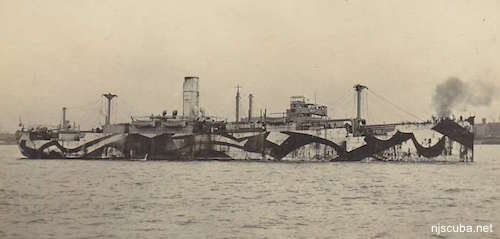
Somerset in WWII camouflage


Comments on Poseidon

Questions or Inquiries?

Just want to say Hello? Sign the .

Submit a Comment

Your email address will not be published. Required fields are marked *


Click image to replace if unable to read.

Enter the digits from the image above, except for the last one:

This site uses Akismet to reduce spam. Learn how your comment data is processed.


wetsuit

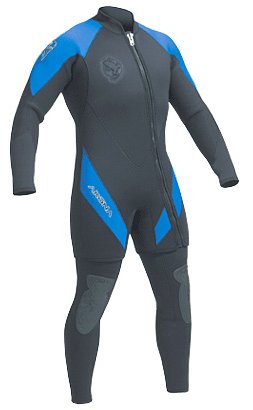
The minimum exposure protection you should plan on for New Jersey diving is a full 6 or 7 mm neoprene wetsuit, with equivalent hood, gloves, and boots. A common misconception about wetsuits is that the water inside keeps you warm. This is absolutely false - the less cold water that gets in, the warmer you will be. ( Some folks actually bring jugs of hot water and pour it into their wetsuits just before the dive. ) Once the suit floods and the water inside warms up, you do feel better, but that water got warmer because you got colder. The trick is to keep as much as possible of this warmed water inside the suit, but almost every motion you make will pump out some warm water, and bring in more cold.

Two things will reduce this pumping tendency. The first thing is a properly sized and fitted suit. A wetsuit should be snug, without crushing you, and there should be no large empty spaces inside when you put it on. Many people have a hard time finding a wetsuit that fits just right. The second thing is a well-made suit. Features of a superior wetsuit include: