
Water Bugs

These are all known as "true bugs", as opposed to beetles, flies, ants, etc. Both the larval and adult stages are aquatic, although only the adult stages are shown here. All may be found swimming or clinging to underwater plants and must surface to breathe. All are also strong fliers that are attracted to lights at night and have a painful and poisonous bite. Giant Water Bugs are known to feed on small fishes.
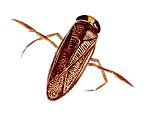
Water Boatman

Water Boatman
Arctocorixia interrupta
to 1"

extremely common
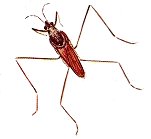

Water Strider

Water Strider
Gerris marginatus
to 1"

Skims along on surface of water. Flies well, but does not dive.


Water Scorpion

Water Scorpion
Ranatra fusca
to 2.5"

Not a true scorpion, but has a very painful bite.
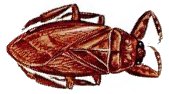


Giant Water Bug

Giant Water Bug
Lethocerus americanus
to 3"
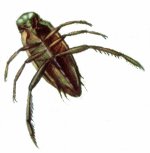


Backswimmer

Backswimmer
Lethocerus americanus
to 1/2"

no snorkel

Here is an item that is useful in the tropics, but much less so around here. This is because the water here is not nearly as crystal clear as in the tropics, and the depths are often greater. Therefore it is unlikely you will be able to see anything interesting below from the surface.

On a boat dive, a snorkel is totally useless - leave it home. Chances are, the captain and crew will tell you to take it off anyway. The same is generally true for inlet diving where the entry is steep. A snorkel is just one extra thing to get tangled up, and you will probably have enough of that already. A snorkel might be useful in a surface swim from the beach out to a close-in dive site, if it is a good one with purge valve or a dry valve to keep the water out entirely. Even then, you are better off doing a backstroke out to the site, with your head out of the water so you can navigate by landmarks, or an underwater swim if the currents are favorable.