
Water Beetles

Beetles are differentiated from bugs by having the first pair of wings developed into armored shields, which protect the second pair of wings and the soft body. They can still fly with their second pair of wings, which fold up out of sight when not in use. Only adults are shown here.
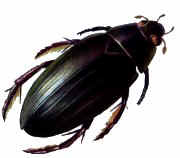
Water Scavenger Beetle

Water Scavenger Beetle
Hydrophilus triangularis
to 1.3"

Adults feed mainly on plant matter; larvae are carnivorous. Other diving beetles are predatory.
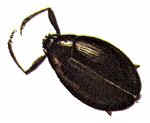


Whirligig Beetle

Whirligig Beetle
Dineutes spp.
to 1/2"

Whirligigs are generally found skating along the surface, although they are also good divers and fliers.

knife

A dive knife should also be considered standard equipment since many dive locations have hazardous monofilament in which you can become entangled. Don't skimp on your knife either - the most commonly found artifact off the New Jersey coast is the cheap dive knife that has slipped from its sheath. When looking at knives in the store, scrutinize the locking mechanism and the sheath. Is it secure and unlikely to release by itself, yet also easy to use? Will it loosen under use, or break with age? Tug at it, and try to see if you can work it loose without actually hitting the release. If you can, then don't buy it. Also, bigger is not necessarily better - many of the best knives on the market are only 10 inches long overall.

Some other features to look for in a knife are:

  • Blade shape: blunt tipped blades are safer, while pointed blades are more useful if you are into underwater hunting.
  • A good big sturdy handle: you will probably have thick gloves on.
  • Metal-butted handle: useful as a tank banger, or light duty hammer.
  • Saw edge: for heavy duty cutting.
  • Quick release depth compensating straps: much better than buckles.