Puffers, Burrfishes & Trunkfishes
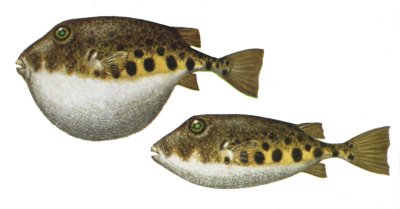
Puffers are highly intelligent, traveling in schools, and hunting cooperatively. They prey on anything they can dismember with their powerful parrot-like beaks, including other fishes and crabs. The body is short, fat, and stiff, with a disproportionately large head.
The tail is used primarily as a rudder, and the puffer displays remarkable agility and quickness using its other fins. The skin is covered in tiny prickles and feels like sandpaper. All members of the order Tetraodontiformes seem to be possessed of above-average intelligence for fish.
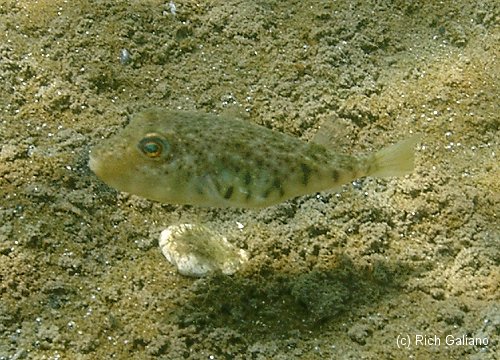
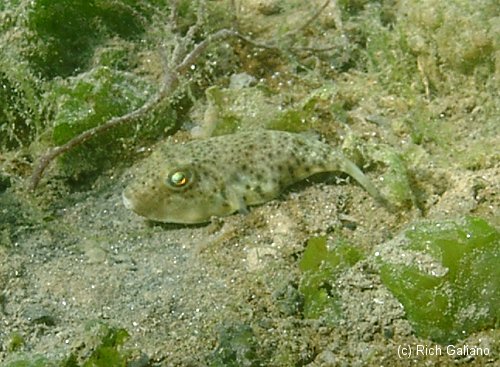
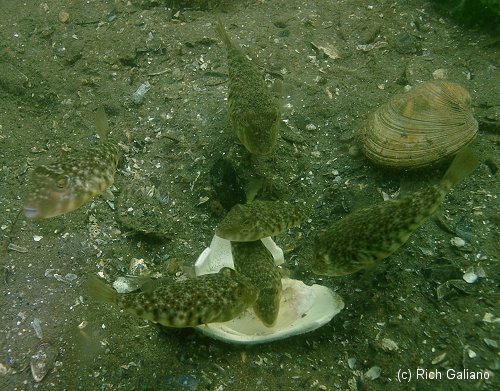
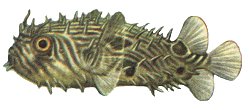
Burrfish are very similar to Puffers, except that instead of a covering of minute folding spines, they are covered with a battery of erect spikes. Burrfish are extremely slow swimmers, and make no attempt to escape from you; instead, they just inflate into spiky balls and wait for you to go away.
All of these fishes are found in bays, estuaries, protected coastal waters. Sometimes the rivers are full of puffers. For fun, catch a puffer with your hand and give it a gentle squeeze ( don't hurt it ! ) and it will puff itself up into a ball.
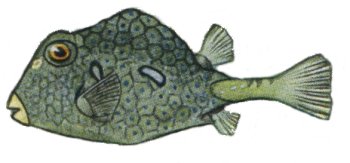
Lactophryus trigonus - to 18"
Think of it as a puffer in a suit of armor.