
Atlantic Torpedo
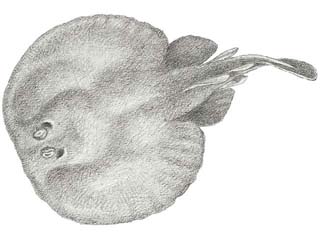
Torpedo nobiliana
Size: to 6 ft long, 200 lbs., and 220 volts
Habitat: Soft sandy bottoms, from water's edge to 350 ft. Uncommon.
Notes:
Potentially dangerous
Distinguishing characteristics: Round body with a short tail and no stingers. This fish can produce enough electricity to stun a swimmer, but it is usually unaggressive. They are uncommon but deserve mention for the surprise they pack. I have seen unaware divers ( including a PADI "Underwater Naturalist" instructor ) get zapped in the tropics by the smaller ( 40 volts ) electric rays there.
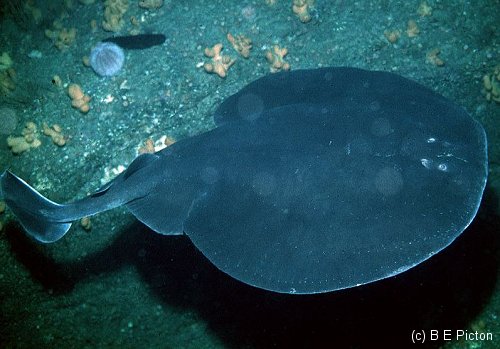
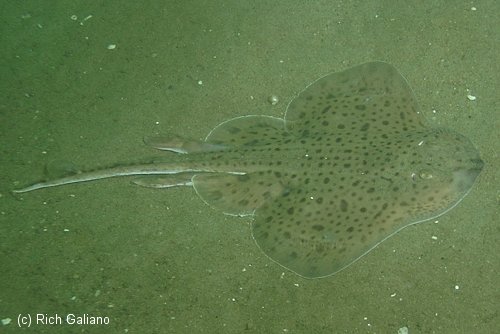
Skates and rays are related to sharks. Unlike flounders, these fish are flattened and lie on their bellies. Skates are harmless. Stingrays have one or more dangerous barbed stingers in the tail and will use them if molested. Finally, the Torpedo is an electric fish and can generate enough voltage to be dangerous. Some skates give birth to live young, while others lay their eggs encased in a horned Mermaid's Purse.
More: Skates & Rays ...
