
Thresher Shark
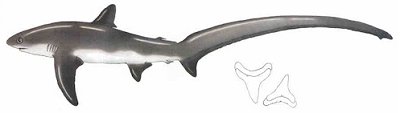
Alopias vulpinus
Size:
to 20 ft including tail
Habitat:
open ocean, both coastal and over very deep water, also in the Mud Hole
Notes:
not especially dangerous
This shark feeds mainly upon small fishes which it stuns with its long tail. It has relatively weak jaws and small teeth for its size and is generally not considered a threat to man unless provoked. Thresher Sharks are capable of great bursts of speed, and also commonly leap completely out of the water, for reasons unknown. The Thresher is a favorite of shark fishermen, and is very good eating if cleaned and prepared properly. It is also a common bycatch of long-line commercial fishing. The Bigeye Thresher shark is even more bizarre ( it's purple ! )
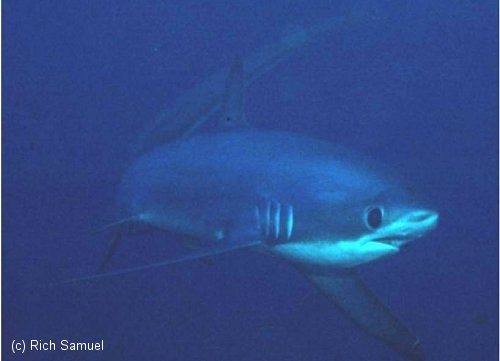
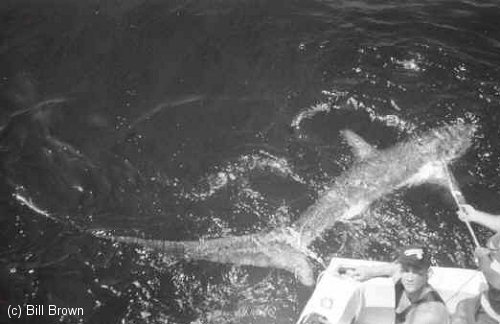
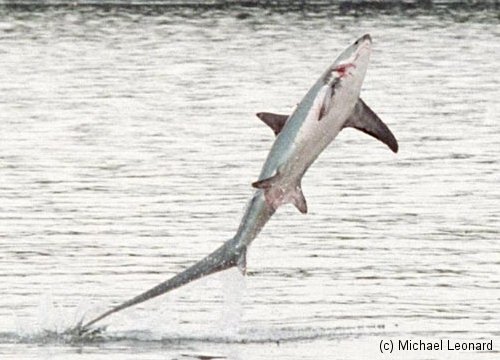
Here is an assortment of large sharks that can be found in New Jersey waters, by no means all of them. These are more likely to be found offshore in oceanic waters. Sharks are seldom a danger to divers, they seem to be put off by the noise and bubbles. Nonetheless, all should be treated with caution.
Realistically, sharks in our waters are not a great concern. In over 350 northeast ocean dives, I have seen sharks on only several occasions ( not counting harmless little Dogfishes ) and only once while in the water. That one was in the Mud Hole, on the Arundo, to be precise. It was a Blue, or possibly a Mako, and wanted nothing to do with me, which was a relief since I had half an hour of deco left to do at the time! That would have left me very bent otherwise.
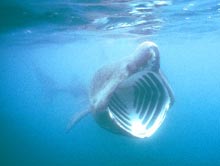 | 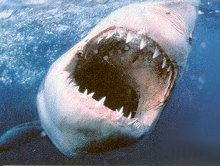 |
and the very not toothless Great White Shark at right.
If you think about it, humans must taste terrible to sharks, and scuba divers especially - with rubber suits and big metal tanks. Many shark attacks occur in murky water where the shark is not sure what it is attacking. Some attacks have been the result of the shark being stepped on in shallow water. Most shark attacks on humans are abortive, the shark taking only one exploratory bite, then realizing its mistake and breaking off the attack. Unfortunately, with a large shark, one bite and you're dead. Many predators, from bears to tigers, will prey on humans when sickness, injury, or old age make them unable to catch their normal prey. Sharks are probably no different.
More: Sharks - Offshore ...