Leatherback Sea Turtle
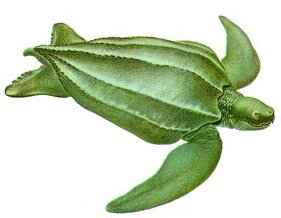
Dermochelys coriacea
Size: to 70" and 1200 lbs.
Habitat: oceanic
Notes: The largest sea turtle in the world, and also the most likely to be seen in our cold waters, since Leatherbacks are at least partially warm-blooded! As implied by the name, they have a leathery flexible covering, rather than the bony hard shell of all other sea turtles - a unique feature that has caused them to be placed in a family of their own, apart from all other sea turtles. Leatherbacks feed on jellyfish.
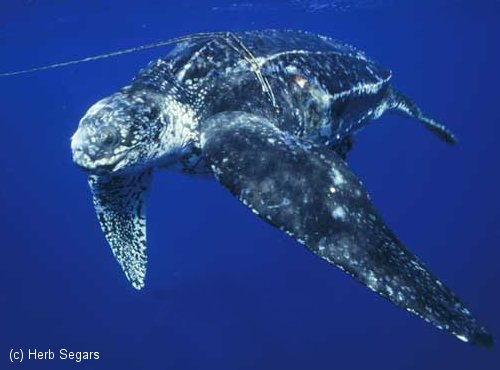
It looks like it has been dead for a while.

There are few marine reptiles and even fewer in the cold North Atlantic. While it would be possible for a salt-water crocodile to swim up from the Caribbean, there is no record of one ever having done so. Nor are there any of the sea-snakes that are famous in the South Pacific. The only marine reptiles that are encountered in our waters are sea turtles.
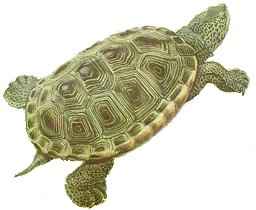
The one exception to this is the little Diamondback Terrapin, Malaclemys terrapin. (right) This small turtle ( about 6 inches ) is found only in salt marsh environments. Adults are very strong swimmers and have even been noted in the ocean surf, although I don't think they venture offshore.
More: Sea Turtles ...