Sea Birds - Stragglers
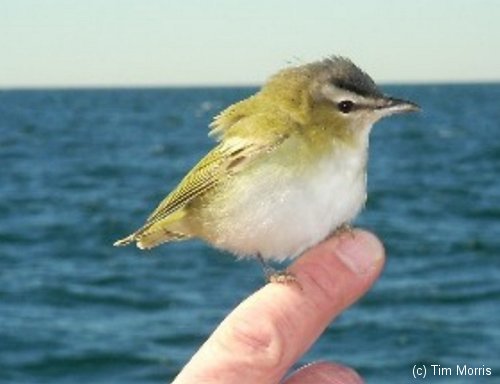
It is not at all uncommon for small songbirds to be blown out to sea in a strong west wind ( or a north wind, for Long Island. ) Unable to make their way back to land, these tiny fliers eventually tire and drop into the water, or get picked off by seagulls. In desperation, they will alight on anything solid to rest. An anchored dive boat makes an easy target and may collect several hitchhikers over the course of a day. This little guy was so exhausted that he even perched on a finger for photographs. Generally, though, you should just leave them alone and not frighten them further, and they will fly away on their own once the boat gets back to land.
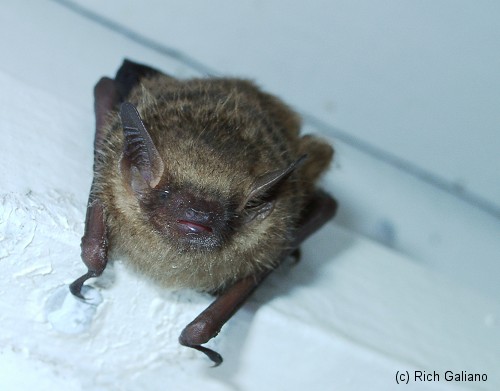
Now this is uncommon. This little bat hitched a ride with us out to sea. When it woke up, it flew around the boat in a panic, and almost bashed its brains out trying to find a perch in the rafters. Except for a few pictures, we left it alone.
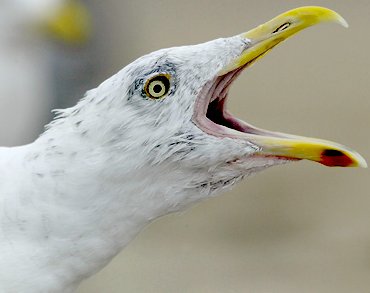
Most sea birds are strictly protected by law, and may not be approached or harassed.
More: Sea Birds ...