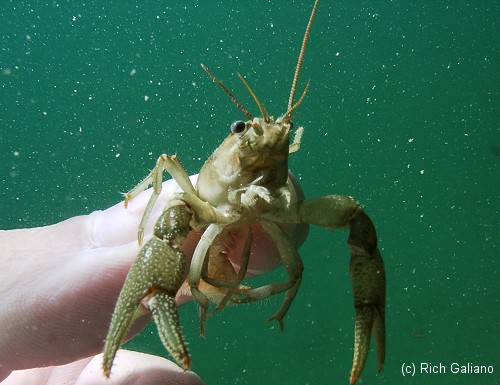
Eastern Crayfish

Crayfish

Cambarus bartoni

Size: to 3"

Habitat: small streams, sometimes ponds and lakes

Notes: Active at night, hides in burrows or under objects during the day.

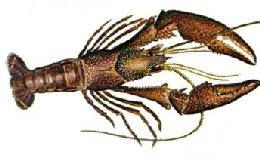
Compare freshwater crayfish with marine lobsters.
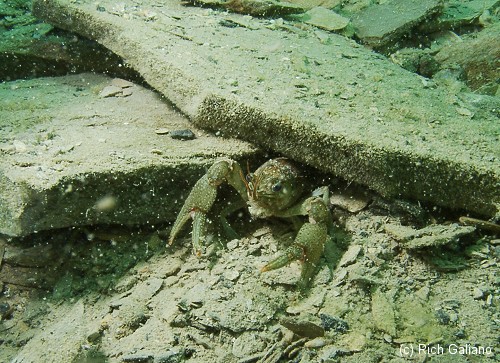
Crayfish
Crayfish are quite common at Dutch Springs. See lobster for anatomical details.
Crayfish
Crayfish

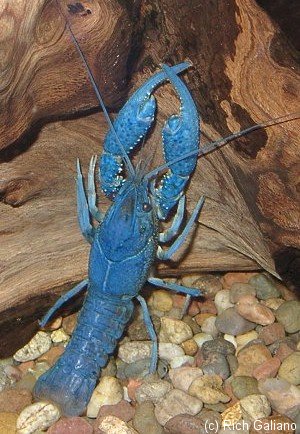
Blue coloration is the crayfish equivalent of albinism, and also occurs in lobsters. Individuals like this have little chance of surviving in the wild.

The North Atlantic is extremely changeable. The aspect that most governs where and when you will ( or even can ) dive is the wave height or the surf. If the surf is pounding on the shore, then it is a good bet the inlet will not be a good dive, let alone the beach. A big surf will even ruin conditions way up the river, say at the Railroad Bridge.

The wave heights on the open ocean will dictate your boat diving. In 1-3 foot seas, the boats can go just about anywhere, all the way out to even the farthest wrecks. In 3-5 foot seas, some boats will do that anyway, but don't count on it. Instead, a closer-in site will be your most likely destination, although perhaps as far as the Pinta or the Mohawk. In 5-6 foot seas you are going to the Delaware, and you'll wish you'd stayed home. Bigger waves than that, and you shouldn't even leave port, although some captains will try. While this may seem like admirable determination on their part ( more like irresponsible greed in some cases! ) you're better off just not going.