Early Artificial Reefs

New Developments in Artificial Reefs

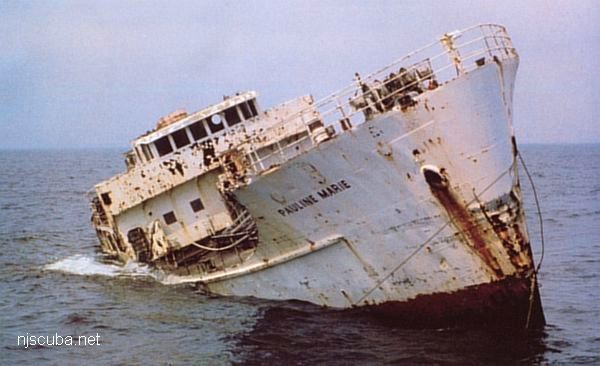
Pauline Marie reef
The Pauline Marie sinks slowly on the Atlantic City Reef.

By Evelyn DeWitt Myatt & Bill Figley, 1986

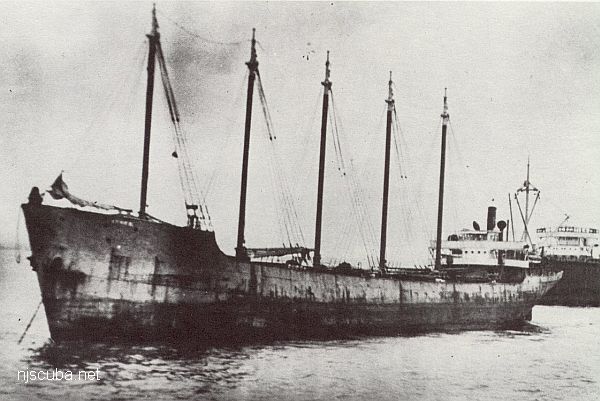
It's hard to imagine anything that could have looked more forlorn than the rusty old freighter whose proud seagoing days were a thing of the past. Floating idly at her berth awaiting her fate, she was a victim of nature's ravages that had left her beautiful only in the eyes of her old captain and crew. The Pauline Marie, however, was not destined to be the victim of a cutting torch that would turn her into a tangle of scrap steel. Instead, she was acquired by the New Jersey Artificial Reef Program and went down with dignity as an artificial reef in March 1985. She now provides continuing services from her watery grave in the Atlantic, some twelve miles off Atlantic City, and her appeal to marine life is undeniable. Her interior compartments now shelter fish and crustaceans; her decks now provide substrate for mussels, soft corals, and plant life; and her newfound productivity has put delicious seafood on many tables.


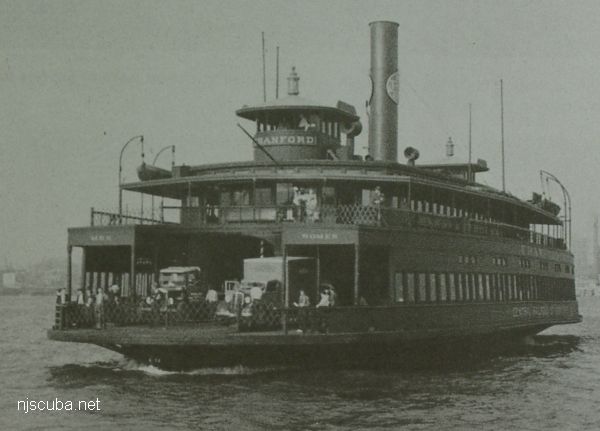
Cranford reef
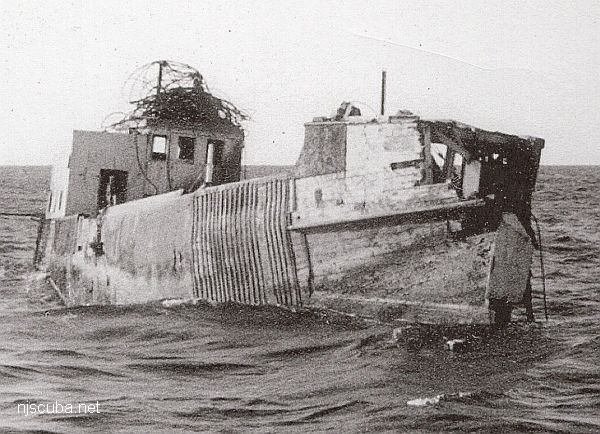
In life, July 1939. At this time, CRRNJ ferries were painted overall dark green. Notice how it says MEN on one side and WOMEN on the other.
Type:
artificial reef, ferry, Central Railroad of New Jersey, USA
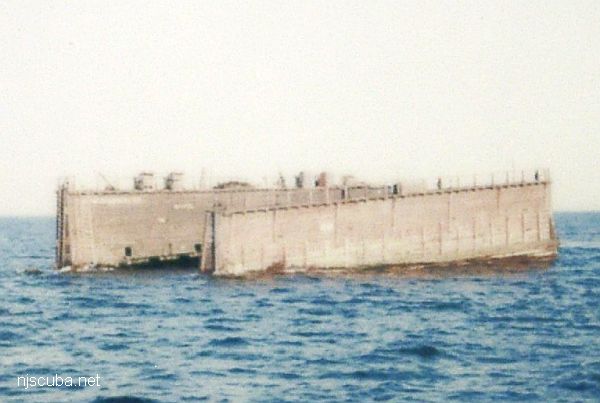
( sometimes incorrectly identified as a barge )
Name:
All CRRNJ ferries were named for New Jersey towns - Lakewood, Bound Brook, Red Bank, Plainfield, Elizabeth, Wilkes Barre, Cranford, Somerville, Westfield, and Bound Brook
Built:
1905, Harlan & Hollingsworth, Wilmington DE USA
Specs:
( 191 x 44 ft ) 1197 tons
Sponsor:
Ashley Development Corporation
Sunk:
Tuesday March 30, 1982 - Sea Girt Artificial Reef
GPS:
40°07.447' -73°56.227'
Depth:
70 ft


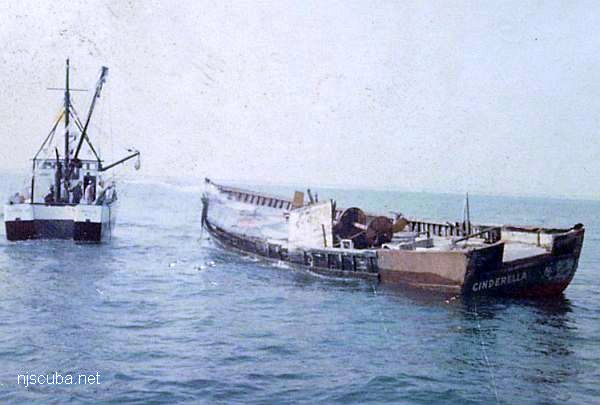
Dykes reef
Type:
artificial reef, schooner barge, USA
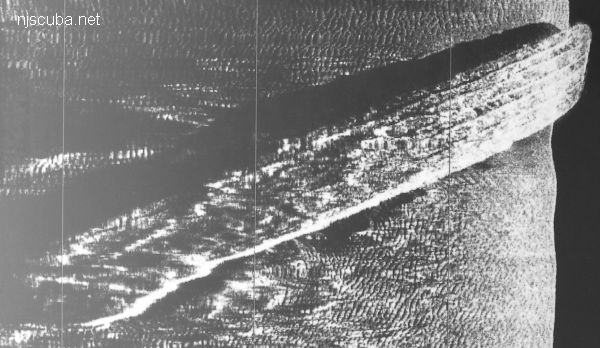
( The small smokestack in the pictures is for an electrical generator. )
Built:
1919, Union Shipbuilding, Baltimore MD USA
Specs:
( 306 x 35 ft ) 2072 tons, 14 crew
Sponsor:
Modern Transportation Co.
Sunk:
July 1983 - Sea Girt Artificial Reef
GPS:
40°06.964' -73°57.571'
Depth:
65 ft


regulator

A "same-source" octopus is an extra second-stage regulator that attaches to the same first stage and air supply as your main regulator. Your own same-source octopus is only useful to your buddy, and then only if you are together. The only same-source octopus that will be of any use to you in an emergency will be your buddy's, not your own, and again, only if you are together. In the tropics, where you can see your buddy 100 ft across the reef and the likelihood of getting separated is slim, this scheme can work very well.

However, in the low visibility conditions of the North Atlantic, counting on your buddy to be there with your emergency backup air supply when you really need it is courting disaster. You can not and should not rely on any air source that is not on your own back.