Higher Animals
"Higher animals" is a catch-all term for vertebrates other than fish. This is rather self-congratulatory, since the so-called "lower animals" - fishes and invertebrates - are actually the dominant species on the planet, both in numbers and diversity! The four classes of higher animals are:
- Amphibians - class Amphibia
- Reptiles - class Reptilia
- Birds - class Aves
- Mammals - class Mammalia
Of these, amphibians are absent from marine environments ( with one or two exceptions. )
- Sea Turtles ...
- Sea Birds ...
- Sea Mammals ...
There are few marine reptiles and even fewer in the cold North Atlantic. While it would be possible for a salt-water crocodile to swim up from the Caribbean, there is no record of one ever having done so. Nor are there any of the sea-snakes that are famous in the South Pacific. The only marine reptiles that are encountered in our waters are sea turtles.
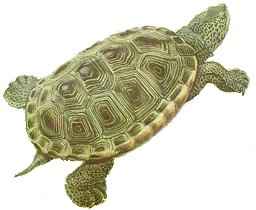
The one exception to this is the little Diamondback Terrapin, Malaclemys terrapin. (right) This small turtle ( about 6 inches ) is found only in salt marsh environments. Adults are very strong swimmers and have even been noted in the ocean surf, although I don't think they venture offshore.
More: Sea Turtles ...
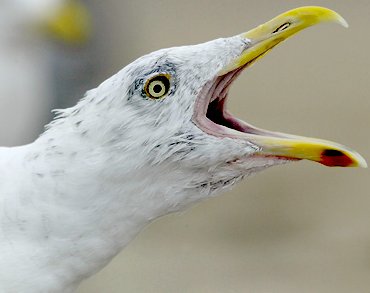
Most sea birds are strictly protected by law, and may not be approached or harassed.
More: Sea Birds ...
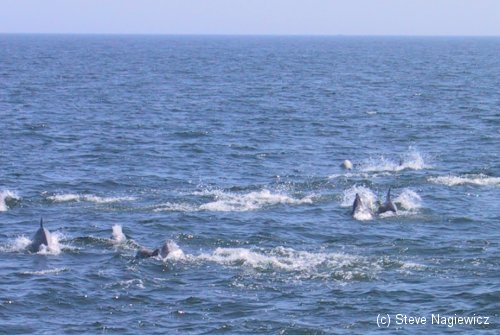
All marine mammals are strictly protected by law, and may not be approached or harassed. Foxes excepted.
More: Sea Mammals ...
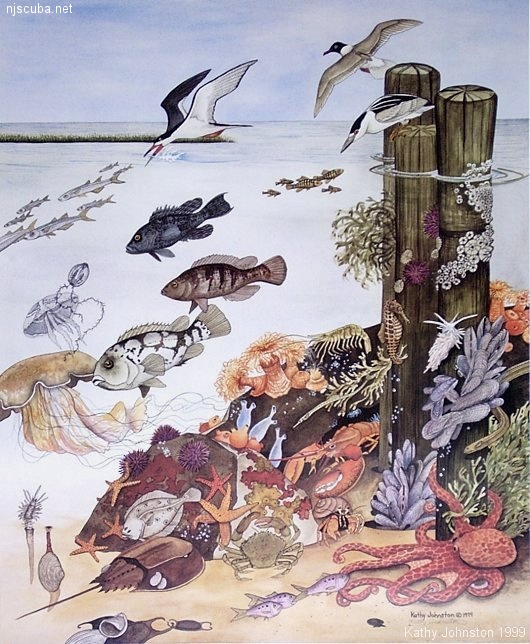
by Kathy Johnston
Courtesy of Jacques Cousteau National Estuarine Research Reserve
- Home ...
- Dive Sites ...
- Artificial Reefs ...
- Marine Biology ...
- Artifacts ...
- Gear & Training ...
- Blog ...
- Cozumel ...
More: Marine Biology & Ecology ...