
India Arrow
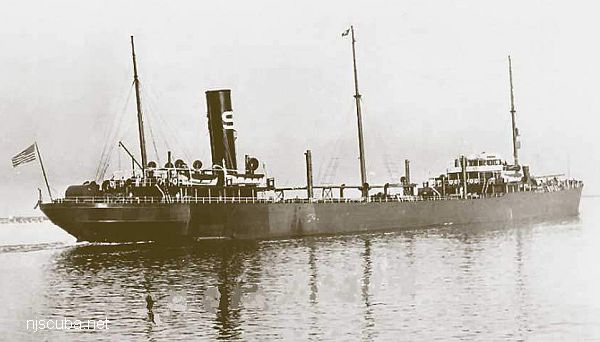
- Type:
- shipwreck, tanker, USA
- Built:
- 1921, Bethlehem Quincy, Quincy MA USA
- Specs:
- ( 468 x 62 ft ) 8327 gross tons, 38 crew
- Sunk:
- Wednesday February 4, 1942
torpedoed by U-103 - 12 survivors - Depth:
- 190 ft
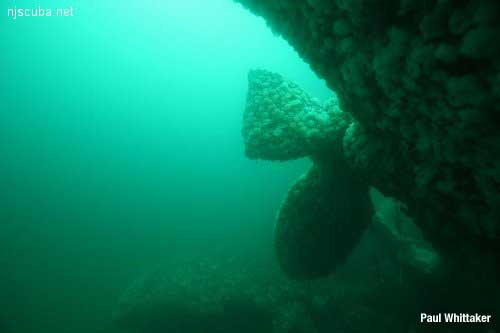
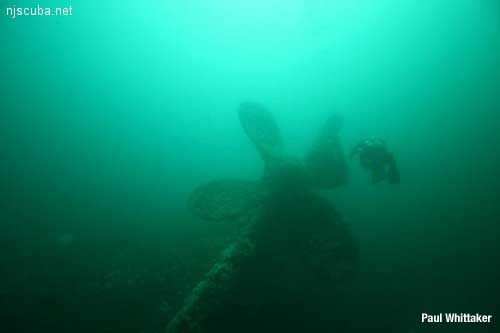
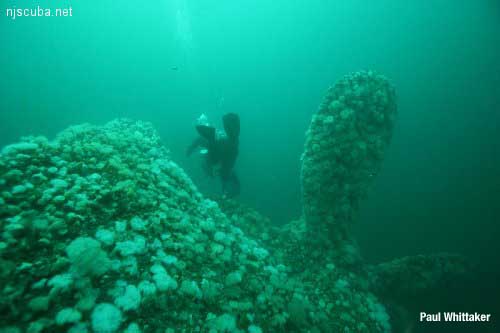
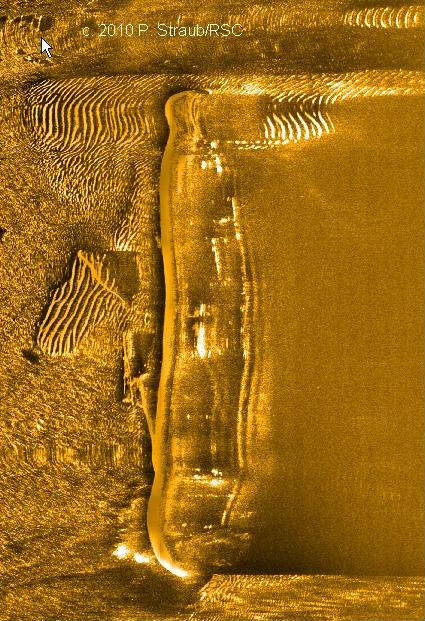
At 01:53 hours on 5 Feb 1942, the unescorted and unarmed India Arrow (Master Carl Samuel Johnson) was torpedoed by U-103 about 20 miles southeast of Cape May, New Jersey while steaming a non-evasive course at 10.5 knots. The torpedo struck the starboard quarter at about the #10 bunker. The ship caught fire and began to sink rapidly by the stern. Only a distress signal without position could be sent before the dynamo failed. The nine officers and 29 crewmen immediately began to abandon ship but were only able to launch one lifeboat. Two boats were destroyed by the explosion and a third was pulled beneath the water by the sinking tanker, drowning 18 of the 20 occupants in it.
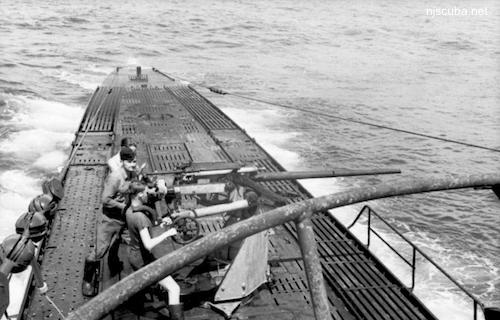
The U-boat then surfaced and fired seven shells from her deck gun at two minutes intervals from a distance of 250 yards into the bow section which remained above water as the stern was sinking. Two men died as a result of the shelling. Only one officer and eleven crewmen survived in the lifeboat, set sail, and headed for shore. They were picked up on 6 February by the American 24-foot fishing skiff Gitana (Frank Marshall and John Shaw) 20 miles southeast off Atlantic City and taken to the Coast Guard station there.
Corpus Christi, Texas - Carteret, New Jersey
Cargo 88.369 barrels of diesel fuel
Underwater photos courtesy of Atlantic Divers
Questions or Inquiries?
Just want to say Hello? Sign the .